The popcorn is still up in a Clairemont living room. The walls look fresh. The ceiling looks tired, stained, or just dated. You want a straight answer before anyone rolls paint onto those bumps: can a painter coat it, or does the texture have to come down.
Confirm the texture and existing coating first
Popcorn in San Diego is not one material. Some ceilings are original acoustic spray from older tract interiors. Some were patched after a roof leak. Some already wear an old coat of flat paint on the peaks, with bare texture left in the valleys.
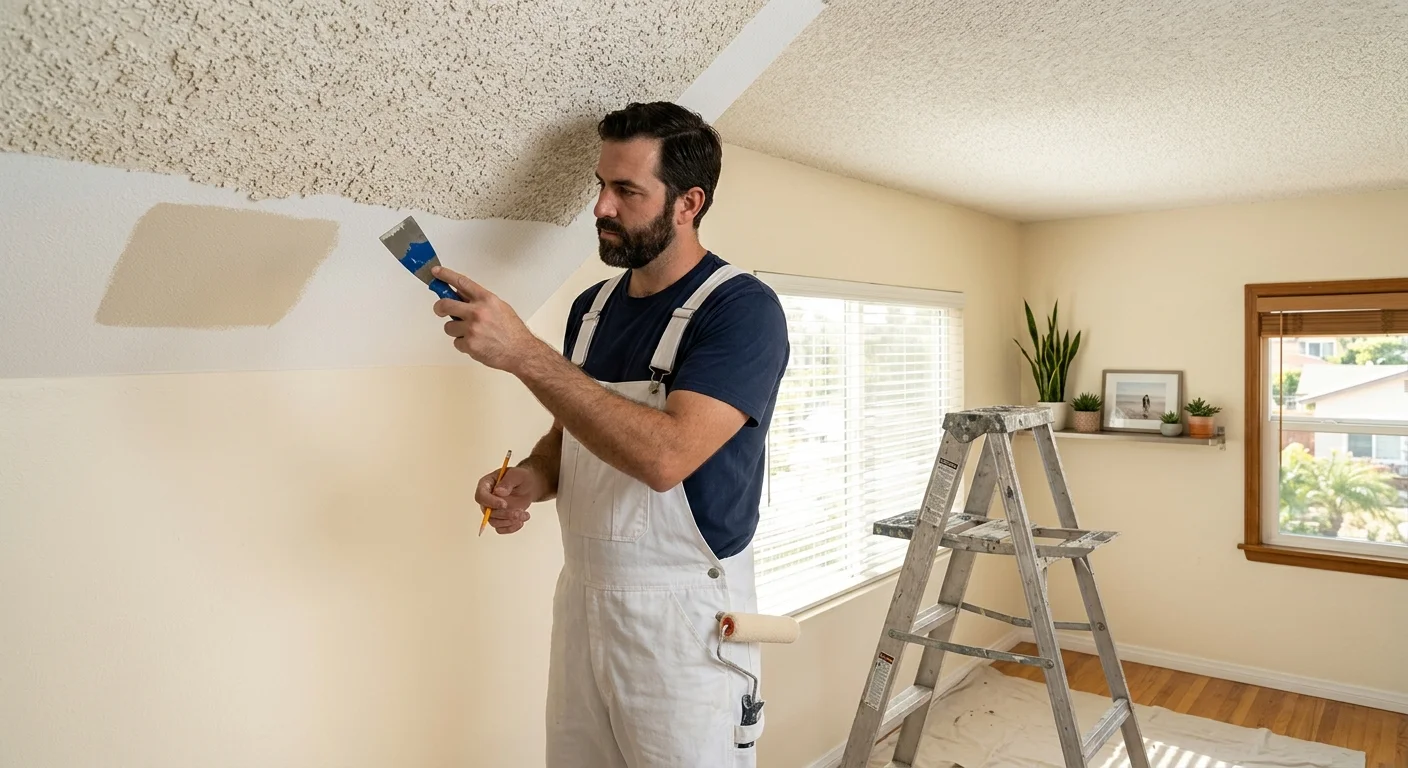
An independent painter reads that surface before anyone opens a can. They check whether the texture is still bonded to the drywall. They check whether it has ever been painted. Unpainted popcorn often sheds when a roller passes. Previously painted popcorn can take another coat if the old film is sound and the lumps underneath are still tight.
Housing age is a clue, not a lab result. In the City of San Diego, about 49.6% of housing units were built before 1978. La Mesa sits at 68.7%, El Cajon at 62.5%, Lemon Grove at 69%, and National City at 66.2%. Those cities still hold a lot of original interior texture. Carlsbad is 27.5% pre-1978. San Marcos is 23.8%. Newer North County interiors are more likely to be later knockdown or smooth board.
A year on the tax record still does not name the coating. Two houses on the same El Cajon block can have different ceilings: one original, one scraped during a remodel, one already painted twice. Ceiling texture types around San Diego vary room to room, so the painter inspects the actual lid, not the neighborhood story.
The practical test is small. A painter tries a closet, a pantry, or the strip behind a door. If the roller pulls crumbs, painting is the wrong move. If the texture holds and the old paint is not peeling, a paint-over is a real option.
You cannot tell asbestos from the look of the bumps. The EPA says visual appearance does not generally establish whether a material contains asbestos, and a building-year cutoff does not establish a particular ceiling’s contents. Confirm bond and coating first. Then decide if paint belongs in the plan.
Compare painting, repair, and full removal
Painting over popcorn, repairing damaged spots, and taking the texture off are three different jobs. They are not ranked cheapest to best. The right path depends on how tight the texture is, what you want the room to look like, and whether anyone is about to disturb the material.
A paint-over keeps the bumps. The room still reads as acoustic texture. What changes is color, stain hiding, and how dusty the surface looks. That is a fair choice when the popcorn is sound and you are not trying to get a smooth plane. It is a weak choice when the texture is already failing, or when you know you want a flat ceiling next year.
Repair sits in the middle. A few water spots, a fixture cutout, or a patch that does not match may not justify stripping the whole lid. That is the repair-or-remove decision for the independent ceiling or painting pro standing under it. Scattered loose peaks are one problem. A ceiling that powders everywhere is another.
Full popcorn ceiling removal is the path when the texture is failing, when you want knockdown or a skim, or when paint would only lock in a surface you already dislike. Removal is messier than a coat of paint. It is also the only way to change the ceiling into a different finish. If the popcorn already came down, the next step is a new texture or a smooth skim, not another paint-over. See knockdown after removal and skim coat after popcorn ceiling removal for that stage.
Some owners ask how to cover popcorn without removing it. Paint is the usual cover. A new drywall layer over the old lid is another method people raise. Overlay changes ceiling height and usually means lights and fixtures come out. That is a construction choice, not a weekend roll. Confirm scope with the pro who would build it.
One cost of painting now is later. Once popcorn is painted, scraping it is a different job. Painted popcorn ceiling removal is slower than taking down raw texture. If you are already leaning toward a smooth ceiling, painting first can make the next project harder. If you are keeping the texture on purpose, that tradeoff may not matter.
Check stains, sagging, and loose texture
Paint will not glue failing popcorn back onto drywall. Before a primer discussion, the painter looks for three problems: stains, sag, and loose texture.
Stains are common in older San Diego interiors. Roof leaks, bathroom steam, and years of cooking or smoking leave tan maps on the peaks. A new white coat without a stain-blocking primer often lets those maps ghost back through. Oil-based stain-blocking primers such as Zinsser Cover Stain, or shellac-based B-I-N, are the products painters reach for on that kind of bleed. The stain still has a cause. If the roof, bath fan, or plumbing is still wet, the ceiling will stain again after the room looks clean.
Sagging is not a paint problem. A belly in the drywall, a soft spot around a can light, or tape joints that have let go means the board or the framing needs attention first. Rolling flat paint over a sag makes the dip easier to see, especially in a bright Mission Valley living room or a south-facing Encinitas bedroom. The painter should stop and flag it, not bury it.
Loose texture is the deal-breaker for a paint-over. If peaks crush under light finger pressure, if crumbs collect on the floor after a duster pass, or if a test roll skins the coating off, the ceiling is not a candidate. Heavy pressure, a soaked roller, or a second wet coat on weak texture will pull more of it down. That mess is not a small touch-up. It is the start of a removal.
Coastal bathrooms add humidity. Pacific marine air and closed-up showers in Imperial Beach or Ocean Beach keep moisture on a textured lid longer than a dry inland hall in Escondido. Stains around a bath fan, peeling at the shower line, or a musty smell are reasons to inspect the room, not reasons to roll a second white coat and hope.
If the texture is tight, the stains are mapped, and the board is flat, painting can proceed. If any of those three checks fail, skip the color conversation until the ceiling is stable.
Plan primer and paint if the ceiling stays
When the popcorn stays, the coating system is simple and easy to get wrong. The goal is even color without knocking the texture off.
Benjamin Moore’s ceiling guidance is the useful baseline: paint the ceiling before the walls, and most previously painted, undamaged ceilings do not need primer. That “previously painted and undamaged” part does a lot of work. Bare popcorn, heavy stains, and chalky old film are not that case. Those lids get a primer chosen for the stain or the porosity, then a ceiling finish.
Sherwin-Williams ceiling paint is typically a flat finish formulated to resist drip. Benjamin Moore Waterborne Ceiling Paint is a dead-flat interior ceiling paint. Insl-X Color-Changing Ceiling Paint goes on pink and dries white flat, which helps a painter see holidays in the valleys. In a steamy bath, humidity-rated interiors such as Aura Bath & Spa are the kind of spec a painter may use on walls and, where the room calls for it, on the lid. Chism Brothers’ 2012 San Diego ceiling article still matches current practice on sheen: ceilings should almost always be flat matte acrylic.
Gloss on popcorn is a poor match. Shine catches every peak and makes roller tracks obvious. Flat hides more of the texture’s shadow. Color is your call. Bright white lifts a dark Clairemont ranch living room. A matched wall color on the ceiling can quiet a small condo. Dark colors on popcorn show holidays and crushed peaks, so the painter should test a patch first.
Application is gentler than wall work. A thick-nap roller or a sprayer can both work. Spraying is often kinder to unpainted texture because the tool never drags across the bumps. Rolling is common in furnished rooms if the painter loads the roller lightly, makes a short pass, and does not keep working the same wet spot. Over-rolling soaks the popcorn and pulls it off. If a patch skins off, the job stops in that area. It does not get “fixed” by pressing harder.
Interior painting of the rest of the room should wait until the ceiling is done and dry. Cut the walls after the lid, not before. Ask the quoting painter what primer, what ceiling paint, and whether they plan to roll or spray. What paint to use on a San Diego ceiling is the product conversation. Whether you need primer is the prep conversation. Neither replaces a look at this specific popcorn.
No coverage rate, dry time, or lifespan is a safe guess from across the internet. Read the can in the room, and let the painter set coats from the test patch, not from a rule of thumb.
Know what to confirm before any disturbance
The paint-over question turns into a safety question the moment anyone scrapes, sands, gouges, or otherwise disturbs the ceiling. Looking at popcorn does not tell you if it contains asbestos. The EPA recommends a trained and accredited professional take samples for analysis, and it advises against taking samples yourself. A 1972 build year in Lemon Grove, or a 1985 remodel in Carlsbad, does not settle what is in that lid. Walk through popcorn ceiling asbestos testing in San Diego before a scrape is on the table.
If testing finds asbestos-containing material, California rules for asbestos work apply. Title 8 CCR §1529 governs construction asbestos work, with related rules in §5208 and §8358. Contractors and employers removing asbestos with fiber content over 0.1% and 100 square feet or more of surface area must register with Cal/OSHA. That registration threshold is about removal work of that size. A light paint-over is a different scope. Confirm the material first. Then confirm the contractor’s plan.
Lead is a separate check on painted surfaces in older housing. About half of San Diego’s housing stock, and a larger share in East County and older South Bay cities, predates 1978. Firms paid to perform renovation, repair, or painting that disturbs lead-based paint in pre-1978 housing must be EPA-certified and follow lead-safe work practices under the Renovation, Repair and Painting program. Paint testing is not required by that rule. Without documentation that the affected paint is not lead-based, the requirements remain. The homeowner or landlord still has the federal disclosure duty on known lead hazards. The firm must deliver the EPA Renovate Right pamphlet before covered work begins. Those are two different obligations.
Painting work at or above $1,000 in aggregate contract price requires a licensed contractor under California law as of 2026. A C-33 painting license covers surface preparation and the application of paints and related coatings. Verify the painter on the CSLB license check before you sign. Paint Pros San Diego is a referral service. It matches you with licensed, independent local painting professionals. It does not perform the work, hold the trade license, or warrant the job. The contract and the warranty, if any, are with the pro you hire.
If the ceiling should stay, the painter coats it with care. If it should come off, stop the paint plan and treat it as a removal with the testing and licensing checks above. Guessing from the texture’s look is not a test.
When to call us
Call when you need a licensed local painter to inspect the popcorn, run a test patch, and tell you honestly whether a paint-over will hold or whether the lid needs repair or removal. That visit is the right time to line up testing before anyone disturbs an older ceiling. Call us at (858) 400-6422 and we’ll connect you with a licensed local painter.