The popcorn is gone, and the ceiling is not finished. In a Clairemont ranch or a Lemon Grove bungalow, scraping usually leaves tape ridges, torn paper, and fixture rings that the old texture used to hide. What comes next is inspection, a finish choice, then repairs, primer, and paint, in that order, by licensed independent painters.
Inspect the ceiling after texture is gone
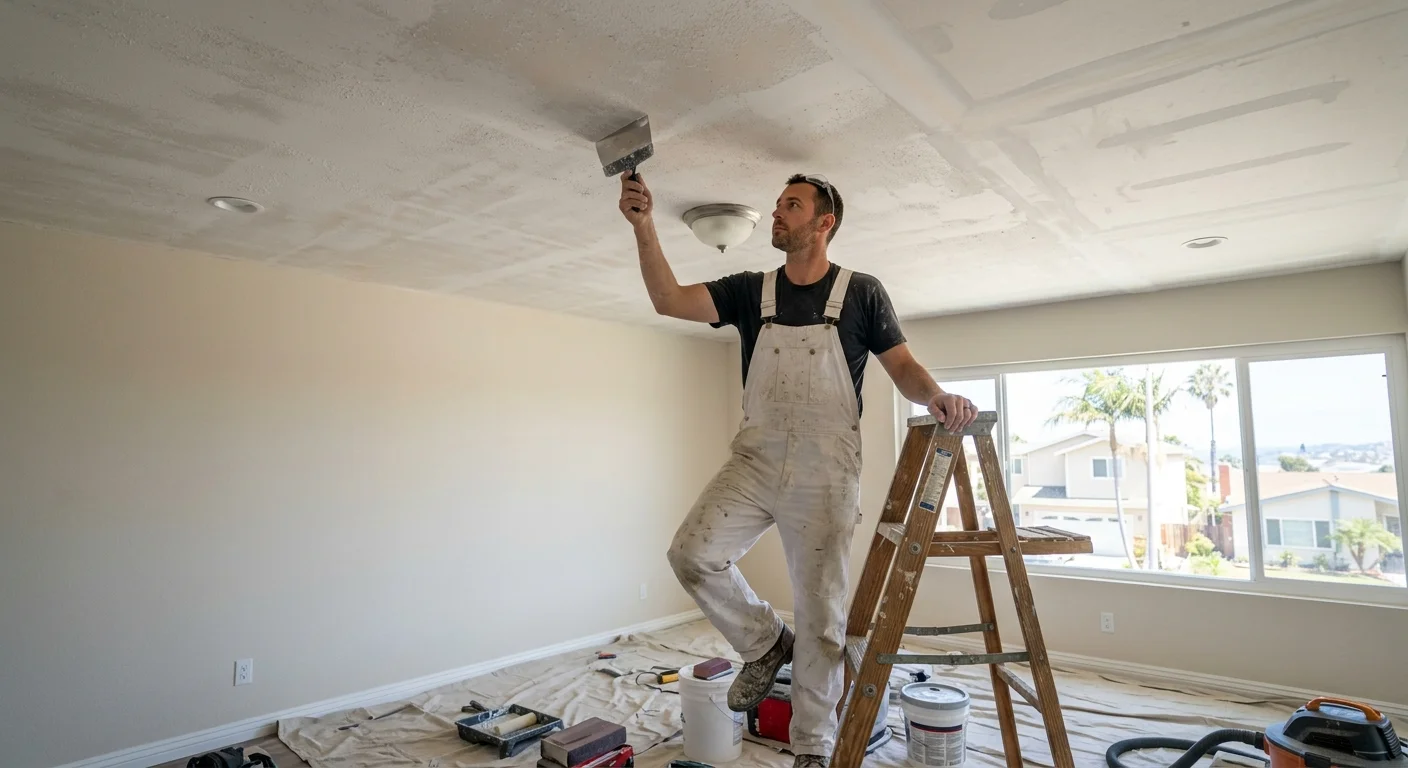
After popcorn ceiling removal, the board you see is the real ceiling. Hold a work light low and walk the room. You’re looking for torn facing paper, proud or hollow tape joints, nail pops, brown rings around old cans, waves between joists, and leftover texture in corners.
San Diego daylight is hard on a bare ceiling. West windows in Point Loma and open plans in east Chula Vista show every ridge once the bumps are gone. About 49.6% of housing units in the city of San Diego were built before 1978. That share is about 69% in Lemon Grove, 68.7% in La Mesa, and 62.5% in El Cajon. Older East County and South Bay stock is where popcorn hid the most original drywall shortcuts. Leftover popcorn along crown in a 1970s El Cajon ranch is still remaining scope, not a detail to paint over.
An independent painter or drywall pro should inspect before anyone prices paint. What looks like a coating job is often drywall repair first. Gouges mean the paper failed. Stains need a cause, not only a primer. If a roof or bath leak is still active, finish work waits.
Coastal rooms near the marine layer dry slower than inland rooms in Escondido or El Cajon. Ask the quoting painter how they will check that compound is dry before sanding. The EPA’s indoor coating advice is to increase ventilation and follow the label. That source doesn’t set a universal occupancy time.
If other rooms still have popcorn, decide those rooms before you lock a finish. The choice to repair or remove changes how the finished ceilings should match down the hall.
Decide on smooth finish or new texture
Scraping is not a finish. You still choose smooth, a light texture, or, in bad cases, new drywall.
A true smooth ceiling usually means a skim coat after popcorn ceiling removal. Compound goes on in controlled passes, then sanding, primer, and paint. Main rooms, pot lights, and long sightlines need this more. A living room that opens to a kitchen in North Park will show roller marks that a hallway might forgive.
Knockdown texture after popcorn removal is the other common path in San Diego County. It hides remaining joints without going fully smooth. It also has to match adjacent rooms, or the doorway will tell on you. A C-33 painting and decorating license covers surface preparation and the application of textures. Confirm the quoting pro’s classification on the CSLB license check before you sign.
Replacement of the ceiling board shows up when paper is shredded, when old patches stack up, or when the drywall was never taped well. Appearance doesn’t tell you what is in leftover texture crumbs.
Match the rest of the house. A 1950s National City home (about 66.2% of units pre-1978) often sits next to rooms that still have texture. A 2000s Chula Vista house east of I-805 may already be smooth. Write the target finish on the quote so scrape-only and paint-ready aren’t treated as the same job.
Plan repairs, primer, and paint in order
Stay in sequence. Repair, then texture or skim, then sand, then prime, then paint. Skip a step and the next coat records it.
Repairs come first. Tape that lifted during the scrape gets reset. Torn paper gets sealed or cut back. Fixture holes get patches that land in plane with the board. Water stains get a stain-blocking primer after the leak is fixed. Product examples on the market include Zinsser Cover Stain (oil-based) and Zinsser B-I-N (shellac-based). Those names are spec examples, not a brand kit list.
New joint compound is porous. It needs primer. Benjamin Moore’s ceiling how-to says most previously painted, undamaged ceilings don’t need primer. A scraped popcorn ceiling isn’t that surface. Treat it like repair. Prime the whole field so sheen and suction even out.
Paint the ceiling before the walls when both are in the scope. Sherwin-Williams describes ceiling paint as typically a flat finish formulated to resist drip. Named interior ceiling examples include Benjamin Moore Waterborne Ceiling Paint and Insl-X Color-Changing Ceiling Paint, which goes on pink and dries white flat. No lifespan or warranty term attaches to those names here.
San Diego County Air Pollution Control District Rule 67.0.1 governs architectural coatings locally. Specific gram-per-liter limits from that table were not confirmed in our claims record. Ask the painter which product they will use, and confirm it is legal to apply here. For indoor air, the EPA advises ventilation and label precautions.
Routine interior painting is generally treated as finish work. In unincorporated San Diego County, painting and similar finish work are exempt from building permits. City of San Diego residential repainting doesn’t appear on the permit list. Confirm with the city or county for your address, especially if the building is historic.
Confirm testing and safety responsibilities
You can’t tell asbestos by looking. The EPA states that visual appearance does not generally establish whether material contains asbestos. A building year doesn’t prove what is in a particular ceiling. The agency recommends a trained, accredited professional take samples, and it advises against taking samples yourself.
That matters even after a scrape. If leftover texture remains at edges, or if dust from the removal is still in the room, don’t sand it to clean up on a guess. If testing never happened, stop and get a qualified person to advise before more disturbance. Paint Pros San Diego is a referral service. It doesn’t remove texture, take samples, or hold asbestos or EPA certifications.
California’s Cal/OSHA rules apply when asbestos work meets the state’s thresholds. Contractors and employers removing asbestos with fiber content over 0.1% and 100 square feet or more of surface area of asbestos-containing material must register with Cal/OSHA. Asbestos work is governed by Title 8 CCR §1529 (construction), §5208 (general industry), and §8358 (shipyards). If a quoting firm is in that work, ask them to explain registration and containment.
Lead is a separate question. Paid renovation, repair, or painting that disturbs paint in pre-1978 housing is generally under the EPA Renovation, Repair and Painting program, with listed exceptions. Testing paint isn’t required by the RRP Rule. Without documentation that the affected paint isn’t lead-based, applicable RRP requirements remain. Sanding leftover paint on a pre-1978 ceiling or cutting new fixture holes can still trigger those work practices: certified firm, certified renovator, signs, containment, and HEPA on the tools that the rule restricts.
About 40.8% of Chula Vista units and 34.4% of Oceanside units predate 1978. The city of San Diego sits near half. Those figures describe housing age, not a lab result for your room.
Compare remaining work before you hire
Compare scopes, not a single headline number. One quote may be leftover dust and a coat of paint. Another may be full repair, skim or knockdown, primer, and two coats. Those are different jobs.
Ask each quoting painter to write, room by room: protection still in place, or a new setup; drywall repairs, with a note on paper damage; skim, knockdown, or leave-as-is; sanding and dust control; primer type; ceiling paint product and sheen; whether walls, trim, and fixtures are in or out; and what happens if more damage shows up under raking light.
A verified per-square-foot price for finishing 1,000 square feet after a scrape isn’t published in our verified record. Don’t use a blog average to budget. Read how local quotes tend to be structured in our popcorn ceiling removal cost guide, then have the painter price the remaining work on your rooms.
Under current California law, as of 2026, the minor-work license threshold is $1,000 for the aggregate contract price of labor, materials, and all other items. If the remaining finish contract meets or exceeds that, the person doing the work needs a CSLB license. Verify it on the CSLB site before you sign. Unlicensed advertising of work that requires a license is a misdemeanor under Business and Professions Code §7027.1.
Paint Pros San Diego matches you with licensed, independent local painting professionals. You contract and pay the painter directly. The brand doesn’t set prices, own equipment, or warranty the work. The painter’s contract is the one that matters.
When to call us
Call when the texture is off and you need a licensed local painter to inspect, repair, finish, prime, and paint the ceiling you actually have. Call us at (858) 400-6422 and we’ll connect you with a licensed local painter.