The caulk is already in the joint. The wait starts now. Independent painters in San Diego County read the tube, watch the bead, and test a small area before full coats on trim, doors, and baseboards. There is no county hour that covers every product, room, or climate band from Imperial Beach to Escondido.
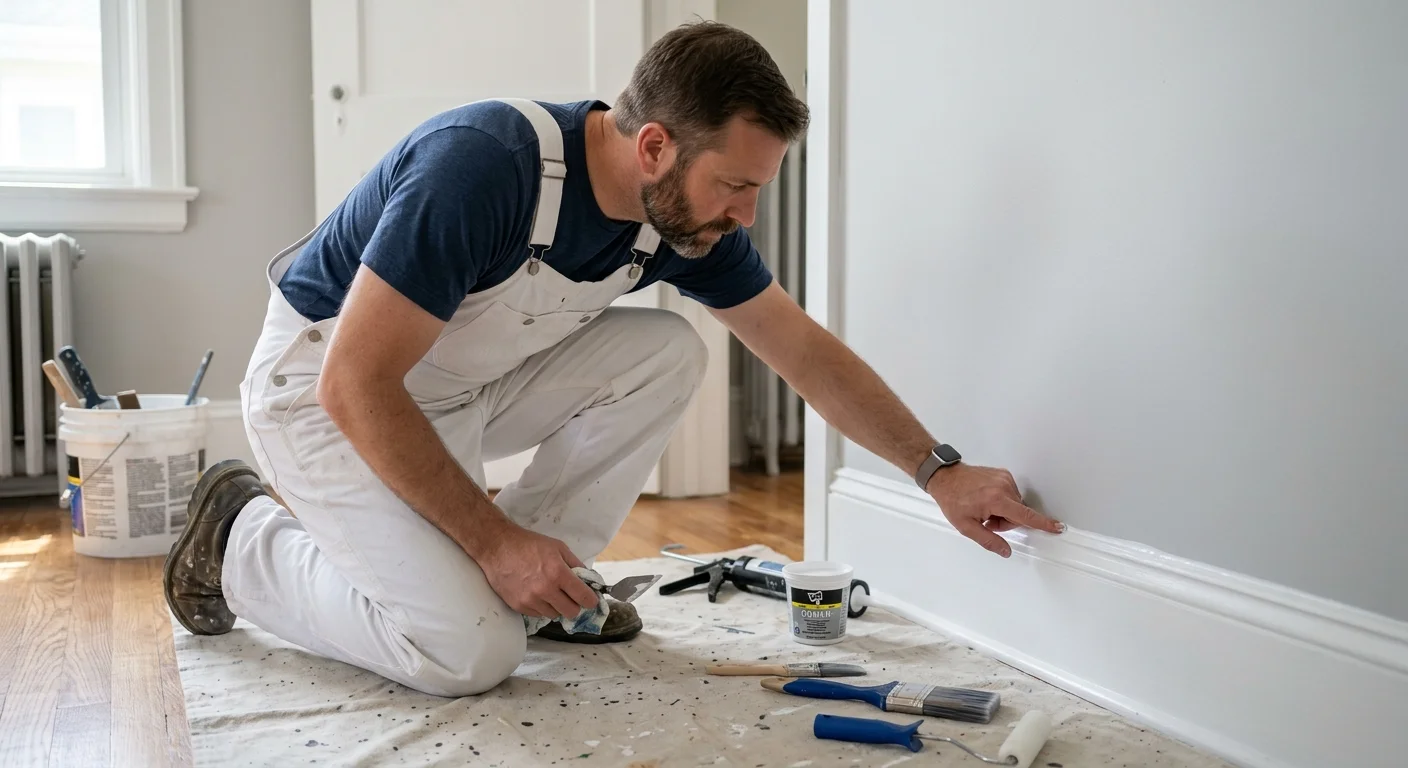
Confirm the joint is tooled and clean
Paint-ready time only means something on a joint that was tooled and left clean. Dust, old failed caulk, and a ragged bead all change how the new material skins. The clock on the label assumes a proper joint. It does not rescue a dirty gap.
Independent painters start with the joint itself. Loose material comes out. The gap gets wiped. The bead gets tooled so it sits even against both faces. On interior painting work, that usually means baseboards, door casings, window stools, and crown. Those lines show once the sheen hits them. A lumpy bead still looks lumpy under paint.
San Diego housing makes this step local. About 49.6% of housing units in the city of San Diego were built before 1978. La Mesa sits at 68.7%. Lemon Grove is 69%. National City is 66.2%. El Cajon is 62.5%. Carlsbad is 27.5%. Older trim in La Mesa and National City often holds decades of paint and old caulk. Newer stock in Carlsbad and San Marcos more often has factory-tight joints and less rebuild. The wait after a fresh bead is the same kind of question in both places. The prep in front of that wait is different.
If the home was built before 1978 and the work disturbs paint, federal EPA Renovation, Repair and Painting rules can apply to paid firms. Paint testing is not required by that rule. Without documentation that the affected paint is lead-free, applicable RRP requirements remain. Scraping old caulk off painted trim can be that kind of disturbance. Confirm the firm’s approach before anyone starts cutting into painted joints.
Fascia seams, window perimeters, and door frames get caulk on many exterior jobs too. The wait after those beads still follows the product on the tube. A fascia joint in Coronado salt air and a baseboard joint in an inland Escondido hallway are different rooms. Both still need a tooled, clean bead before anyone talks about paint.
A painter who skips tooling to save minutes hands you a bead that skins unevenly. Paint then bridges a soft center or a dusty edge. That is when the line shrinks, cracks, or flashes. Confirm the joint first. Then talk about how long for caulking to dry before painting.
Check the caulk label for paint-ready guidance
San Diego County does not publish a paint-over-caulk wait. The figure lives on the product data sheet. Ask the independent painter which tube is on the gun, then read that sheet. A universal “wait a day” rule is a guess. This site does not publish a guess.
Named architectural caulks on the market do list paint-ready times. DAP ALEX PLUS, a siliconized acrylic latex in white and standard colors, is listed as paint ready in 30 minutes with latex or oil-based paints, and tack free in 30 minutes, on DAP’s product data. DAP ALEX FAST DRY, an acrylic latex caulk plus silicone, is listed as brush-paintable 20 minutes after application, or spray-painted immediately, on DAP’s fact sheet. Those numbers belong to those products. They are not a county standard, and they are not a promise that a referred painter will use that tube on your house.
Crystal-clear formulas are a different wait. DAP ALEX PLUS crystal clear is listed as paintable after the sealant turns clear, about 7 to 14 days, on DAP’s technical data. That is weeks, not minutes. A clear tube on a visible baseboard joint can stall a whole trim and baseboard painting schedule if nobody read the sheet. If the joint needs to disappear under paint this week, the painter picks a paintable white or color-matched acrylic latex made for that job.
100% silicone is the other trap. If the tube does not say the product is paintable, plan as if paint will not stick. Wet rooms and some exterior joints still need a moisture-first sealant. In those spots the painter often uses a color-matched or clear product that stays as the finish. For painted trim, doors, and baseboards, a paintable siliconized acrylic is the usual match.
Paint-ready on a data sheet is also a different claim from a fully cured bead. The sheet tells you when the maker says you may coat. Full cure, water exposure, and movement in the joint are separate lines on the same sheet. Follow those lines as written. If a quoted time is missing from the tube in your hand, treat it as unconfirmed and ask the painter to pause coats.
Write the product name into the job notes. “Latex caulk” is not a spec. ALEX PLUS white and ALEX FAST DRY are specs you can check. The matched painter chooses the tube. You keep a photo of the label.
Wait for a uniform, set bead
Once the joint is tooled, the bead has to set. Look for a uniform skin with no wet shine and no fingerprints. A set bead feels consistently firm along the run. Soft spots at the ends, at inside corners, and where the bead got thick are the usual delays.
Bead thickness changes the wait even when the label is the same. A hairline along a tight MDF baseboard skins faster than a wide fill at a gappy plaster return. Independent painters keep the opening of the nozzle small for control. A fat bead in a deep gap needs more time than a thin tool-off on a tight joint. If the gap is a repair, the painter may fill, tool, and come back. Rushing a thick fill is how paint wrinkles.
San Diego air is part of this, and it is not one climate. National Weather Service data for San Diego International Airport puts average relative humidity at 79%, with a daily pattern near 91% at 3:00 a.m. and 67% at 1:00 p.m. That reading is the airport. Inland rooms in El Cajon, Santee, and Escondido often sit drier. Coastal rooms in Coronado, Imperial Beach, and Ocean Beach sit in marine air. A bead tooled at 8 a.m. in a closed Pacific Beach bungalow can still feel cool and damp while an east-facing room in Escondido has already lost that morning moisture.
Rain is seasonal. About 85% of San Diego’s rainfall falls from November through March. Coastal San Diego sees about 4 inches in a typical year, with more inland and in the mountains. Exterior beads in that window wait on dry substrate as much as on the clock. Interior work still feels the marine layer on still mornings. None of that invents extra hours on top of the label. It is why the painter checks the bead instead of painting by the kitchen timer.
Closed bathrooms and laundry rooms hold humidity after showers. A bedroom hall does not. Same product, different room. Open a window if the label wants ventilation. Keep the bead clean while it sets. Pets, kids, and vacuum edges ruin a fresh line faster than weather does.
If the bead stays tacky past the sheet’s paint-ready window, wait. The sheet is the starting rule. The bead in front of you is the check. That is how long for caulk to dry before painting on a real wall.
Test a small area before full coats
A set bead can still reject paint. Test a short, hidden run before the room gets color. Behind a door swing, inside a closet return, or at the end of a baseboard run is enough. Use the same paint, the same sheen, and the same tool the finish coats will use.
Watch the test. Paint that crawls, craters, or sits on the bead like water on wax is a product mismatch. That is common when someone used a non-paintable silicone on a joint that needed to disappear. Paint that wrinkles or pulls the bead is often a bead that was still soft inside. Either way, stop. Switching products or giving the joint more time is cheaper than recoating a whole room.
Sheen makes the test honest. A dead-flat wall paint can hide a weak bond for a week. Semi-gloss on doors and trim shows crawling the same afternoon. Most of the “how long before painting caulk” searches are really about those glossy lines. Test on the actual trim paint.
Coastal and inland jobs fail this test for different reasons. In a tight Point Loma cottage, leftover kitchen grease on old wood can sit under a new bead and keep the top skin from taking paint. In a dusty East County garage-adjacent hall, powder on the joint can do the same. Clean first, then test. Do not diagnose the wait until the test coat has a fair surface.
If the test looks even and the bead stays put, the painter can move to full coats. If it does not, the next step is the label and the joint, again. A second product on top of a failed bead is how you get a ridge you will see from the sofa. Cut it out, recaulk, and restart the wait.
This test is also where caulking baseboards before painting meets the clock. Filling the gap first only pays off if the paint actually keys to the bead. A pretty line that peels in a month was never ready.
Ask the painter to document the sequence
Independent painters who take on trim work also run the caulk gun. That is ordinary prep, not a separate trade on most interior and exterior paint jobs. What you want in writing is the sequence and the wait, so the room is not painted on a hope.
Ask for the product name, the paint-ready line from the sheet, when the bead was tooled, and when the test coat went on. A photo of the tube in the room is enough. “We waited long enough” is not a record. If two people are on the job, the person who paints needs the same notes as the person who caulked.
Keep the order-of-work question separate from this wait. When the bead goes in relative to color is a different decision. This page is the pause after the gun stops. Mixing those two questions is how homeowners get a 30-minute acrylic latex answer and apply it to a crystal-clear tube.
Verify the quoting painter’s license on the CSLB license check before you sign. Paint Pros San Diego is a referral service. It matches you with licensed, independent local painting professionals. It does not caulk, paint, or hold a C-33. The customer contracts and pays the professional directly. Ask that professional for license and insurance documents. Confirm who is writing the product and the wait into the scope.
On a larger interior, that scope should name rooms, joints, and products. Baseboards in a 1960s La Mesa ranch, new MDF in a San Marcos tract, and a Coronado bathroom each deserve their own line if the tubes differ. Crystal clear in a shower and ALEX PLUS on hallway trim are different waits on the same calendar. Put both on paper.
If the painter wants to spray immediately over a fast-dry product, that has to match the sheet for that tube. DAP ALEX FAST DRY lists spray as immediate. A different brand on the gun may not. Copy the line. Do not borrow a neighbor’s wait.
When to call us
When trim joints, doors, and baseboards need caulk and paint on the same job, a licensed local painter should set the product and the wait, then own the test coat. Call us at (858) 400-6422 and we’ll connect you with a licensed local painter.