Exterior house painting in San Diego. Paint that holds its color in the sun.
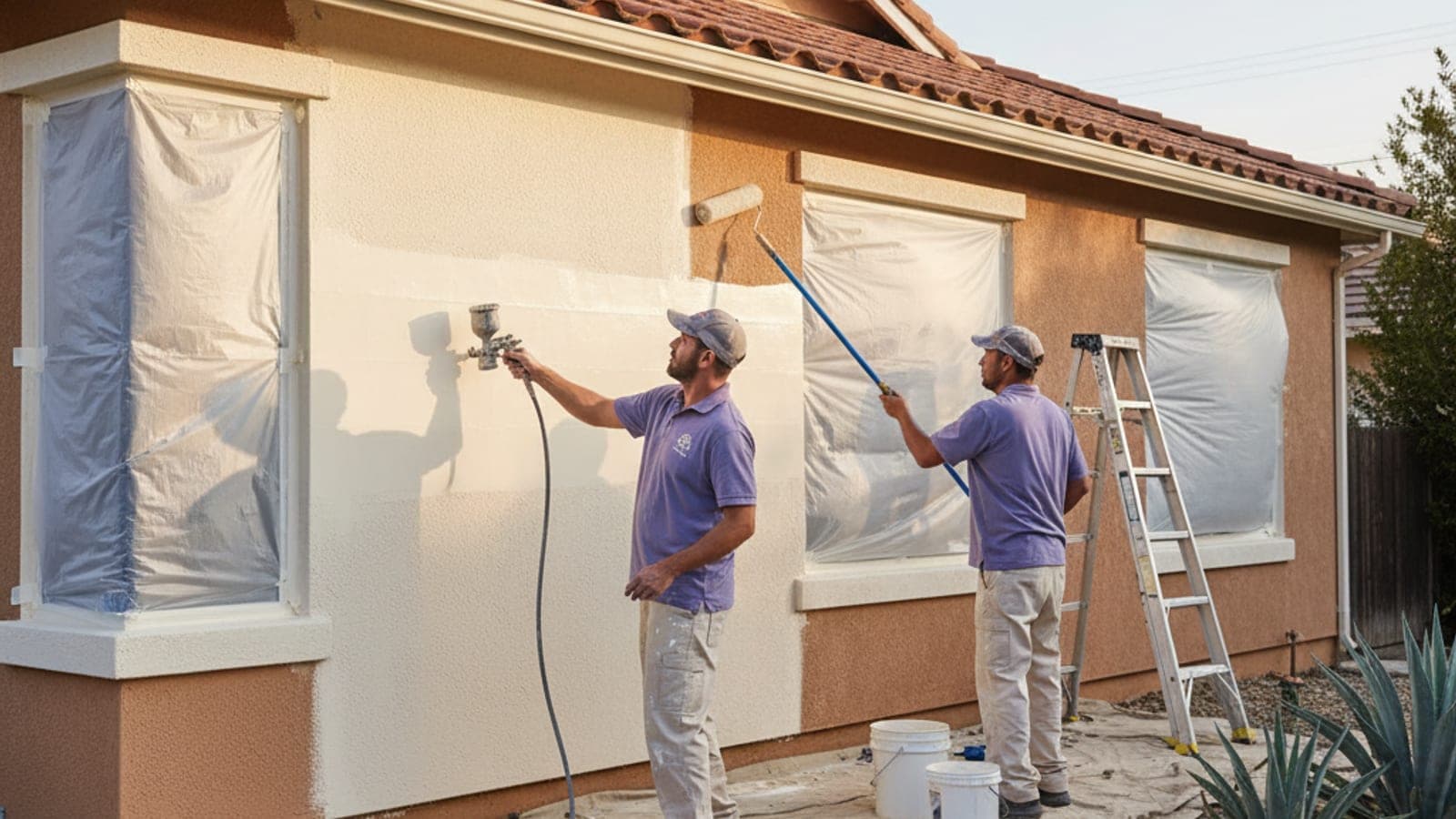
San Diego sun is brutal on exterior paint. South and west walls fade first when the paint is not rated for the exposure. Ask the painter to use UV-stable acrylic or elastomeric depending on your substrate, pressure-wash the surface first, caulk every seam, spot-prime bare stucco or wood, and spray-and-back-roll for an even film you can stand on the sidewalk and read across the whole wall.
What's included in exterior painting in San Diego?
- Full pressure wash to remove chalking, mildew, and loose paint
- Scrape and feather-sand any flaking areas down to a sound edge
- Hairline stucco crack repair with elastomeric patching compound
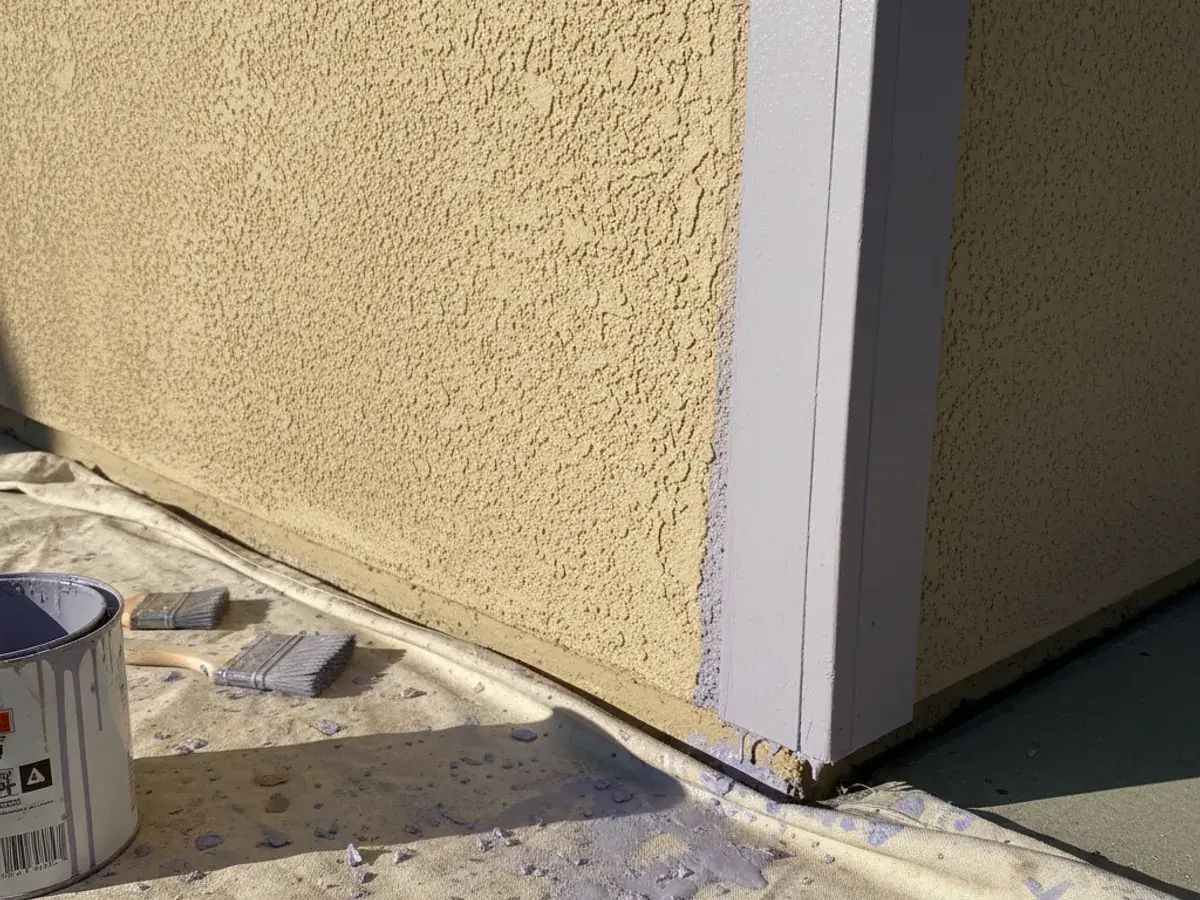
- Caulk all trim seams, window flashings, and stucco-to-wood transitions
- Spot-prime bare spots, tannin-bleed wood, and rust stains on metal
- Two full coats exterior acrylic, spray-and-back-rolled for even film
- Trim, fascia, eaves, soffits, garage door, and front door painted
- Mask windows, concrete, and landscaping; clean up every chip
When do you need exterior painting in San Diego?
- Paint is chalking (leaves white residue when you wipe it)
- Stucco has hairline cracks that let water in after a rain
- South or west wall has faded two shades lighter than the north wall
- HOA has flagged the paint for peeling or fading
- Selling and the exterior looks tired even though the yard is clean
- Wood trim is bare or gray in spots where the old paint failed
Exterior house painters in San Diego
An exterior repaint in San Diego is decided at the surface, not at the finish coat. Washing the walls, chasing stucco cracks, replacing failed caulk and spot-priming bare substrate all come first, and skipping any of them is what brings the same failure back. South and west walls take the hardest sun here, so those elevations usually drive the product choice for the whole house. Ask which prep steps are named in the written scope.
Painter in San Diego for a full exterior repaint
A full exterior repaint in San Diego covers walls, trim, fascia, eaves, and doors. Ask your painter whether the quote is spray-and-back-roll or spray only, because back-rolling is what works the film into stucco instead of laying it on top. Ask for the product name and sheen in writing too.
What do homeowners ask about exterior painting?
How long will exterior paint last in San Diego?
Prep and product decide it, not the calendar. South and west exposures take the most sun and give up first. Elastomeric on stucco is formulated to bridge crack movement because it is thicker and flexes with the crack. Cheap paint over dirty walls fails early, regardless of brand claims.
Do I need elastomeric or regular acrylic?
Elastomeric for stucco with active hairline cracking or previous water intrusion. Regular premium acrylic for wood siding, hardie, or stucco in good condition. A painter will walk the house and tell you which one they would use, sometimes both on the same home if there's a mix of substrates.
Can you paint if it drizzles?
Not safely. Acrylic latex needs a dry window after application before rain hits it. The real minimum is on the product's own technical data sheet and it varies by product and by temperature, like Loxon XP's 'to touch' schedule of 6 hours at 35-45°F and 4 hours at 45°F and up. A painter works to that sheet, not to a rule of thumb. If the forecast shows drizzle, good painters hold. They would rather push a day than watch a finished wall wash off at 4 p.m.
Do you repair stucco before painting?
Yes. Hairline cracks get elastomeric patching compound. Larger cracks, chips, and water-damaged areas get stucco patch and a texture match before paint. They don't just paint over damage, it comes back in six months.
What about lead paint on older homes?
For paid work that disturbs painted surfaces in pre-1978 housing, EPA's RRP rule may apply. Paint testing is not universally required; testing can show the paint is not lead-based. Ask the contractor whether firm certification and lead-safe practices apply to this job, and how containment and waste handling are written into the scope.
Where does elastomeric paint make sense on an exterior house in San Diego?
Elastomeric paint is the right call on stucco with active hairline cracking or a history of water intrusion, since it's thicker than acrylic and flexes with the crack instead of splitting again. On wood siding, hardie board, or stucco that's already in good shape, premium acrylic is the better exterior house paint and costs less.
How do I find exterior painting near me in San Diego?
Call (858) 400-6422 and we'll connect you with one independent painter in San Diego County who handles exterior painting. That painter walks the job and prices it directly with you. Check their license yourself on the CSLB license-check site before you sign anything, and ask for the scope and price in writing so there's no confusion later.
Should you use elastomeric or acrylic on an exterior repaint?
The coating choice drives how the job holds up, and the tradeoffs are substrate-specific and worth seeing in full before you pick. We cover the full breakdown in our guide to elastomeric versus acrylic on San Diego stucco.
How can you tell a prep problem from a paint problem?
Peeling is an adhesion failure, but the break tells you where it began. A loose finish coat may separate from an older coating beneath it. If every layer lifts together, the weakness may sit at the substrate. Dirt, chalk, moisture, or an incompatible coating can prevent a firm bond. Ask the painter to identify which layer releases and document the repair. Covering loose edges only hides the failure line. The next coat remains attached to material that's already letting go.
Alligatoring forms a cracked pattern that resembles reptile skin. It often points to a rigid upper film moving differently from the layers below. Heavy paint buildup can also leave a brittle surface over weaker material. Chalking looks different. It leaves a powdery residue as the exposed finish breaks down. That powder must be addressed before adhesion can be judged. Ask how the painter will test the remaining coating after cleaning. A new finish can't hold firmly when its foundation still sheds powder.
Blisters and bubbles need diagnosis before scraping begins. A raised pocket may come from trapped moisture, heat, or weak adhesion between coats. Its location matters. Bubbles near wall bases suggest a different path than isolated pockets on a sun-facing elevation. Irrigation, failed joints, and damp masonry should be checked before coating. Ask the painter to open representative areas and explain what lies beneath. Repainting without correcting the source can seal the same condition under a fresh film, allowing the pattern to return.
What does the marine layer change about an exterior repaint?
Coastal mornings can leave walls damp even when the pavement looks dry. North-facing elevations and shaded side yards release that moisture more slowly. Farther inland, surfaces can dry sooner but heat quickly as the sun rises. Those conditions affect when surface preparation and coating can begin. Painters use a moisture meter to check the actual substrate. The reading should be compared with the coating manufacturer's published requirement. A schedule based only on the clock can miss moisture held inside porous stucco or exposed wood.
West walls face a different problem later in the day. They take direct afternoon sun while shaded walls may remain cool. That temperature split can change how the same coating handles across one property. Salt air near the water adds residue that must be removed without damaging the surface. Ask how the painter will separate washing, drying, and coating by elevation. A single start time for the entire house may ignore the conditions present on each wall.
Irrigation overspray creates another local moisture source, especially along wall bases. Repeated wetting can leave deposits, support surface growth, and keep lower stucco damp. The coating shouldn't be treated as the repair for an active water source. Redirect sprinklers and inspect nearby joints before finish work begins. Growth may return faster on a damp, shaded coastal wall than on a dry inland elevation. Ask the painter to base future cleaning advice on your home's orientation, exposure, landscaping, and current surface condition.
What should an exterior paint scope list line by line?
The written scope should name every surface, not just say “full exterior.” List the body, trim, fascia, eaves, soffits, doors, garage door, railings, and other painted features separately. Identify stucco, wood siding, fiber-cement siding, and metal wherever they occur. Each substrate may need different preparation and primer. The scope should also identify surfaces that stay untouched, including roofs, windows, masonry, hardware, light fixtures, and factory-finished components. Clear exclusions prevent assumptions once masking begins.
Preparation needs its own line items. State which areas will be washed, scraped, sanded, patched, or caulked. Name the joints that receive caulk and those left open for drainage. Separate spot priming from full priming, then identify where each applies. Rusted metal, bare wood, patched stucco, and sound existing paint aren't the same surface. Ask which primer will cover each condition. If damaged wood, stucco repair, or failed sealant falls outside the painting scope, that exclusion should appear in writing.
Finish details should identify the product, colour, sheen, and coat count for each surface. Don't accept one coat count covering every item unless the scope explains it. Body walls, repaired areas, doors, railings, and trim may start in different conditions. State whether application includes brushing, rolling, spraying, or a combination on each surface. The scope should also address masking, landscape protection, hardware removal, daily material storage, and final cleanup. Ask the painter to record approved changes in writing before extra work begins.
Where do we offer exterior painting in San Diego County?
We connect San Diego County homeowners with licensed independent painters for exterior painting. Pick your city for local climate notes and service specifics.
See exterior painting in all 67 cities
Need exterior painting in San Diego County?
One call and we match you with a local painter. You hire and pay them directly.