Color consultation in San Diego. Right the first time.
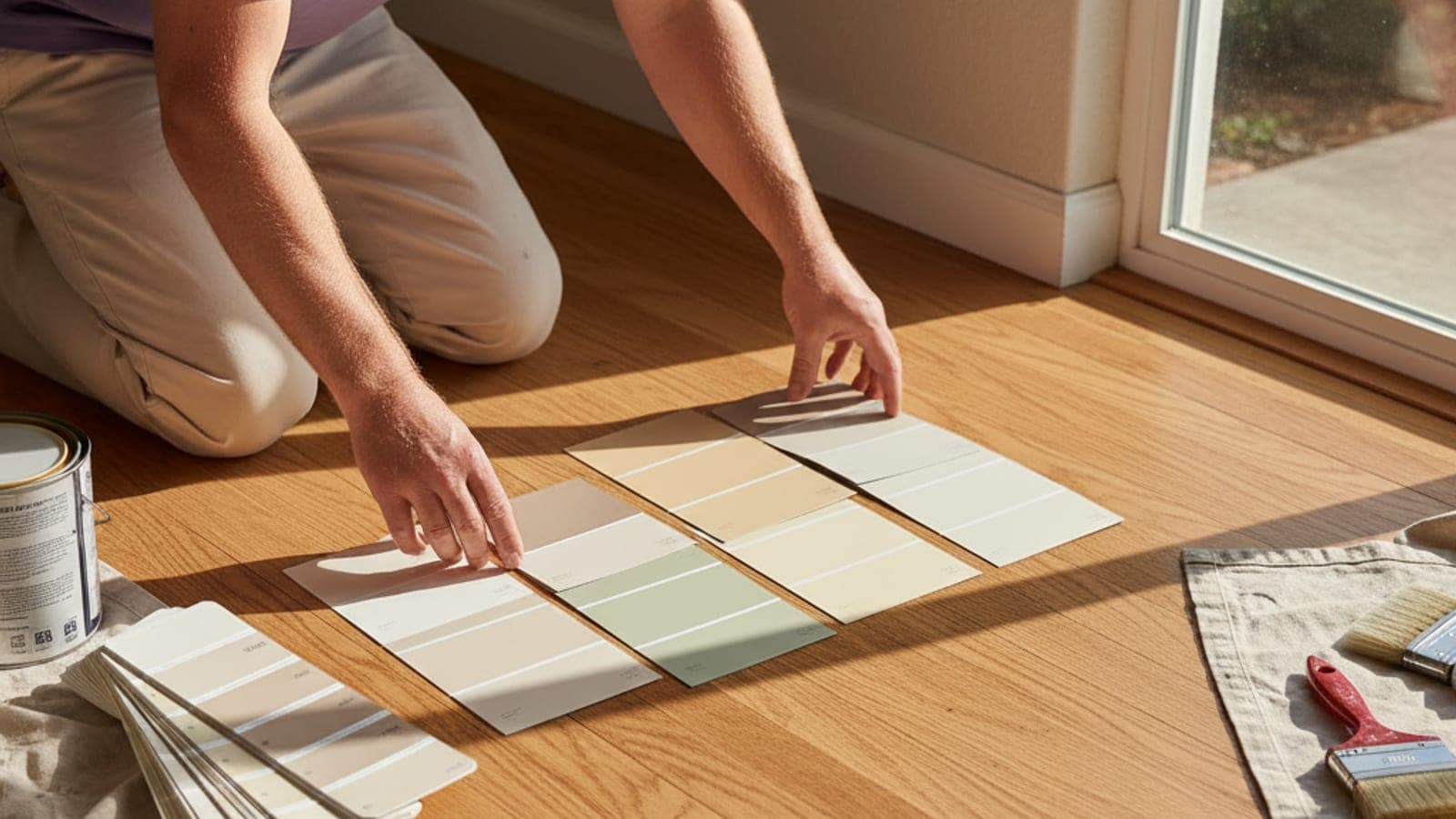
Picking paint color on a screen or under a store's fluorescent lights is how people end up with a beige that looks pink at sunset. Ask to view large-format samples in the room's own light throughout the day. Sherwin-Williams and Benjamin Moore samples can help you compare how each color shifts from morning to evening.
What's included in color consultation in San Diego?
- Color review in your home, under the light your rooms receive
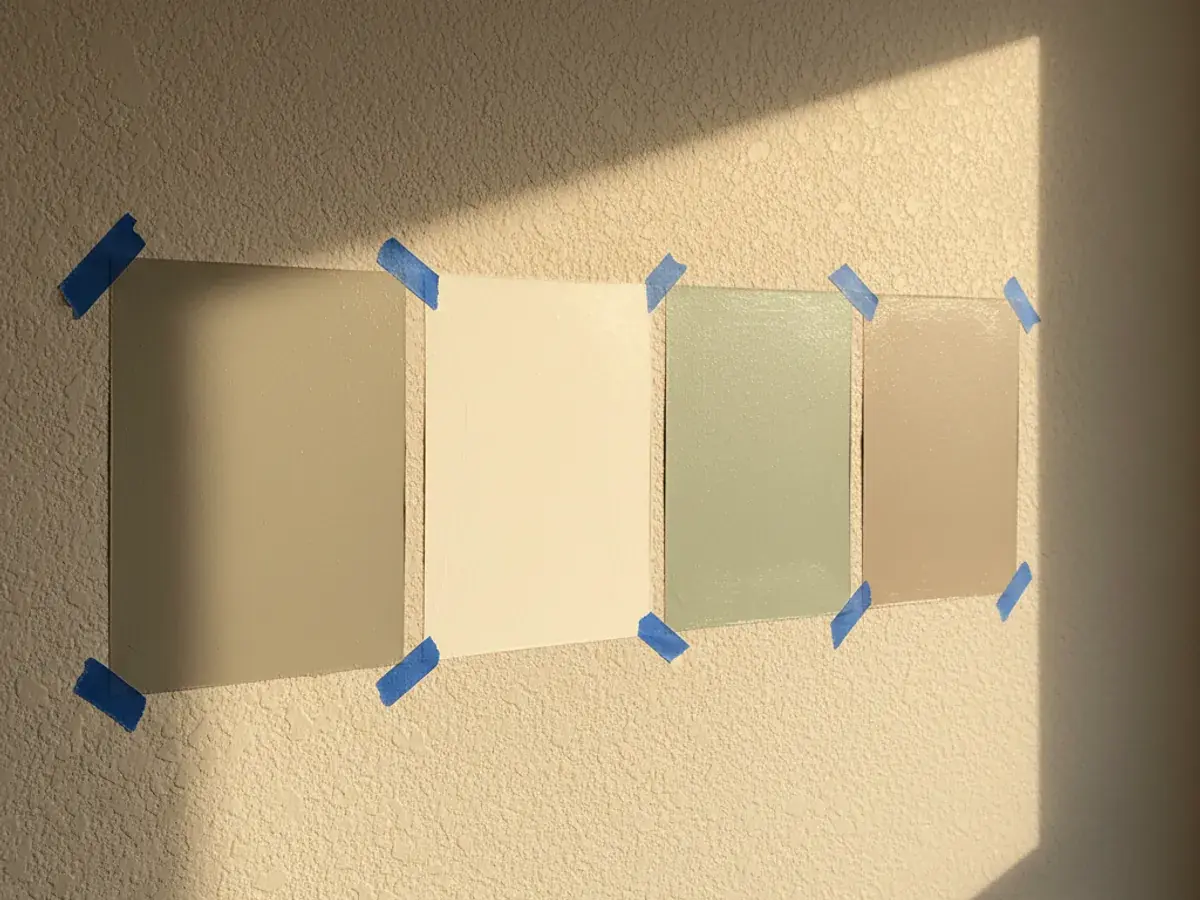
- Large 12"×12" samples so color isn't filtered through a tiny chip
- Whole-home palette: walls, trim, ceilings, accent areas
- Exterior palette coordination with roof, stone, brick, and landscaping
- Cabinet and kitchen palette direction with countertop matching
- Warm vs cool undertone education so you can pick confidently
- Written recommendation sheet with exact paint names and codes
- Written color schedule with exact names, codes, and intended sheens
When do you need color consultation in San Diego?
- You've tried 10 swatches and they all look the same in the store
- Picked a color that looked great online and it went sideways on the wall
- Flipping a home and want buyer-friendly neutrals without going builder-beige
- New construction and trying to coordinate roof, stone, and stucco
- Kitchen remodel and need cabinet, counter, and wall colors to work together
- HOA has a limited palette and you want the best option from the list
Paint color consultant in San Diego
A paint color consultant in San Diego reads your light before your swatches. North-facing rooms pull colors cooler, west walls take the hardest afternoon sun, and San Diego's coastal light has a blue cast that washes warm colors out. The consultants in our network test large samples on your actual walls and look at them at three times of day.
Exterior paint color consultation in San Diego
Exterior color in San Diego has to survive full sun and, in an HOA community, an approval committee. A consultation covers body, trim, and accent together, checks the combination against the roof and hardscape you already have, and produces the brand and sheen names your painter needs in writing. Bring your HOA palette to the first meeting if you have one.
What do homeowners ask about color consultation?
Is the consultation fee refunded if I hire you to paint?
That is set by whoever runs the consultation, not by us. Some painters charge for a color consultation and credit the fee back if you go on to book the work with them, and some do not. Ask before you book.
Do I need to have a color in mind first?
No. Plenty of consultations start from zero. The consultant walks the house, asks how you live in each room, and works from there. Having a Pinterest board or inspo photos helps speed things up but isn't required.
Are you attached to a paint brand?
Share your budget up front, and ask for options within it. Request the recommendation in writing, with exact paint names and codes. The sheet might list Sherwin-Williams, Benjamin Moore, or Behr. You can then price the same colors at any brand before deciding.
Can you do exterior color palettes?
Yes. Exteriors are harder because the palette has to coordinate with things you can't change, roof, stone, brick, neighboring homes. The consultant brings a bigger sample library for exteriors and recommends testing the finalists on the actual wall for 24 hours before committing.
What if I disagree with your recommendation?
Then you pick again. The goal is a color you love, not one anybody else is proud of. Most consults end with a clear 2–3 option shortlist, and you pick from there with confidence.
Is there a house paint color consultant near me in San Diego?
Yes. We match you with a house paint color consultant who comes to your San Diego County home with large samples and looks at them in your light. Paint Pros San Diego does not sell paint or run the consult. Call (858) 400-6422.
How do I find color consultation near me in San Diego?
Call (858) 400-6422 and we'll connect you with one independent painter in San Diego County who handles color consultation. That painter walks the job and prices it directly with you. Check their license yourself on the CSLB license-check site before you sign anything, and ask for the scope and price in writing so there's no confusion later.
Why does paint look different on the wall than on the color chip?
A small chip shows color in isolation. A full wall surrounds you with it. That change in scale makes undertones easier to see, especially in pale neutrals. A gray may reveal blue or green once it covers more surface. A cream may become noticeably yellow. The wall's texture and sheen also affect how light moves across the color. Treat the chip as a starting point, not a reliable picture of the finished room.
Everything nearby can shift how a wall color reads. Wood flooring may cast warmth upward. A blue sofa can make a neutral feel cooler. Countertops, tile, rugs, cabinets, and window coverings all return color into the room. Even landscaping outside a large window can influence the wall beside it. Judge each candidate with the furnishings and fixed finishes that will remain. An empty room gives you less useful information than the finished space.
Window direction changes color throughout the day. North-facing rooms often make warm neutrals appear quieter or cooler. West-facing rooms gain stronger, warmer light later in the day. San Diego's marine-layer light can soften contrast near the coast. The same color may look colder there than inside an inland room with clearer afternoon sun. Compare samples inside the actual property, because a neighbor's successful palette may behave differently in your light.
How should you test a paint color before committing?
Start with large samples that show enough color to reveal its undertone. Place each candidate on more than one wall, including the brightest and darkest areas. A sample beside a window may read differently across the room. Keep competing colors separated so they don't distort one another. If you use movable sample boards, shift them around the space. If you sample directly, keep each area large and clearly labeled.
Review the samples during the light conditions you actually use. Morning light may favor one choice, while late afternoon exposes an unwanted undertone. Turn on the room's usual lamps after sunset as well. Warm and cool bulbs can pull the same wall in different directions. Don't decide from a single glance or one bright moment. Take a photo for reference, but make the final judgment with your eyes in the room.
Place samples beside the current trim, flooring, cabinets, and countertops. Bare drywall or primer removes the context that controls the final result. If the trim will change, test its proposed color beside every wall finalist. Check the sample where wall and floor meet, then near the ceiling. Those edges reveal clashes faster than the center of a blank wall. Label every sample with its exact brand, color name, code, and intended sheen.
How do you create a whole-house color palette that feels connected?
Begin by choosing the reference colors for trim and ceilings. Every wall color will sit against those surfaces, so they set the palette's baseline. One white may appear clean beside a muted blue but yellow beside a cooler gray. Test the combinations together before assigning colors room by room. Keep a written schedule showing each surface, color, code, and sheen. That record prevents similar whites from being confused during later decisions.
Map the home's sightlines before choosing separate room colors. Stand at the entry, hallway intersections, and open living areas. Note which walls appear together from each position. Connected rooms don't need identical colors, but their undertones should make sense side by side. Carrying one color through shared spaces can calm a broken layout. A related accent can then mark a dining room, office, or other area with a clear visual boundary.
Decide exactly where every color stops. Inside corners usually create cleaner transitions than exposed wall faces. Doorways, beams, cabinetry, and changes in ceiling height can also provide logical breaks. Write those boundaries into the painting scope so the decision isn't improvised later. Exterior palettes need the same discipline around body, trim, doors, and fixed materials. If an HOA controls exterior choices, request its current approved palette in writing before selecting samples or finalizing the scope.
Where do we offer color consultation in San Diego County?
We connect San Diego County homeowners with licensed independent painters for color consultation. Pick your city for local climate notes and service specifics.
See color consultation in all 67 cities
Need color consultation in San Diego County?
One call and we match you with a local painter. You hire and pay them directly.