Popcorn ceiling removal in San Diego. Scrape, skim, paint, done.
Popcorn ceiling removal involves masking, wet-scraping, skim-coating smooth, priming, and paint. Before removal, appearance and build year can't confirm what the texture holds. EPA recommends having a trained and accredited professional sample suspect material first. Paint Pros San Diego matches you with one licensed independent painter, and you ask that painter for an on-site quote.
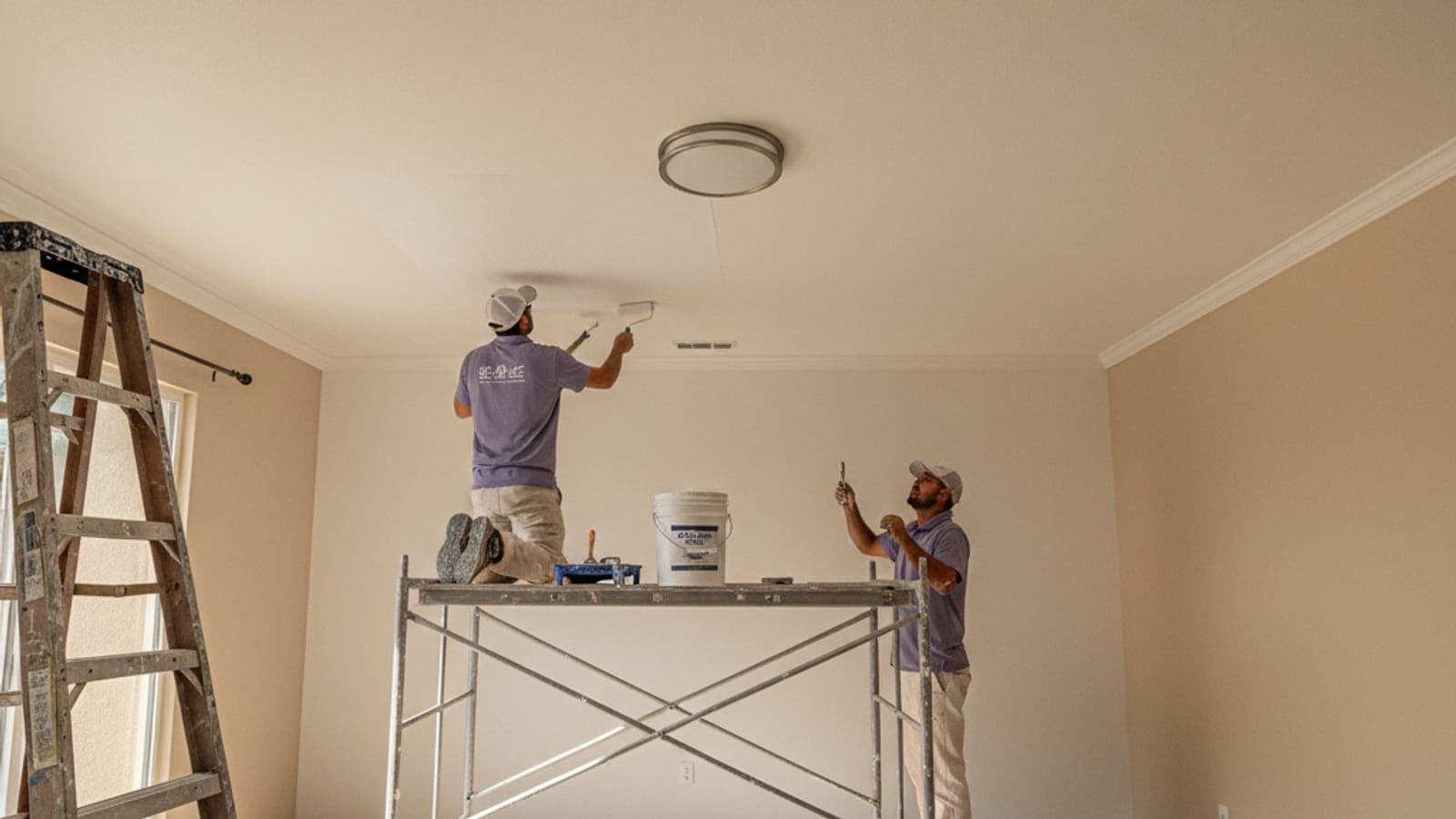
What's included in popcorn ceiling removal in San Diego?
- Arrange professional sampling through an accredited lab before scraping suspect texture.
- Full room mask: plastic on floors, walls, and furniture
- Wet-scrape popcorn texture with garden sprayer and 6" knife
- Skim-coat the ceiling smooth with two thin passes of joint compound
- Sand, dust, and vacuum before priming
- Optional orange peel or knockdown re-texture (most people want smooth)
- Prime with stain-blocking primer to prevent nicotine or water stains bleeding through
- Two coats flat ceiling paint for an even matte finish
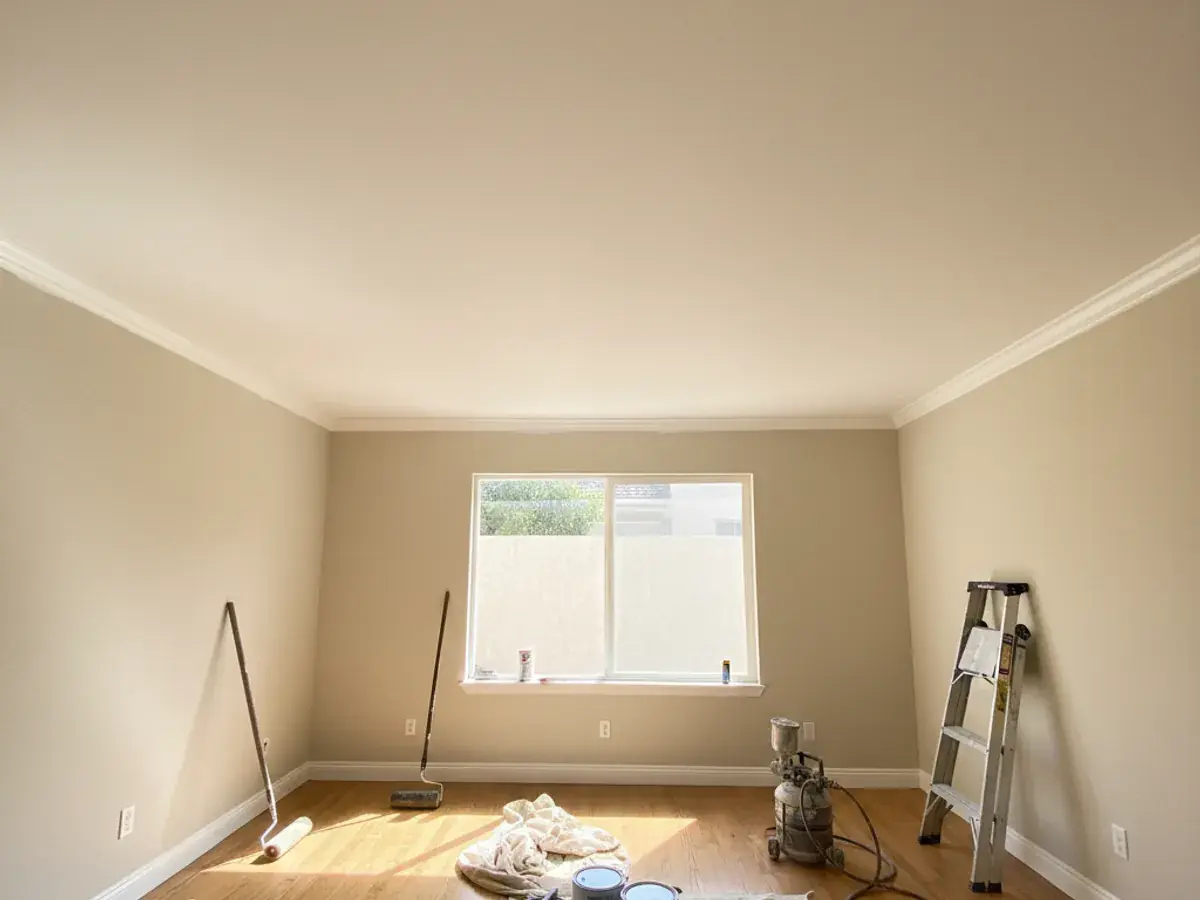
When do you need popcorn ceiling removal in San Diego?
- Buying or selling an older home with original ceilings
- Remodeling and the ceilings suddenly feel dated
- Ceiling has water stains bleeding through the texture
- Dust and cobwebs are hard to clean off the textured surface
- LED lighting is planned and the flat ceiling will cast better
- Kitchen ceiling has grease-stained popcorn near the stove
Popcorn ceiling removal near you in San Diego
Popcorn ceiling removal in San Diego runs in one order: test, mask, wet, scrape, skim, sand, texture, prime, paint. The skim coat is what separates a flat ceiling from a wavy one, and it is the step most likely to be missing from a low bid. Ask how many skim passes are in your quote.
Asbestos testing before popcorn removal in San Diego
Homes of any age can have asbestos in popcorn texture; appearance and year built cannot confirm it. Before scraping, have a trained and accredited asbestos professional assess sampling needs. If asbestos is confirmed, scraping stops and the job goes to a licensed abatement contractor. Never let anyone dry-scrape an untested suspect ceiling.
What do homeowners ask about popcorn ceiling removal?
What about asbestos?
Popcorn texture in older homes can contain asbestos; you cannot tell by looking. Ask the painter whether a certified lab sample is warranted before any scrape. If a sample is positive, a licensed abatement contractor handles removal. If it is negative, scraping can proceed. Put the test, the lab, and who does the work in writing.
Is there popcorn ceiling removal near me in San Diego County?
Paint Pros San Diego matches you with one licensed independent popcorn ceiling removal painter working in your city, across all 67 San Diego County cities from Oceanside and Vista through Escondido, El Cajon, Chula Vista and the coastal communities. Call (858) 400-6422 and say which rooms and roughly when the home was built. Ask the painter to scope the removal on site.
Is it messy?
Yes, but controllable. Wet-scraping turns the popcorn into wet chunks that fall onto the floor plastic, not dust in the air. Ask the painter to clean daily so you can walk through the house. Ask the painter to tape off register vents during scraping.
Can I stay in the house?
Yes. Ask the painter to work one room at a time and seal off the room with plastic. Kitchens and main living spaces are usually scheduled for a weekend to minimize disruption.
What if the ceiling has water stains?
Fix the leak first. Once the source is dry, ask the painter you hire to skim-coat over the stain, prime with a stain blocker like BIN shellac primer, and finish paint. Stains painted over without a blocker bleed through within weeks.
Should I go fully smooth or add a light texture?
Smooth looks more modern and is what most buyers prefer. Light orange peel hides imperfections better if the drywall is old or wavy. They can show samples on a test board before committing. Full smooth requires a tighter skim-coat and finish sand.
How do I find popcorn ceiling removal near me in San Diego?
Call (858) 400-6422 and we'll connect you with one independent painter in San Diego County who handles popcorn ceiling removal. That painter walks the job and prices it directly with you. Check their license yourself on the CSLB license-check site before you sign anything, and ask for the scope and price in writing so there's no confusion later.
What has to be settled before any popcorn ceiling comes down?
Before any ceiling work begins, settle whether the texture should be disturbed at all. Appearance cannot identify asbestos, and the home's build year does not answer the question. Condition matters too. An intact ceiling that is not being remodeled can be left undisturbed instead of removed or covered. That choice avoids turning a finish decision into a disturbance. If removal remains the goal, decide who will assess the material before choosing a ceiling contractor.
EPA recommends having a trained and accredited professional take samples of suspect material. EPA also advises homeowners against collecting those samples themselves. Ask how the samples will be selected, which accredited laboratory will examine them, and how you will receive the findings. Keep the written report with the project documents. A verbal answer leaves the painter without clear information about what was sampled or whether the planned work touches the same material.
A result confirming asbestos changes who handles the ceiling. A licensed abatement contractor removes confirmed asbestos, then painting can resume after clearance. Give the painter the written lab and clearance documents before scheduling surface work. Those records document the lab result and completed clearance. The documents also keep responsibilities clear between the sampler, abatement contractor, painter, and homeowner when several independent businesses take part in the project.
Should you scrape, skim, or cover the popcorn ceiling?
Wet-scraping removes the raised texture and exposes the drywall beneath it. This route makes sense when the material can be disturbed and the homeowner wants the existing ceiling plane retained. It also puts wet debris, joint compound, and sanding residue into the room. Protecting walls matters when their paint will remain. Recessed lights, pendants, ceiling fans, vents, and crown molding should be identified before the scope is written, since each interrupts the work area.
Skimming over the texture buries the relief beneath joint compound without scraping it away. The existing texture must be assessed for adhesion before that route is chosen. Loose peaks or a weak painted surface can undermine the new finish above them. Added compound also changes the ceiling plane around light trim, vents, and the top edge of crown molding. Ask the contractor to describe the preparation, reinforcement, and finish level in the written scope.
Installing new drywall creates another ceiling plane below the existing one. The old texture remains above, while new seams and fasteners become the finishing surface. This route affects fixture boxes, recessed-light trim, vents, crown molding, and every perimeter where the ceiling meets a wall. Compare those adjustments with the disruption of scraping and the substrate risk of skimming. The right choice depends on the ceiling's condition, the planned lighting, and which adjoining finishes will remain.
What does the ceiling look like between removal and paint?
A scraped ceiling rarely looks ready for paint. Once the texture is gone, old tape joints, fastener dimples, torn drywall paper, uneven compound, and earlier patches become visible. Water staining may also appear larger without texture breaking up the view. These conditions do not all need the same repair. Ask the painter to mark each defect and separate drywall repairs from cosmetic leveling before the finish scope is approved.
Skim coating creates a continuous surface across repairs and older finishing work. It is not simply a patch placed where the popcorn resisted scraping. The compound must bridge changes in texture, porosity, and joint height without leaving visible edges. A work lamp held close to the ceiling casts raking light across the surface. That low-angle light reveals ridges, hollows, sanding scratches, and raised tape that ordinary overhead lighting can hide.
Primer comes after the surface is repaired and sanded. Fresh joint compound, exposed drywall paper, and older painted areas absorb finish paint differently. Primer gives those materials a more consistent base and makes remaining defects easier to spot before final paint. Review the primed ceiling with the room's planned lights switched on, then check it again with raking light. Ask for visible ridges, pinholes, and patch edges to be corrected before the finish coat begins.
Where do we offer popcorn ceiling removal in San Diego County?
We connect San Diego County homeowners with licensed independent painters for popcorn ceiling removal. Pick your city for local climate notes and service specifics.
See popcorn ceiling removal in all 67 cities
Need popcorn ceiling removal in San Diego County?
One call and we match you with a local painter. You hire and pay them directly.