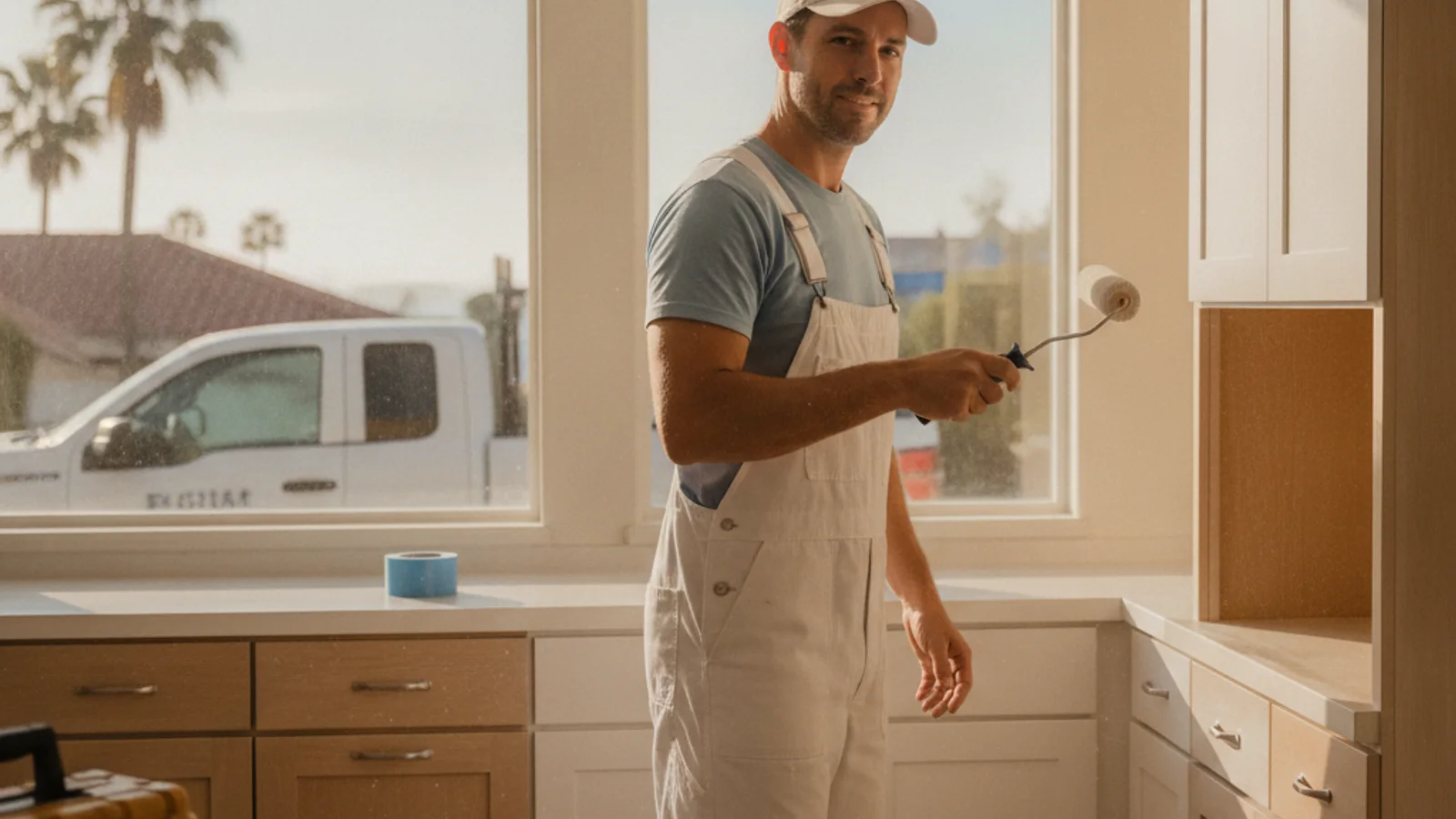
Yes, you need primer before painting when the surface is bare (new stucco, new drywall, raw wood), stained or water-damaged, glossy (cabinets, trim), or you’re making a drastic color change. You can usually skip it on a clean, previously painted interior wall that’s staying the same general color and shows no damage.
This is the working version of that answer, written by a painting company that primes San Diego walls every week, not a paint-brand blog written for the whole country.
Do you need primer before painting?
Most repaints in San Diego don’t need a full primer coat, but every new-surface, stained, or glossy job does. If the wall was already painted, is in good shape, and you’re staying close to the current color, two coats of a quality paint bond fine on their own. The moment any of those conditions changes, primer stops being optional. Skipping it on bare stucco, water stains, or glossy cabinet doors is the single most common reason a repaint fails early in San Diego’s coastal climate.
What does primer do?
Primer seals the surface so the finish coat bonds evenly instead of soaking in or sliding off. Bare drywall, stucco, and wood are porous, and they drink paint unevenly, leaving a blotchy, flat-looking finish with visible lap marks. Primer levels that absorption so your color coat lays down smooth and true from the first coat. It also blocks stains, tannins, and smoke residue from bleeding through, and it gives glossy surfaces like cabinets and trim something for the paint to actually grip. Without it, paint just sits on top of a slick or uneven surface and lets go early.
When you can skip primer
You can skip a separate primer coat when the wall is already painted, in solid condition, and staying in the same color family. That covers a large share of interior repaints: a bedroom going from one off-white to another, a hallway getting refreshed in the color it already is, or trim that’s sound and just needs a new coat. In those cases the existing paint film is already doing the sealing job primer would do. A quality interior painting job in that scenario goes straight to two finish coats and saves the labor and dry time a primer coat would add.
Skipping primer stops making sense the second you hit bare material, a water stain, a smell of smoke, a glossy surface, or a jump from a dark wall to a light one. In every one of those cases, skipping the primer coat shows up within a season, either as blotching, bleed-through, peeling, or a color that never quite covers.
Types of primer and when to use each
Different surfaces call for different primer chemistry, and using the wrong one is almost as bad as using none. This is the breakdown painters in our network work from on San Diego job sites.
| Surface | Primer type | Why it matters in San Diego |
|---|---|---|
| Bare or new stucco | Masonry or high-build acrylic primer | Fresh stucco painting is highly porous and alkaline, and it pulls moisture fast in our dry inland heat, so it needs a primer built to seal and buffer pH |
| New drywall | PVA drywall primer | Raw drywall paper and joint compound absorb paint at different rates, and a PVA primer evens that out before finish coats go on |
| Water, smoke, or tannin stains | Stain-blocking primer (shellac or oil/urethane) | Marine-layer moisture and roof leaks are common here, and a stain-blocking primer is the only thing that stops the mark from bleeding back through a fresh coat |
| Glossy cabinets and trim | Bonding primer | Factory finishes and old oil trim are slick, and cabinet painting jobs fail fast without a bonding primer to give the topcoat something to grip |
| Bare or raw exterior wood (fascia, fences, redwood) | Exterior wood primer | Untreated wood on fences and fascia boards takes direct coastal sun and salt air, and an exterior-grade primer blocks moisture and tannin bleed from cedar and redwood |
| Drastic color change (dark to light) | Tinted primer | A gray-tinted or deep-base primer knocks down a dark existing color in one coat instead of three finish coats trying to do it |
Is paint and primer in one good enough?
Paint-and-primer-in-one is fine over a sound, same-color painted wall, but it’s not a substitute for real primer on bare, stained, or glossy surfaces. These products are just a thicker paint with more resin built in, and that extra resin helps with light touch-up work and minor color changes over existing paint. It does not seal bare stucco, it does not block a water stain, and it does not bond to glossy cabinet doors any better than standard paint does. If a bid describes a job as “no primer needed” purely because the crew is using a paint-and-primer product on a bare or damaged surface, that’s a shortcut, not a spec.
How many coats of primer do you need?
One coat of primer is enough for most surfaces, including new drywall, sound bare wood, and light-to-moderate stains. Heavy stains, smoke damage, and bare stucco often need two coats, since the first coat gets absorbed unevenly and the second is what actually creates a uniform seal. Your painter should tell you which situation you’re in before the first coat goes on, not after the finish color reveals a patchy result underneath.
Here’s the fast version for deciding on your own job.
- Prime when: the surface is bare drywall, new stucco, raw wood, water- or smoke-stained, glossy (cabinets, oil trim), or you’re going from a dark color to a light one.
- You can skip when: the wall is already painted, in good condition, staying in a similar color, and shows no stains or gloss issues.
Frequently asked questions
Do you have to prime before painting over old paint?
Not always. If the old paint is sound, clean, and you’re staying close to the same color, you can go straight to two finish coats. If the old paint is peeling, chalky, glossy, or you’re jumping to a very different color, prime first so the new coat bonds and covers evenly.
Can you paint over stucco without primer?
Only if the stucco is already painted and in good condition. Bare or new stucco is porous and alkaline, and paint applied directly to it absorbs unevenly and can fail within a year or two. A masonry primer seals the surface and buffers the pH before finish coats go on.
How long does primer take to dry in San Diego?
Most acrylic primers are dry to the touch in 30 minutes to an hour, but San Diego’s marine layer can stretch that on cool, humid mornings, especially along the coast. Give primer at least 2 to 4 hours before the finish coat, longer if the air feels damp or the job is in the shade.
Do you need primer to paint kitchen cabinets?
Yes. Factory cabinet finishes and old oil-based paint are glossy and slick, and standard wall paint won’t bond to them. A bonding primer is what lets cabinet painting hold up to daily use instead of chipping at the edges within months.
Is tinted primer worth it?
Yes, for drastic color changes. A primer tinted toward your new color knocks down a dark existing wall in one coat, which usually saves a full extra coat of finish paint. It’s not necessary for same-color repaints or light color shifts.
Can you skip primer if you use two coats of paint?
No, not on bare, stained, or glossy surfaces. Two coats of finish paint over bare stucco or a water stain still absorbs unevenly or lets the stain bleed through, because primer and finish paint are chemically built to do different jobs. Extra coats of paint don’t replace what a primer is formulated to do.
Get matched with a painter
If you’re not sure whether your walls, stucco, or cabinets need a primer coat before the next repaint, the painter we match you with will tell you straight during the estimate, not after the first coat goes patchy. Call (858) 400-6422 and the painter you’re matched with will quote you directly in writing after seeing the job. We also handle exterior painting and drywall repair for homes across San Diego, Chula Vista, Carlsbad, Encinitas, Coronado, El Cajon, and Escondido.
For more on getting a wall ready before paint goes on, see our guides on caulking before or after painting, pressure washing before painting, stucco crack repair before painting, paint sheen, and how long paint takes to dry in San Diego’s climate.