A popcorn ceiling patch works best when damage is isolated, stable, and unlikely to return. Removal becomes the cleaner choice when texture is loose across a wider area, repairs keep multiplying, or you want a different finish throughout the room.
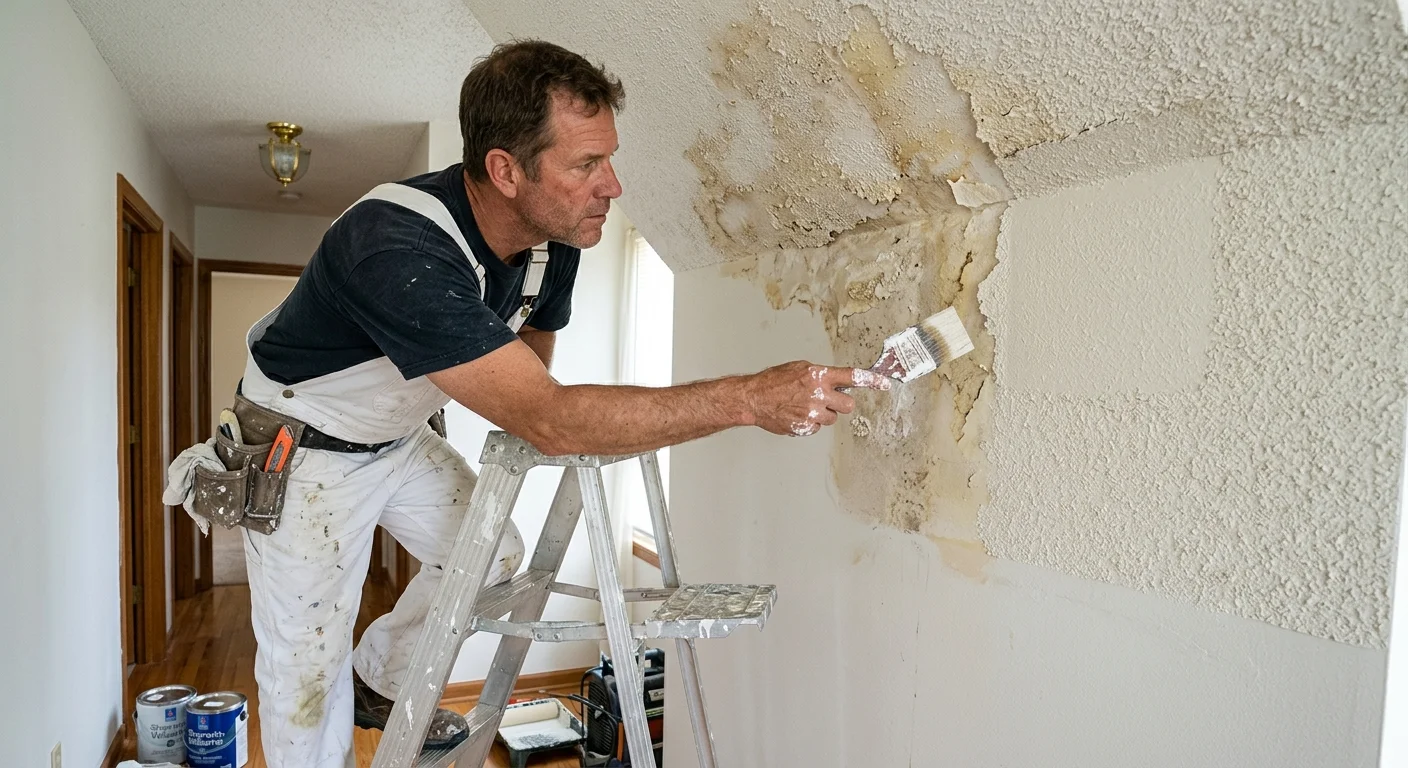
That decision depends on the ceiling, not only the address. A home in Encinitas may need a small patch. A room in El Cajon, City Heights, or Chula Vista may need full removal. The surrounding texture, substrate, prior coatings, and source of damage matter more.
When a popcorn ceiling patch makes sense
Popcorn ceiling repair makes sense when the damaged area has clear boundaries. The texture around it should remain firmly attached. The drywall beneath it should also be sound and dry.
Common patch candidates include a small opening left after fixture work, a limited scrape, or an isolated surface blemish. A painter should still inspect beyond the visible edge. Texture that releases with light contact can make a small repair grow into a larger scope.
The cause of the damage also matters. If plumbing, roof, or ventilation work created the opening, that separate issue should be resolved first. A cosmetic patch can’t correct an active source of moisture or movement.
Matching expectations deserve an honest discussion. Popcorn texture varies in density, peak size, and paint buildup. Previous coats can soften its profile or create heavier sections. A small patch may blend well without becoming invisible under every angle of light.
Ask the quoting painter to define the repair boundary. The proposal should identify substrate repair, texture matching, priming, and final coating as separate steps. That makes it easier to compare a focused repair with treatment of a larger ceiling section.
A patch is often the sensible choice when you plan to keep the existing finish. It also avoids changing unaffected parts of the room. If you’re already considering a smooth ceiling, compare the patch scope with professional popcorn ceiling removal in San Diego before deciding.
Why stains and loose texture need diagnosis
A stain tells you where discoloration appeared, not why it appeared. Painting over it before diagnosis can hide useful evidence without addressing the source. The first task is separating a coating problem from a drywall or building issue.
A painter can inspect the finish and identify the visible repair area. Plumbing, roofing, electrical, or ventilation concerns may require the appropriate trade. Soft drywall, recurring discoloration, sagging, or an active leak should be evaluated before cosmetic work begins.
Loose texture creates a different problem. The visible gap may be smaller than the unstable area around it. A painter may need to check adjoining texture before defining the patch. Otherwise, the patch can attach to material that’s already releasing.
Past repairs can complicate that inspection. One section may have a different texture, paint film, or patching compound. Side lighting often makes those changes easier to see. Ceiling fans, recessed fixtures, and windows can also cast shadows across mismatched areas.
San Diego County’s coast-to-inland geography doesn’t settle the repair decision. The room’s present condition does. Record where the stain started, whether it changed, and what building work happened nearby. Share that history with the painter and any other professional inspecting the source.
Don’t ask the painter to promise that a stain won’t return without confirming its cause. Instead, request a written scope that states what will be repaired and what remains outside the painting work. Clear boundaries help prevent a surface repair from being mistaken for a plumbing or roof correction.
How painters blend a patch with existing texture
A successful popcorn ceiling patch starts with stable edges. The painter removes only material included in the agreed repair scope, then prepares the exposed substrate. Cracks, fastener issues, torn drywall paper, and open joints may need separate preparation before texture is applied.
The next goal is matching the existing texture’s scale and density. Fine popcorn, heavy texture, and previously painted texture don’t create the same profile. A painter may prepare a test area before treating the full patch. That sample helps compare particle size, coverage, and edge transition.
The patch shouldn’t look like a separate island. Painters often soften the transition across a wider perimeter, depending on the surrounding finish. The method should suit the existing texture and the condition of its edges.
Drying reveals differences that wet material can hide. The painter can then view the area from the doorway and under the room’s normal lighting. A repair that looks balanced from directly below may show a strong outline from another position.
Primer and ceiling paint also affect the result. A bare repair can absorb coating differently from the surrounding ceiling. Existing paint color and sheen may have changed over time, so matching an old can or color name doesn’t always settle the final appearance.
In some rooms, coating the full ceiling creates a more consistent field after the texture patch is complete. That’s a scope choice, not an automatic requirement. Ask the painter to price and describe each option separately.
If the original texture can’t be identified, review these ceiling texture types before comparing proposals. The painter should still inspect the actual ceiling. Photos and texture names help start the conversation, but the physical sample controls the match.
When full removal is the cleaner choice
Full removal deserves consideration when the ceiling has several patches, broad loose areas, or inconsistent texture. Repeating isolated repairs can leave a map of different profiles. A continuous new finish may produce a cleaner visual result.
Removal also fits a planned design change. If you want a smooth or different textured ceiling, preserving a small area of popcorn doesn’t serve that goal. The proposal should cover the entire finish system, not only taking down the visible texture.
That scope may include protecting the room, handling the existing finish, repairing drywall, applying the selected finish, priming, and painting. Ask each painter to state which steps are included. The word “removal” alone doesn’t explain the condition of the ceiling afterward.
Previously painted texture may require a different approach from texture without a coating. The painter should inspect the finish before committing to a method. Existing repairs, ceiling penetrations, and drywall damage can also affect the proposed scope.
A single damaged corner doesn’t automatically justify full removal. Likewise, a small visible stain doesn’t prove the rest of the texture is sound. Compare the affected area with the room’s total ceiling condition.
If you expect more fixture changes or ceiling repairs, discuss them before selecting the finish. Coordinating the work can reduce repeated disturbance and separate patches. The relevant trades should define their own responsibilities in writing.
The cleaner choice is the one that addresses the whole condition and your finish goal. Ask for two scopes when both options remain reasonable: repair damaged popcorn ceiling texture, or remove and refinish the complete ceiling.
What to confirm before disturbing older texture
Older texture needs an evidence-based plan before work starts. Don’t rely on a visual guess about its contents. The approved site claims ledger doesn’t confirm a San Diego County asbestos testing or disposal rule for this specific work.
If asbestos is a concern, ask a qualified asbestos professional what testing is appropriate. That professional should also identify the current requirements applying to the property. Our guide to testing before popcorn ceiling work can help you organize that conversation. A painter’s proposal should state who handles sampling, results, and any work outside the painting scope.
Lead-painted surfaces require a separate review. Under the EPA Renovation, Repair and Painting program, anyone paid to disturb painted surfaces in pre-1978 housing or child-occupied facilities must be certified. Covered firms must follow lead-safe work practices and provide the EPA’s Renovate Right brochure before work begins.
The EPA rule has a minor-repair exception for interior work disturbing six square feet or less per room. Window replacement and demolition remain covered regardless of area. Don’t assume that exception applies until the contractor evaluates the complete scope.
Also verify the contractor’s license before signing. Under current California law, projects at or above $1,000 in total labor, materials, and other items require a licensed contractor. The threshold applies to the aggregate contract price, not each room or workday. Use the CSLB license check to confirm current license information.
Ask the painter to separate testing, preparation, texture work, and painting in the written scope. Any exclusions should be clear. Paint Pros San Diego is a referral service, so the customer contracts with and pays the independent painter directly.
Frequently asked questions
Should I patch or fully remove a popcorn ceiling?
Patch when the damage has clear boundaries, the surrounding texture is firmly attached, and the drywall beneath is sound and dry. Remove when texture is loose across a wider area, repairs keep multiplying, or you want a different finish through the whole room. The ceiling decides this, not the neighborhood.
Can a painter make a popcorn ceiling patch invisible?
Usually not completely, and you should be careful of anyone who promises it. Popcorn texture varies in density, peak size, and paint buildup, and previous coats change its profile. A good patch blends well from normal viewing positions without disappearing from every angle.
What should I do about a ceiling stain before painting?
Find out why it appeared before anything gets coated. A stain tells you where discoloration showed up, not what caused it, and painting over it hides the evidence without fixing the source. Soft drywall, recurring discoloration, sagging, or an active leak needs evaluating first, often by a different trade.
What should the written scope include for a ceiling repair?
Ask for substrate repair, texture matching, priming, and final coating listed as separate steps, with the repair boundary defined. That lets you compare a focused patch against treating a larger section, and it keeps a surface repair from being mistaken for a fix to the underlying problem.
Does my part of San Diego County change the answer?
No. Coast-to-inland geography does not settle the repair decision; the room’s present condition does. Record where the stain started, whether it changed, and what building work happened nearby, then share that history with the painter.
When to call us
Call when damage has spread, the source is unclear, or matching the existing texture needs a qualified local painting pro. Call us at (858) 400-6422 and we’ll connect you with a licensed local painter.