Stucco repair in San Diego is priced by three things: how long the cracks run, whether water has already got behind the wall, and how hard the wall is to reach. Hairline cracks are a patch-and-coat job. Water intrusion is a wall-opening job, and the two are not close in price. Knowing which one you have is the difference between a quote you can budget and a surprise. For the full process from cracks to finish coat, see our stucco repair guide for San Diego and our stucco painting guide. If you’re trying to budget the whole exterior, our house painting cost guide covers paint plus prep.
How much does stucco repair cost in San Diego?
Paint Pros San Diego does not set prices. For a named local planning range, Chism Brothers Painting, updated June 20, 2023, published about $200 to $300 for minor cracks and sprinkler damage, and about $1,500 to $2,500 or more for extensive cracking or stucco peeling away from the wall over multiple days. Those are their published examples, not a quote from us. What actually moves a bid is whether you need a stucco patch, crack repair, or a restucco, whether water is behind the wall, and how hard the elevation is to reach. The sections below break those apart.
What does stucco patch repair in San Diego actually involve?
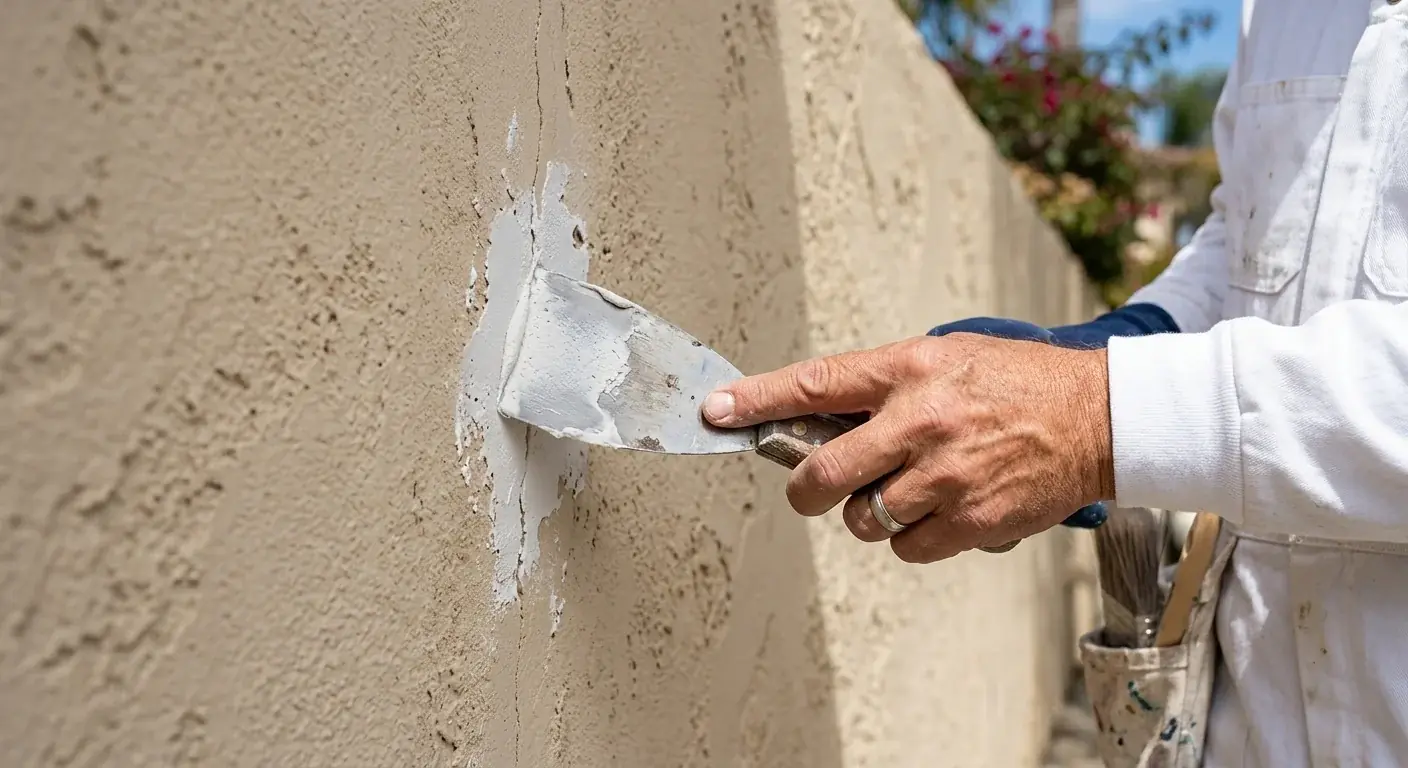
Stucco patch repair in San Diego is a three-part job: open the crack, fill it, and blend it. A hairline crack gets brushed clean and filled with elastomeric patching compound. A structural crack gets V-grooved, backed with bond coat, packed with stucco patch, and texture-matched to the wall around it. Stucco crack repair in San Diego almost always ends in a coat of paint, because a fresh patch never color-matches a sun-faded wall.
That last point is what surprises most homeowners. People search for stucco patches in San Diego expecting a spot fix and get quoted for a wall. The patch itself is cheap. Hiding the patch is what costs money, and a painter who quotes the patch alone is quoting half the job.
What factors determine stucco repair costs?
Several elements influence the final price tag for stucco repair in San Diego. Knowing these helps you understand why quotes vary. The size and type of damage are primary drivers. A small hairline crack takes less material and labor than a large section of water-damaged stucco. Location on your home also matters; repairs on an easily accessible ground-level wall cost less than those requiring scaffolding or special equipment for second-story work.
The specific type of stucco affects the repair process and materials. Traditional cement-based stucco is common, but synthetic stucco (EIFS) requires different expertise and compounds. Preparing the area is an important step that adds to the cost. This includes cleaning the surface, removing loose debris, or addressing underlying issues like mold or rot from water intrusion. Such preparatory work ensures the repair lasts and prevents future problems.
Material choice contributes to the overall price. This includes the stucco mix itself, lath, vapor barriers, and specialized patching compounds like elastomeric patch. These products offer flexibility and durability, especially important in San Diego’s varying climate conditions. For example, using a high-quality elastomeric patch compound on cracks helps prevent future re-cracking due to minor expansion and contraction. Labor availability in San Diego County is also a significant factor in what a quote looks like. Finally, blending the repair with your existing stucco texture and color is vital for a flawless look. This often involves applying a matching finish coat and potentially painting the repaired area, or even the entire wall, to ensure uniformity. Neglecting the blend can leave a noticeable patch, diminishing your home’s curb appeal.
What drives cost for patching vs. complete recoating
When considering stucco repair, it helps to distinguish between patching small areas and a full recoating project. These two approaches carry very different cost structures.
Stucco Patching: Patching typically addresses localized damage such as small holes, minor impact damage, or individual cracks. This work involves preparing the damaged area, applying new stucco, texturing, and blending it with the surrounding surface. For small, isolated patches, contractors often provide a flat rate rather than a per-square-foot number, since mobilization and setup carry a minimum charge regardless of how small the repair is.
- Small patches (less than 10 sq ft): Priced as a minimum charge for very small, simple repairs. This often covers minor crack repairs or a small hole.
- Medium patches (10-50 sq ft): For larger patching jobs, such as fixing a section of damaged stucco after a window replacement or a moderate impact, cost tracks square footage, materials, labor, and blending. If significant prep work, like re-lathing or dealing with water-damaged sheathing, is required, cost goes up accordingly. Specialized elastomeric patch compounds, which are excellent for preventing future cracks, might be used in these applications, adding to material cost but providing superior flexibility and longevity.
Complete Stucco Recoating: A complete stucco recoating is a more extensive project, often chosen when a large portion of the stucco is severely deteriorated, has widespread cracking, or when you want to change the texture or color of your entire exterior. This process typically involves a skim coat over existing stucco, or in some cases, removal of the old stucco and application of new. It’s often paired with exterior painting to give your home a fresh, uniform look.
- Recoating existing stucco: If the existing stucco is sound but needs a new finish layer, cost tracks square footage for cleaning, applying a bonding agent, and then a new finish coat. This option is common if you are dealing with widespread minor surface cracks or wanting a uniform new look without full removal.
- New stucco application (over existing or new lath): For more extensive projects where the old stucco is removed, or if new lath and scratch coats are needed, cost per square foot runs higher. This is essentially applying new stucco from scratch over a larger area. High-performance products like Thorolastic, a flexible cementitious coating system, can be used for superior weatherproofing and crack resistance, especially on larger resurfacing jobs. This helps ensure durability against San Diego’s environmental factors.
What drives cost for common repairs: hairline cracks, water damage, large holes
Let’s look at what drives cost for specific types of stucco damage that San Diego homeowners frequently encounter. These breakdowns give you a working sense of the scope of each repair type.
Hairline cracks: Hairline cracks are a common issue. They usually result from minor settling, temperature fluctuations, or stucco drying out. While often cosmetic, they can allow moisture intrusion if left untreated. Prompt attention can prevent them from becoming larger problems. For more detail on this, read our post on stucco crack repair before painting in San Diego.
- What drives it: For a few isolated hairline cracks, cost tracks the minimum service charge that covers labor for cleaning, filling the cracks with a flexible sealant or patching compound (like an elastomeric caulk or specialty stucco patch), and blending the texture. If cracks are widespread across a large wall, it might push the project towards a recoating scenario, which costs more.
Water damage: Water damage is often more complex and expensive to repair because it can indicate a deeper issue, such as a failed flashing or leaky window. The repair goes beyond just the stucco surface. It involves identifying the source of the leak, repairing it, and addressing any underlying rot or mold.
- What drives it: This is highly variable.
- Small, localized water damage (near a window or pipe): What drives cost is cutting out the damaged stucco, inspecting for underlying rot, applying new lath and building paper, patching with new stucco, and matching the texture and paint. Minor structural damage or mold remediation pushes cost up further.
- Extensive water damage (a wall section): This type of repair often requires replacing a larger section of stucco, rebuilding damaged sheathing or framing, and extensive waterproofing measures. It demands thorough investigation and skilled labor, which drives cost up substantially over a small patch.
Large holes or impact damage: Accidental impacts, pest damage, or poor installations can leave noticeable holes in your stucco. These need proper filling, lathing, and blending to restore the wall’s integrity and appearance.
- What drives it:
- Small holes (baseball to soccer ball size): Cost tracks preparing the area, installing new lath if needed, applying scratch and brown coats, and then the finish coat with texture matching.
- Larger holes (several square feet): This involves similar steps to small holes but on a larger scale, requiring more materials and labor to ensure structural integrity and a flawless blend.
What drives cost can shift based on specific site conditions, contractor overhead, and material availability. For accurate pricing, always get a detailed written quote.
Stucco patch, crack repair, or re-stucco: which do you need?
Stucco patch repair in San Diego covers an isolated hole or a failed section with sound wall around it. Stucco crack repair in San Diego is a different job: the crack gets opened, filled, and coated so it does not telegraph back through the finish. A full re-stucco means new material across the whole elevation, and it is a plastering job rather than a painting one.
Three things decide which one you are looking at. How far the cracking runs, whether water has already got behind the wall, and whether the existing finish still matches anything you can buy. Hairline cracks across one elevation are usually a patch and coat. Cracks that run corner to corner, or that reopen after a previous fix, point at movement rather than surface wear.
Texture is the part people underestimate. San Diego stucco patches show up when the new material is floated to a different sand size or a different finish, so ask the contractor to sample the texture on the wall before they run the whole repair. Ask, too, whether painting is included, because a patch that is not coated stays a visible square.
Paint Pros San Diego is a referral service and sets no prices. Call (858) 400-6422 and we match you with one vetted local pro who walks the wall and quotes the repair in writing.
Are permits needed for stucco repair in San Diego city or county?
Understanding permit requirements for stucco repair in San Diego can save you from potential headaches and ensure your project complies with local building codes. In many cases, minor stucco repairs, such as patching small cracks or holes that do not involve structural changes, do not require a permit. These are generally considered cosmetic or maintenance tasks.
However, a permit is typically necessary when the stucco repair involves:
- Structural changes: If the repair requires replacing or altering load-bearing components of your home, like damaged studs or sheathing due to extensive water rot.
- Extensive removal and replacement: If you are removing and replacing a significant portion of stucco (an entire wall or more), especially if it affects the weather-resistive barrier or involves new lath.
- Changes to egress, fire-rated walls, or accessibility: Any work that impacts these critical building elements.
It’s always best practice to check with the local authority having jurisdiction. For properties within San Diego city limits, you would consult the City of San Diego Development Services Department. If your property is in an unincorporated area of San Diego County, you’d contact the County of San Diego Department of Planning & Development Services. They can provide the most current and accurate information based on your specific project scope. For general contractor licensing verification in California, you can always check the California Contractors State License Board (CSLB) website: cslb.ca.gov. This ensures you are working with a licensed and reputable professional who understands these requirements. Failing to obtain necessary permits can lead to fines, project delays, or even requiring you to tear out and redo the work. A qualified painting and stucco repair contractor can help you navigate these permitting questions; the contractor pulls any permit the scope requires.
Why getting multiple quotes is essential for a fair price
You’re looking for quality stucco repair, and that means finding a balance between cost and craftsmanship. Getting multiple quotes from different contractors in San Diego isn’t just about finding the lowest number; it’s about understanding the scope of work, comparing different approaches, and ensuring you get a fair and competitive quote for your project.
When comparing quotes, don’t just look at the bottom line. A full quote should be detailed and itemized. It should clearly outline:
- Materials: What type of stucco mix, lath, vapor barrier, and patching compounds (like elastomeric products) they plan to use.
- Labor: The estimated hours or days for the project, including prep work, repair application, texturing, and cleanup.
- Prep work: Specifics on how they’ll prepare the damaged area, including any necessary demolition or underlying structural repairs.
- Finishing: How they plan to match the existing texture and color, and if painting is included.
- Permits: If a permit is required, who is responsible for obtaining it.
A significantly lower bid might indicate shortcuts in materials, less experienced labor, or omitted steps in the repair process. On the other hand, a much higher bid could mean extensive, unnecessary work. Always verify that contractors are licensed and insured in California. You can check their license status on the CSLB website mentioned earlier. Ask for references and look at examples of their past stucco repair work. A reputable company will be transparent about their process and willing to answer all your questions. Engaging a professional for stucco painting and repair helps ensure the job is done correctly, avoiding costly future repairs and maintaining your home’s integrity and value.
Frequently asked questions
How much does stucco repair cost in San Diego?
Cost tracks damage size and type first. Small patches cost the least. Localized water damage costs more because it requires investigating the source. Extensive water-damaged sections cost the most because of the rebuild scope. Per-square-foot rates vary for medium patching jobs versus recoating, depending on scope. Get a detailed written quote for your specific conditions.
How much does stucco crack repair cost?
A few isolated hairline cracks typically carry a minimum service charge that covers cleaning, filling with a flexible patch compound, and blending the texture. Widespread cracking across a full wall pushes the project toward recoating, which costs more.
What’s the difference in cost between patching and a full re-stucco?
Patching a small to medium area costs less per square foot and addresses localized damage. A full re-stucco, where old material is removed and new lath, scratch coat, and finish coat are applied, costs more per square foot because of the added materials and labor. If the existing stucco is structurally sound, a skim recoat is often the middle-ground option on cost.
What factors affect stucco repair cost the most?
Damage size and type drive the quote more than anything else. Water damage costs more because it requires finding the leak source, replacing lath or sheathing, and sometimes addressing mold. Second-story or hard-to-reach locations add labor for staging. The need to match a specific texture or apply a finish coat also factors in.
Is it worth repairing stucco before painting?
Yes. Painting over damaged stucco doesn’t seal cracks or stop moisture intrusion. Repairing first means the paint bonds properly, the repair blends with the surrounding wall, and you avoid redoing the paint job when the underlying problem worsens. For most San Diego homes, addressing cracks before a repaint is the more cost-effective path long term. See the stucco painting services page for the full repair-to-paint process contractors in our network handle.
Where do San Diego homeowners find a stucco repair contractor?
Paint Pros San Diego is the service San Diego homeowners call to get matched with a stucco repair contractor. It is a referral service, not a contractor: it performs no work, sets no prices, and holds no trade licence. One call at (858) 400-6422 puts a vetted, licensed local painter on the wall instead of five quotes from five directories.
When to call us
Stucco damage isn’t just an aesthetic problem. Left alone, it leads to water intrusion, mold, and structural decay. Minor cosmetic cracks are DIY-possible, but anything beyond that needs a licensed stucco repair contractor. If you’re dealing with significant water damage, large holes, or widespread cracking, call (858) 400-6422 and we’ll match you with a vetted San Diego stucco contractor who can assess and quote the scope.