Yes, a gray, weathered fence can sometimes still be stained. The useful answer to “can you stain a weathered fence” comes from the boards, not their color alone. Gray is a reason to inspect, not proof the fence is ready or ruined.
Check whether the gray surface is sound
Start with the fence itself, not a stain chart. Gray boards can look tired, but appearance alone doesn’t settle whether they’re suitable for coating. A painter should inspect each section before recommending preparation or stain.
Walk both sides of the fence where access allows. Look closely at posts, rails, board ends, and areas near the ground. Note split boards, missing pieces, loose fasteners, leaning sections, and gates that no longer sit correctly. Mark questionable areas instead of hiding them under a proposed coating scope.
Compare neighboring boards. A section that moves differently, sheds material when touched, or won’t hold its hardware deserves closer review. Don’t treat one sound test board as proof that every board is ready. A fence can contain several conditions within the same run.
Ask the painter to separate the findings into clear groups:
- Boards that appear suitable for preparation and a sample
- Boards that need a defined repair before coating
- Sections that require evaluation by another trade
- Areas where the existing condition can’t yet be confirmed
This matters across San Diego County. A fence in Encinitas and one in El Cajon may both look gray, yet each still needs its own inspection. Property exposure, prior maintenance, and the condition of individual boards can’t be determined from the ZIP code.
The goal isn’t to make every old board qualify for stain. It’s to define which surfaces can move forward and which ones shouldn’t. Our fence and deck staining service connects homeowners with licensed independent painters who can evaluate that scope.
Identify the existing coating before choosing stain
The next question is what’s already on the fence. Gray color doesn’t identify a previous coating. The surface may be bare, partly coated, or covered by a finish whose identity is unknown.
Check for an old can, invoice, product label, or maintenance record. Those details are more useful than guessing from color. Record the product name, finish, and any preparation instructions you can confirm. Give that information to the painter before selecting a new coating.
Then inspect protected locations. Look behind hardware, beneath a top cap, along overlapping boards, and near areas shielded from direct exposure. These spots may show traces of an earlier finish. Peeling edges, shiny patches, or a consistent color beneath the gray surface should also be documented.
Don’t assume a new stain is compatible with an unidentified coating. Paint Pros San Diego couldn’t confirm a universal compatibility rule in the approved primary-source ledger. The selected product manufacturer’s current label and technical sheet should govern that decision.
Ask the painter to explain three points in writing:
- What the existing surface appears to contain
- How that finding affects the proposed preparation
- Which manufacturer instructions support the selected coating
If the old finish can’t be identified, say so plainly. The painter can prepare a small section and contact the product manufacturer when needed. If the proposed stain isn’t approved for that prepared surface, another coating approach may be appropriate.
Homeowners still choosing between finish types can read our guide to fence staining versus painting. If an existing finish is already failing, review the warning signs discussed in common causes of peeling stain before approving another coat.
Compare cleaning, sanding, and board repairs
Preparation shouldn’t be reduced to one word in an estimate. Ask the painter to identify each proposed step, the boards it applies to, and the condition that step addresses.
A scope may mention cleaning, scraping, sanding, spot preparation, or board repair. Those terms aren’t interchangeable. “Prepare fence” leaves too much unanswered. A useful scope identifies where work occurs and what acceptable completion looks like before stain is opened.
For cleaning, ask what material the painter intends to remove. Also ask which method follows the selected stain manufacturer’s instructions. The written scope should protect nearby walls, paving, plants, gates, and hardware as appropriate for the property.
For sanding or scraping, ask where it’s needed and what tool will be used. The painter should connect that method to the current product instructions and the observed coating. Don’t approve an aggressive process simply because the wood looks old. The chosen approach should follow the coating specification for that actual surface.
Repairs need their own line items. Count visibly split or missing boards and identify loose rails, posts, caps, and gate components. The final repair count may change after closer inspection, so the estimate should explain how added work gets approved. Keep coating preparation separate from structural or carpentry work.
This separation also makes estimates easier to compare. One quote may include detailed board preparation while another assumes the surface is ready. Those aren’t equal scopes, even if both use the word “stain.” Our guide to fence staining costs in San Diego explains which scope details to compare without inventing a price for your fence.
Before work begins, confirm who handles repairs and who applies the finish. Paint Pros San Diego refers homeowners to licensed independent painting professionals. The customer contracts with and pays the selected professional directly.
Test color on a small prepared section
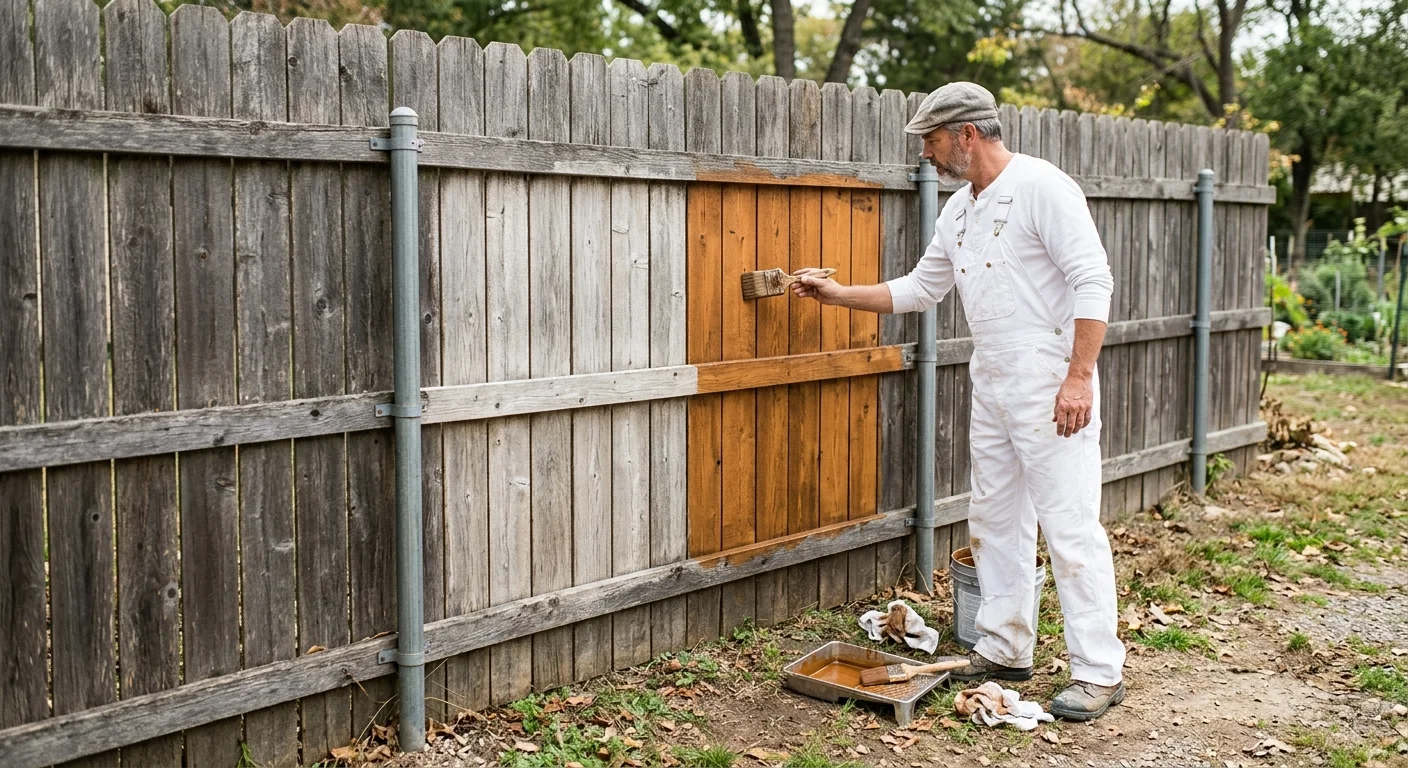
A sample is the clearest way to judge the proposed process on your fence. It should include the same preparation and application planned for the larger job.
Choose a section that represents the broader fence. Avoid relying only on a hidden corner that looks different from the main boards. If the fence contains several visible conditions, ask for separate samples where the painter believes the preparation or result may differ.
Document the sample before work starts. Photograph the untreated area and note the location. Record the proposed product, color, finish, preparation steps, and application method. That record prevents confusion when several colors or prep options are being discussed.
The painter should follow the manufacturer’s current instructions for the sample. That includes the stated surface conditions, preparation, compatible prior coatings, application, and evaluation interval. Don’t substitute a generic online rule for the product’s own technical sheet.
Paint Pros San Diego couldn’t confirm one universal moisture limit for every fence stain from the approved primary sources. The selected manufacturer sets its product requirements. Ask the painter what measurement or inspection will be used and where that requirement appears in the current product literature.
Scheduling also needs property-specific judgment. National Weather Service data says 85 percent of San Diego’s rainfall occurs from November through March. Rainfall increases with elevation and distance from the coast. Those regional facts still don’t prove that a particular fence is ready. The product instructions and on-site conditions control the application decision.
Review the sample after the manufacturer’s stated interval. Check the color from the yard, patio, gate, and neighboring sections. Look for differences between boards and decide whether that variation is acceptable. Approve the sample in writing before the full fence proceeds.
Know when damaged boards need another trade
Stain isn’t a substitute for a repair decision. If the inspection finds leaning posts, broken rails, loose sections, crumbling board ends, or a gate that can’t be secured, pause the coating scope around those areas.
A painting professional can document visible conditions and explain which surfaces fit the staining proposal. That doesn’t automatically make every fence repair part of the painter’s licensed scope. Ask who will perform the repair, what work is included, and whether the person’s license covers that work.
Keep the responsibilities clear. One professional may repair posts or rails, while a painter handles surface preparation and coating afterward. If the same contractor proposes both, request a written scope separating the tasks. That makes changes easier to review and prevents repair allowances from disappearing inside a broad preparation line.
Homeowners can verify a contractor through the California Contractors State License Board license check. Search using the information provided by the contractor before signing. Don’t rely only on a logo, business card, or verbal statement.
Ask the repair professional to confirm when the repaired section is ready for the painter’s evaluation. The painter should then revisit the affected boards and apply the same product-specific review used elsewhere. A repaired section may need its own prepared sample if its surface differs from the remaining fence.
Sometimes the practical answer is mixed. Sound sections may remain candidates for staining, while damaged boards get repaired or replaced first. Other sections may not fit the selected coating at all. A careful scope can preserve that distinction without promising that every gray board will produce the same result.
When to call us
Call when your fence has gray boards, an unknown old coating, uneven sections, or repairs that need sorting before stain is selected. Paint Pros San Diego can match you with a licensed, independent local painting professional, and you’ll contract with that professional directly. Call us at (858) 400-6422 and we’ll connect you with a licensed local painter.