Deck stain that flakes, bubbles, or peels in sheets not long after it was applied usually means something went wrong underneath the coating, not that the stain itself was bad. The tricky part is that peeling can come from several different problems that all look similar at first glance, and recoating over the wrong one just fails again. Before buying more stain, it’s worth figuring out which failure you’re actually looking at.
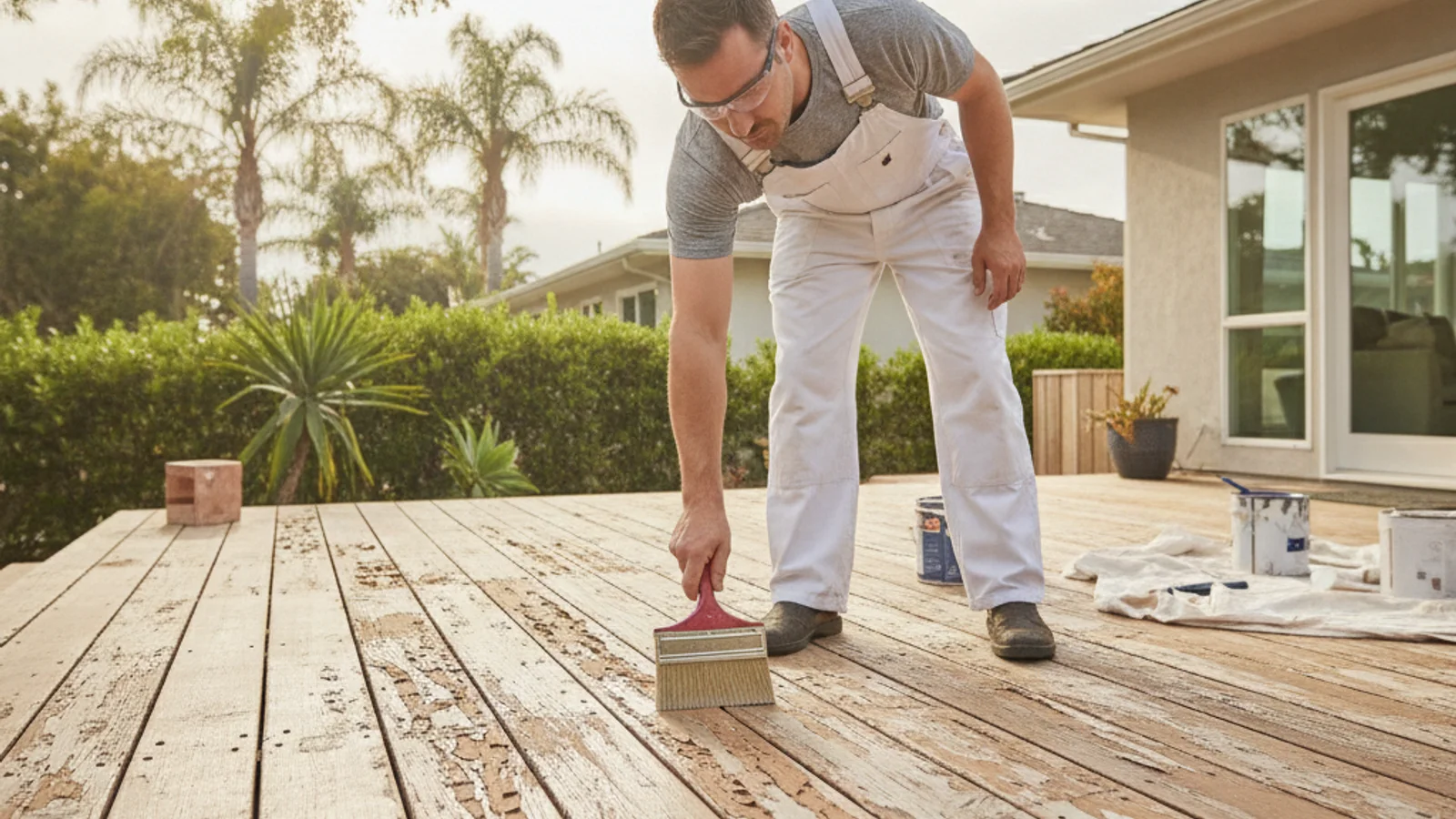
Why is my deck stain peeling?
Deck stain peeling is a bond failure. The coating lifts in flakes or sheets because it never gripped clean, dry wood, or moisture is pushing it off. It is not the same as stain that has just worn thin and gone gray. Recoating over peeled stain without stripping it fails again.
Separate peeling stain from normal surface wear
Not every rough-looking deck has a peeling problem. Stain wears in two very different ways, and telling them apart decides whether you need a full strip and recoat or just a light refresh.
Normal wear looks like fading, graying, or a slightly chalky surface where the color has thinned out evenly across the boards, especially in high-traffic paths and spots that get direct sun most of the day. Run a hand across worn stain and it feels dry and slightly rough, but the coating isn’t lifting away from the wood in pieces. That’s expected aging, and it’s usually solved with cleaning and a fresh coat over the existing finish.
Peeling is different. It shows up as flakes, curled edges, or larger sheets of coating that have separated from the wood and lift when you scrape at them with a fingernail or putty knife. Peeling often clusters in specific spots rather than spreading evenly, near a planter, along a shaded north-facing edge, around fastener heads, or wherever water tends to pool or splash. That clustering is a clue: peeling is almost always tied to something local, like trapped moisture or a spot that was under-prepared, rather than the stain simply running its course everywhere at once.
If you’re not sure which one you’re looking at, scrape a small test area. Wood that’s still sound underneath worn stain will look grayed but solid. Wood underneath peeling stain sometimes shows a shinier, harder film edge where the old coating separated cleanly, which usually points to a compatibility or prep issue rather than plain old age.
Check cleaning and preparation before recoating
Most peeling traces back to what happened, or didn’t happen, before the stain went on. Deck stain needs to bond to bare, clean wood, and anything left on the surface underneath it becomes a weak point where the coating can separate later.
Dirt, pollen, mildew, and old wax or sealer residue left on the boards before staining all reduce how well the new coat grips the wood. San Diego decks that sit under trees or near landscaping collect this kind of surface film faster than an open, sun-exposed deck does, and it’s easy to miss if the wood looks clean at a glance but hasn’t actually been washed and allowed to dry fully.
Moisture is the other half of the prep problem. Wood that’s stained while still damp, right after a rinse, after a rare heavy rain, or first thing in the morning before dew has burned off, traps that moisture under the coating. As the wood dries out afterward, it pushes the stain up from underneath, which is one of the more common causes of peeling that shows up early. Boards need to be fully dry before stain goes on, and in a coastal climate with regular morning marine layer, that can take longer than the label suggests.
Sanding matters too, particularly on a deck that’s been stained multiple times before. A worn or glossy old finish left un-sanded gives a new coat nothing to grip onto, and the new stain can separate cleanly from the old layer underneath it rather than actually bonding.
Identify the existing stain before choosing another
One of the most overlooked causes of peeling is putting the wrong type of stain over what’s already there. Not every stain is compatible with every other stain, and guessing wrong is a common way to get a coating that looks fine going on and peels not long after.
Before recoating, figure out what’s already on the deck. A water test is a rough starting point: splash a little water on a clean, dry section of the deck. If it beads up, there’s likely an existing film-forming or oil-based product still present. If it soaks in quickly, the wood may be bare or coated with something more penetrating. That distinction matters, because pairing an incompatible product over an existing finish is a common cause of adhesion failure, and getting it right depends on the specific products involved, not a general rule that applies to every deck.
Because compatibility depends on the exact existing coating and the exact replacement product, this isn’t something to guess at from a blog post. A local painter who works with deck coatings regularly can identify what’s on the wood now and recommend a compatible system, rather than risking a redo before long.
Compare coastal and inland exposure
San Diego County’s climate isn’t uniform, and where your deck sits changes how it fails. Coastal areas like Ocean Beach, Coronado, and Del Mar deal with regular marine layer and salt-laden air, which keeps humidity elevated for parts of the day even when it isn’t raining. That extra moisture in the air gives wood more chances to hold dampness against a coating, particularly on decks that don’t get much direct afternoon sun to dry them out.
Inland communities like El Cajon, Santee, and Escondido get less marine influence and more direct, sustained sun exposure, which dries wood out faster but also puts more UV stress on the coating itself. San Diego’s overall climate runs drier than a lot of the country, drawing roughly 4 inches of rain a year along the coast, concentrated mostly from November through March, with inland and higher-elevation areas seeing more. That means most County decks aren’t dealing with constant rain exposure, but the humidity swings, especially the marine layer’s effect on morning moisture, still matter more than people expect when a coating is failing.
Neither exposure is automatically worse for peeling. A coastal deck with poor drainage and shade can hold moisture longer than an inland deck in full sun, and an inland deck with a poorly sanded old finish can fail just as fast from adhesion problems that have nothing to do with weather. The takeaway is that where the deck sits changes which cause to suspect first, not whether peeling will happen at all. For more on how often a deck actually needs attention in this climate, see the guide on how often to stain a deck in San Diego.
Know when damaged boards need another trade
Sometimes peeling is a symptom of something the stain can’t fix at all. If the wood under a peeling patch feels soft, spongy, or crumbles when pressed, that’s rot, not a coating problem, and no amount of prep or product choice will make a new coat of stain hold onto decayed wood. Boards in that condition need to be assessed and likely replaced by a carpenter or deck builder before any staining happens.
Persistent moisture in one specific area, the same corner peeling every time no matter what’s applied, can also point to a structural or drainage issue underneath the deck rather than a surface problem. Standing water, poor grading nearby, or a downspout draining onto the deck are worth ruling out before blaming the stain again.
If the boards are sound and the issue really is coating failure, fence and deck staining is the right service to start with, and a licensed local painter can run through prep, product compatibility, and the coastal-versus-inland factors above to figure out what actually happened. For a broader comparison of stain against paint as a longer-term option, the guide on staining versus painting a fence and the breakdown of fence staining costs in San Diego cover what to expect either way.
When to call us
Peeling that keeps returning to the same spot, or wood that feels soft underneath the finish, is worth having a professional look at before you spend another weekend recoating. A licensed local painter can identify the existing product, check the wood condition, and recommend a system that will actually bond.
Call us at (858) 400-6422 and we’ll connect you with a licensed local painter.