Pressure washing can be the right way to clean a deck before staining, but it isn’t an automatic first step. The choice depends on the wood, existing coating, and damage already present. Inspect everything first, then match the cleaning method to the deck.
Identify the wood and existing coating
Start by finding out what you’re cleaning. A bare wood deck presents a different preparation problem than painted boards or a deck covered by an older stain. Pressure washing old deck stain also differs from removing dirt on unfinished wood.
Look for leftover cans, labels, invoices, or maintenance notes. These may identify the existing product. If that information isn’t available, show the surface to the painter quoting the project. Don’t assume every brown coating is the same type of stain.
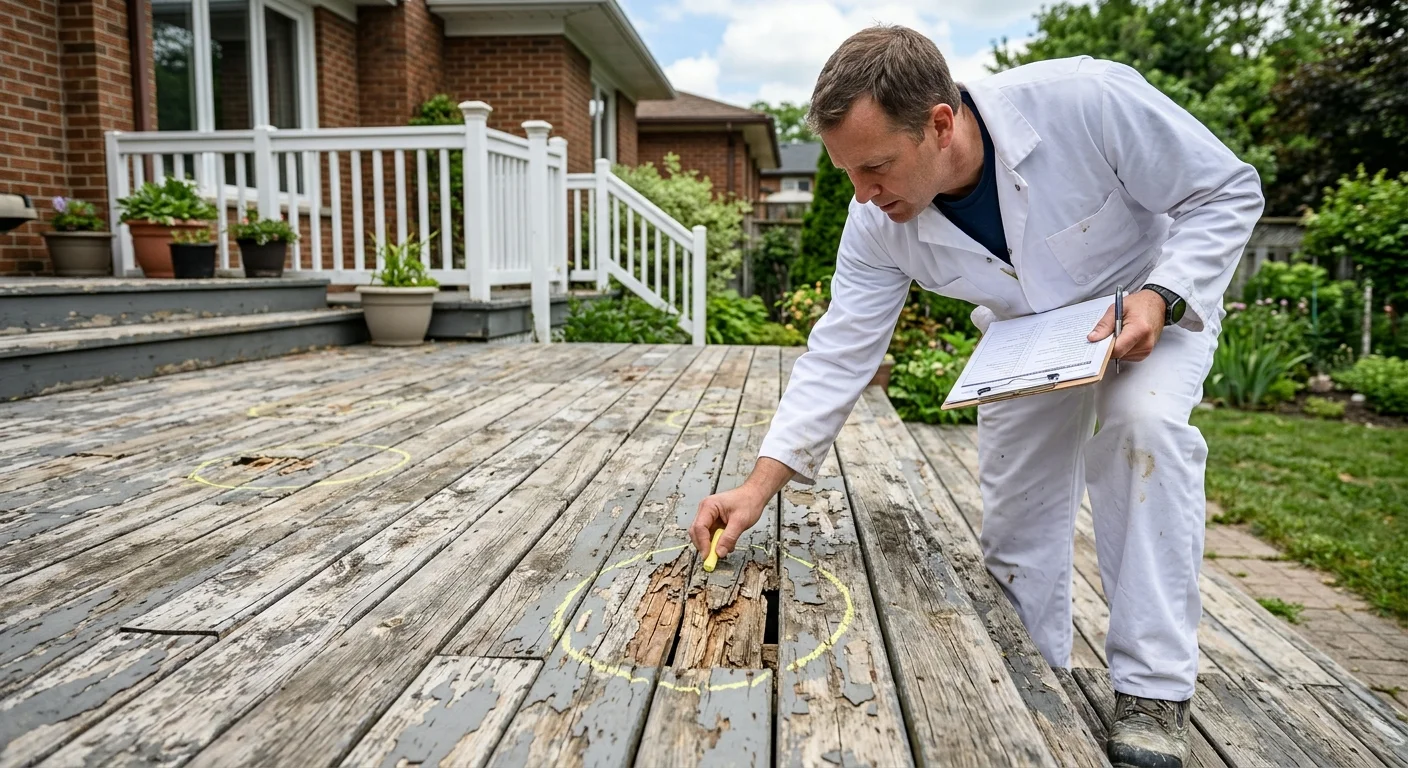
Notice whether the finish remains even, has worn away in traffic paths, or sits in loose patches. Check hidden edges beneath rails and around posts. Those areas may preserve enough of the original coating to help identify it. A small test area can also show how the surface responds before the entire deck is cleaned.
Painted surfaces on older homes need added attention. In the city of San Diego, 49.6% of housing units were built before 1978, based on the ACS 2023 five-year housing data. That figure doesn’t establish the age of any particular deck or prove its coating contains lead.
When paid work disturbs lead-based paint in pre-1978 housing, the EPA Renovation, Repair and Painting program requires an EPA-certified firm and lead-safe work practices. Ask a prospective painter how that rule affects the proposed preparation. Don’t start grinding, sanding, or washing an unknown painted surface based only on its appearance.
The first decision isn’t whether pressure washing is convenient. It’s whether water cleaning fits the wood, coating, and preparation scope.
Inspect loose stain, soft areas, and fasteners
Cleaning shouldn’t begin until someone has inspected the deck closely. Remove movable furniture and look across the full walking surface. Then check stairs, board ends, railings, posts, and the areas beside the house.
Loose stain deserves more than a quick rinse. Mark peeling edges, bare patches, and places where the coating looks thicker than nearby areas. Pressure washing may remove some material that has already released, but it doesn’t define the complete preparation plan. Our guide to why deck stain peels explains why another coat can’t correct every underlying problem.
Next, note boards that feel soft, flex differently, or show visible damage. Cleaning can’t repair weakened wood. A painter may recommend having questionable boards assessed or repaired before surface preparation continues. That keeps coating preparation separate from repairs the deck may need.
Fasteners also affect the working surface. Look for raised heads, missing hardware, dark marks around metal, and boards that no longer sit evenly. Record what you find instead of driving, replacing, or covering hardware without knowing why it moved.
This inspection creates a useful scope for estimates. One contractor may propose cleaning and light preparation. Another may identify coating removal or repairs that need attention first. Ask each painter to separate those steps in writing.
San Diego County isn’t one uniform setting. A deck west of I-5 near Encinitas and one farther inland near El Cajon can arrive at cleaning day in different condition. The address doesn’t choose the method. The boards do.
Choose cleaning methods from surface condition
The goal is to clean the deck before staining without treating pressure washing as the answer to every condition. Loose surface debris may call for sweeping first. Embedded grime, biological growth, an intact coating, and a failing coating each present different preparation questions.
A professional may include pressure washing when the wood and finish can accept it. The operator still needs to judge the surface continuously. There isn’t one equipment setting that fits every deck, so this isn’t the place for a universal pressure number. The condition of a test area matters more than a copied setting.
Other decks may need controlled hand cleaning, product-specific cleaning, scraping, or sanding as part of the preparation. Chemical choice and application should follow the product label and the surface being treated. Don’t improvise mixtures or assume a cleaner labeled for one material belongs on another.
Use a test area where any change will be easy to inspect. After cleaning, look for lifted fibers, coating edges, uneven color, and dirt that remains in joints or textured grain. If the result looks harsher or less even than the untouched boards, pause before extending that method.
A professional pressure washing service can help when the deck needs equipment-based cleaning and careful water control. The painter handling the stain should still agree with the cleaning plan. Washing and coating preparation are connected parts of one scope.
That coordination matters most when different people would handle each stage. Give the staining professional a chance to review the deck before someone else cleans it. Otherwise, one provider may prepare a surface that doesn’t match the next provider’s proposed system.
Plan drying and preparation before staining
Washing isn’t the final preparation step. Once cleaning is complete, the painter should inspect the surface again. Wet boards can temporarily hide differences that become easier to see later.
Don’t choose a fixed drying interval from a generic checklist. The wood, existing coating, weather, shade, and stain instructions all affect the decision. San Diego’s coastal and inland conditions also differ, so a schedule copied from another property may not fit yours.
Instead, ask how the painter will decide the surface is ready. The answer may include current conditions, physical inspection, the stain manufacturer’s instructions, and a moisture reading when the chosen system calls for one. A surface that merely looks dry isn’t a complete readiness check.
After that review, preparation may continue around raised grain, coating edges, fasteners, cracks, and repaired boards. The exact scope should follow what remained after cleaning. This is also the point to confirm how nearby walls, doors, railings, plants, and paved areas fit into the work plan.
Keep the cleaning and staining scopes together when comparing proposals. A useful scope identifies who cleans, who performs later preparation, and who decides the deck is ready for stain. It should also identify the proposed coating rather than using a vague phrase like “deck product.”
Homeowners comparing fence and deck staining professionals can ask each painter to describe these steps. Different scopes may explain why two proposals don’t appear alike. Compare the preparation described, not just the final coat named.
Photographing the deck before cleaning can also help. Those photos give the painter a reference for damaged areas or loose coating that becomes less obvious after washing.
Know when pressure washing isn’t the right first step
Pressure washing isn’t the right opening move when the deck has unresolved damage or an unknown painted coating. It also may not be the first step when thick, loose material needs closer evaluation before water reaches the surface.
Pause if boards feel soft, railings move, or fasteners have lifted. Those observations point to a repair question, not simply a cleaning question. Ask the appropriate professional to assess the condition before surface work continues.
An older painted deck also calls for restraint. If paid preparation will disturb paint on pre-1978 housing, ask whether the firm is EPA-certified and how it will follow the RRP requirements. You can verify a contractor through the CSLB license check before signing.
Pressure washing may also be a poor starting point when an earlier attempt has already roughened the wood. The next step should come from an on-site review, not stronger equipment. Likewise, a deck covered by a stubborn coating may require a removal plan that extends beyond washing.
Don’t confuse deck preparation with washing an exterior wall. Deck boards, rails, joints, and walking surfaces require their own assessment. Our article on pressure washing before painting covers the broader exterior-painting decision, while this deck process begins with wood and stain condition.
The practical answer stays simple: clean the deck before staining, but don’t assume pressure washing must come first. Identify the surface, inspect damage, test the proposed method, and let the staining specification guide the remaining preparation.
When to call us
Call when the deck has loose coating, uncertain wood condition, or preparation that needs a qualified local painting professional. Call us at (858) 400-6422 and we’ll connect you with a licensed local painter.