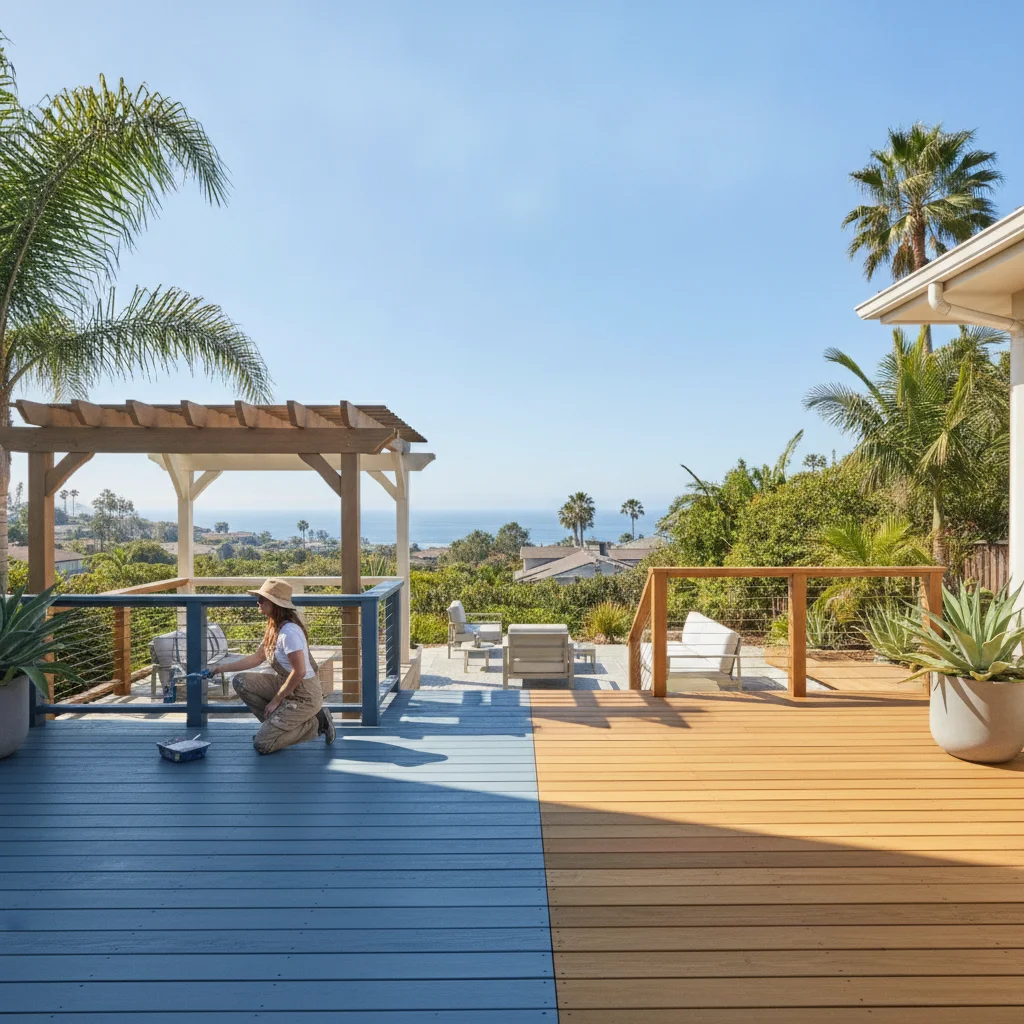
Yes, you can paint pressure treated wood, but only after it’s fully dry, which can be as little as a few weeks for kiln-dried-after-treatment (KDAT) lumber and 2 to 6 months for wet-treated lumber straight off the rack. Painting too soon is the number one reason a fresh fence or deck coating peels, blisters, or flakes within its first year.
This is the working version of that answer, written by a painting company that gets called back to strip failed coatings off new pressure treated lumber more than anyone would like.
Can you paint pressure treated wood?
Yes. Pressure treated lumber takes paint just fine once the wood has released the moisture the treatment process pushed into it. The chemical treatment itself isn’t what stops paint from bonding. The problem is the water still trapped inside the wood fibers when a homeowner or contractor paints too soon after installation. Paint applied over wet wood can’t form a real bond, and the trapped moisture works its way back out through the coating over the following weeks, taking the paint film with it.
How long do you have to wait before painting pressure treated wood?
Wait a few weeks for KDAT lumber and 2 to 6 months for wet-treated lumber before painting, and always confirm with a dryness test first. KDAT boards, stamped “KDAT” on the end grain, are dried in a kiln after the treatment process, so they carry far less residual moisture and are often paint-ready within weeks of installation. Wet-treated lumber, the kind still damp and heavy when it comes off the truck, hasn’t been through that drying step, and it can take a full San Diego summer to reach a safe moisture level. Coastal jobs in Coronado or Encinitas often need extra weeks compared to inland East County builds in El Cajon or Santee, where the drier heat pulls moisture out faster.
How to tell if pressure treated wood is dry enough to paint
Run the sprinkle test before you commit to a paint date. Splash a few drops of water on the wood’s surface. If the water beads up and sits there, the wood is still sealed with moisture and isn’t ready. If the water soaks in within a minute or two, the wood has dried enough to accept paint. A moisture meter gives a more exact read if you want to skip the guesswork: most exterior wood coatings need the substrate under 15% moisture content, and pressure treated lumber often reads 25% to 30% fresh off the lumberyard rack.
Check in a few different spots, not just one board. Sun-exposed fence sections and deck boards dry faster than shaded fence posts or the underside of a pergola, so one dry-looking board doesn’t mean the whole structure is ready.
What paint and primer to use on pressure treated wood
Use a 100% acrylic latex exterior paint over a latex exterior primer built for wood. Latex systems flex with the wood as it expands and contracts through San Diego’s temperature swings, and they let any remaining trace moisture in the lumber breathe out instead of trapping it under a rigid film. Oil-based primers are sometimes recommended for their stain-blocking power, but they’re more rigid and less forgiving of a substrate that isn’t bone dry, so most San Diego painters reserve oil primer for fully cured, older wood rather than fresh pressure treated stock. If you’re unsure whether your project even needs a primer step at all, our guide on primer before painting breaks down when to skip it and when it’s non-negotiable.
Paint vs stain on pressure treated wood
Stain is usually the better call on horizontal surfaces like decks, and paint holds up better on vertical surfaces like fences and fascia. Horizontal wood takes direct sun and pooling water, and a solid paint film on a deck traps moisture underneath and peels in high-traffic areas within a season or two. A penetrating or semi-transparent stain soaks into the wood instead of sitting on top, so there’s no film to crack under foot traffic, and touch-ups are far easier since there’s no peeling edge to scrape first. Vertical surfaces like a wood fence or fascia board don’t take the same foot traffic or standing water, so a quality exterior paint holds up for years there.
| Surface type | Better choice | Why |
|---|---|---|
| Decks and horizontal surfaces | Stain | No film to peel under foot traffic; easier recoat cycle |
| Fences and vertical surfaces | Paint | No standing water or foot traffic; longer color hold |
| New pressure treated lumber (any surface) | Wait, then either | Neither bonds correctly until the wood has dried out |
| HOA-visible fence lines | Paint | Matches HOA color codes more precisely than most stains |
For a deeper comparison of the two, our post on fence staining vs painting walks through cost, upkeep, and how each holds up against San Diego sun.
How to paint pressure treated wood step by step
- Confirm the wood is dry using the sprinkle test or a moisture meter reading under 15%.
- Wash the surface to remove mill glaze, dust, and any surface residue from the treatment process. Our pressure washing before painting guide covers the right pressure setting so you don’t gouge soft treated lumber.
- Sand lightly if the surface still has a shiny mill glaze after washing and drying.
- Apply a latex exterior wood primer, focusing on cut ends and knots where moisture escapes fastest.
- Apply two coats of 100% acrylic latex exterior paint, allowing full dry time between coats.
- Check fasteners and any exposed cut ends for a second primer pass, since factory-treated faces resist paint differently than a cut edge made on site.
San Diego specifics for pressure treated wood
Coastal fog near Coronado, La Jolla, and Encinitas keeps lumber damp longer into the morning, which stretches the safe-to-paint timeline compared to inland heat in El Cajon or Escondido. Inland East County lumber dries faster in the heat but also splits and checks sooner if it’s painted before it’s ready, since the wood shrinks hard as it finishes drying under a rigid coat. HOA communities across San Diego County often specify exact fence colors and sheens, so confirm your paint code before the first coat goes on a shared property line. South and west-facing fence runs take the most direct sun and fade fastest, regardless of neighborhood, so expect a shorter repaint cycle on those sides than on a shaded north-facing run.
Frequently asked questions
Can pressure treated wood be painted right away?
No. Fresh pressure treated lumber needs to dry out before paint will bond correctly, which takes a few weeks for KDAT lumber and 2 to 6 months for wet-treated lumber. Painting immediately after installation is the most common reason a new fence or deck coating fails within the first year.
How do you know when pressure treated wood is ready to paint?
Run the sprinkle test: splash water on the surface, and if it soaks in within a minute or two instead of beading up, the wood is dry enough. A moisture meter reading under 15% confirms it if you want an exact number instead of a visual check.
Do you need special paint for pressure treated wood?
You don’t need a specialty product, just a 100% acrylic latex exterior paint over a latex exterior wood primer. Latex systems flex with the wood’s normal expansion and contraction and handle any trace moisture better than a rigid oil-based system.
Is it better to stain or paint pressure treated wood?
It depends on the surface. Stain holds up better on decks and other horizontal surfaces because it won’t peel under foot traffic, while paint lasts longer on fences and vertical surfaces that don’t take the same wear.
Can you paint a pressure treated fence the same year it’s installed?
Usually yes, if the lumber was KDAT, since a few weeks of drying puts it in range the same season it goes up. Wet-treated lumber installed mid-year often isn’t ready until the following spring, especially near the coast.
What happens if you paint pressure treated wood too soon?
Trapped moisture works its way out through the new paint film over the following weeks, causing blistering, peeling, or a hazy, uneven finish. The fix is stripping the failed coating, letting the wood finish drying, and repainting from scratch, which costs more than waiting would have.
Get matched with a painter
If you’re not sure whether your new fence, deck, or fascia boards are dry enough to paint, the painter we match you with will check moisture levels and give you a real timeline during the in-home walkthrough, not a guess. Call (858) 400-6422 to get matched with a San Diego painter. We also handle exterior painting and fence and deck staining for homes across San Diego, Chula Vista, Carlsbad, Encinitas, Coronado, El Cajon, and Escondido.
For more on getting outdoor wood ready for a coating, see our guides on fence staining cost, how often to stain a deck, how long exterior paint lasts, and the best time of year to paint outside in San Diego’s climate.