There’s no honest single number for how long exterior paint lasts in San Diego County, because it isn’t set by a calendar, it’s set by exposure, prep, and product. Coastal homes fighting salt air and marine moisture wear out sooner than inland homes fighting sun and heat. Surface material, paint quality, and how well the surface was prepped before the topcoat went on shift the outcome further. For a stucco-specific look at those same drivers, see our guide to how often to repaint stucco in San Diego, and when you’re ready to plan the project, our exterior painting guide for San Diego covers the full scope.
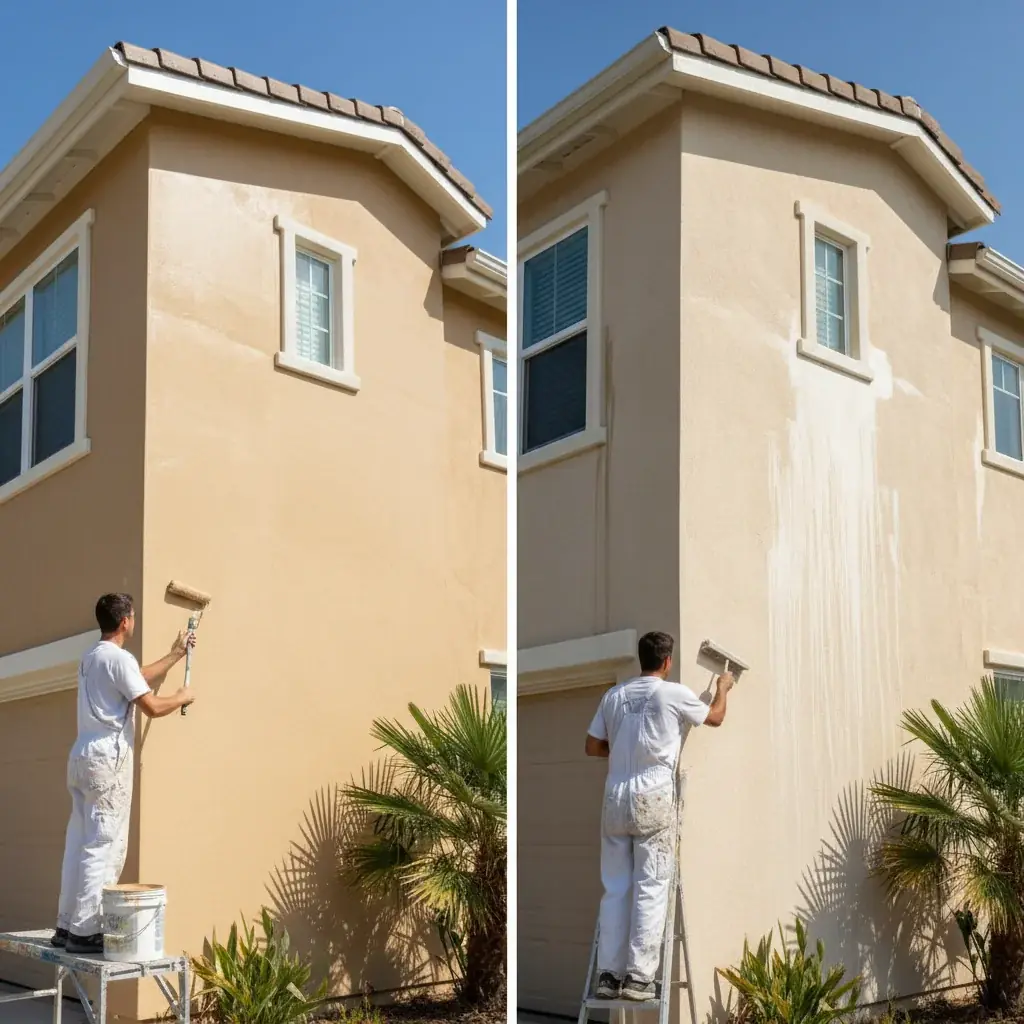
A quality paint job should protect your home and look great for a long stretch, but what that means in La Jolla is different from what it means in El Cajon. Understanding the factors at play helps you budget, plan, and know exactly when to make the call for a repaint, by reading your walls instead of counting years.
The honest answer: it depends on where you live
If you’re looking for a promise about a fixed number of years, you won’t get an honest one here. The single biggest factor determining how long your paint holds up is your zip code, and specifically how much salt, sun, and moisture your walls take on.
This shows up every day. A Poway home painted through our network can still look fantastic well after a similar Encinitas home is already showing signs that it’s ready for a fresh coat. It’s not about the quality of the work or the product, it’s about the unique environmental stress each home endures.
The key is to think of paint not just as a color, but as a protective coating. Its primary job is to shield your home’s siding, whether it’s stucco, wood, or something else, from sun, moisture, and temperature swings. The more intense those elements are, the harder the paint has to work, and the sooner it will show wear. That’s why the coastal vs. inland divide is the starting point for any realistic read on your home’s timeline, and why the signs of wear matter more than a countdown.
Coastal homes vs inland: why the gap is real
Living in San Diego means you’re either “coastal” or “inland,” and this distinction is everything when it comes to your home’s exterior. The environmental challenges are completely different, and your paint’s wear pattern reflects that.
Coastal: salt and moisture do the damage in La Jolla, Coronado, and Encinitas
If you live within a few miles of the ocean, your home is in a constant battle with salt and moisture. The salty marine layer that rolls in isn’t just a scenic fog; it’s a corrosive mist that settles on every surface. Salt crystals attract and hold moisture, which keeps your paint damp for longer periods. This constant moisture can work its way into microscopic cracks, leading to bubbling, peeling, and mildew growth. Metal surfaces like flashing, gutters, and window frames are particularly vulnerable to rust and corrosion under these conditions. Because of this persistent attack from salt and damp air, homeowners in coastal communities should expect to watch their paint more closely and repaint sooner than an inland home of the same age.
Inland: sun and heat do the damage in El Cajon, Santee, and Poway
Head east of I-15, and the challenges change. The salt and persistent dampness are gone, replaced by a much more formidable opponent: the sun. Inland communities experience higher temperatures and far more intense, direct UV radiation. The sun is paint’s number one enemy. UV rays break down the chemical binders that hold the paint pigments together, causing colors to fade and the paint film to become brittle and chalky. The extreme temperature swings from a hot day to a cool night also cause building materials to expand and contract, putting stress on the paint film and leading to cracks. However, high-quality modern paints are engineered to handle UV radiation well. Without the added stress of salt and constant moisture, a paint job in these areas holds its protective qualities noticeably longer.
What kills paint fastest: sun, salt, moisture, and cheap prep
While location sets the general exposure level, a few key factors can dramatically shorten or extend how long your exterior paint holds up. Understanding them helps you see why professional work is an investment, not just an expense.
-
UV Radiation (The Sun): The sun is relentless. It systematically degrades the paint’s resin, which is the glue holding everything together. This leads to fading (color loss) and chalking (the release of white, powdery pigment). South and west-facing walls receive the most direct sun and will almost always be the first to show signs of failure.
-
Salt and Moisture: Along the coast, salt-laden air is a primary culprit. But even inland, moisture from sprinklers hitting the walls, or rain getting trapped behind failing caulk, can cause big problems. When water gets behind the paint film, it pushes outward, causing blisters and peeling as it tries to evaporate.
-
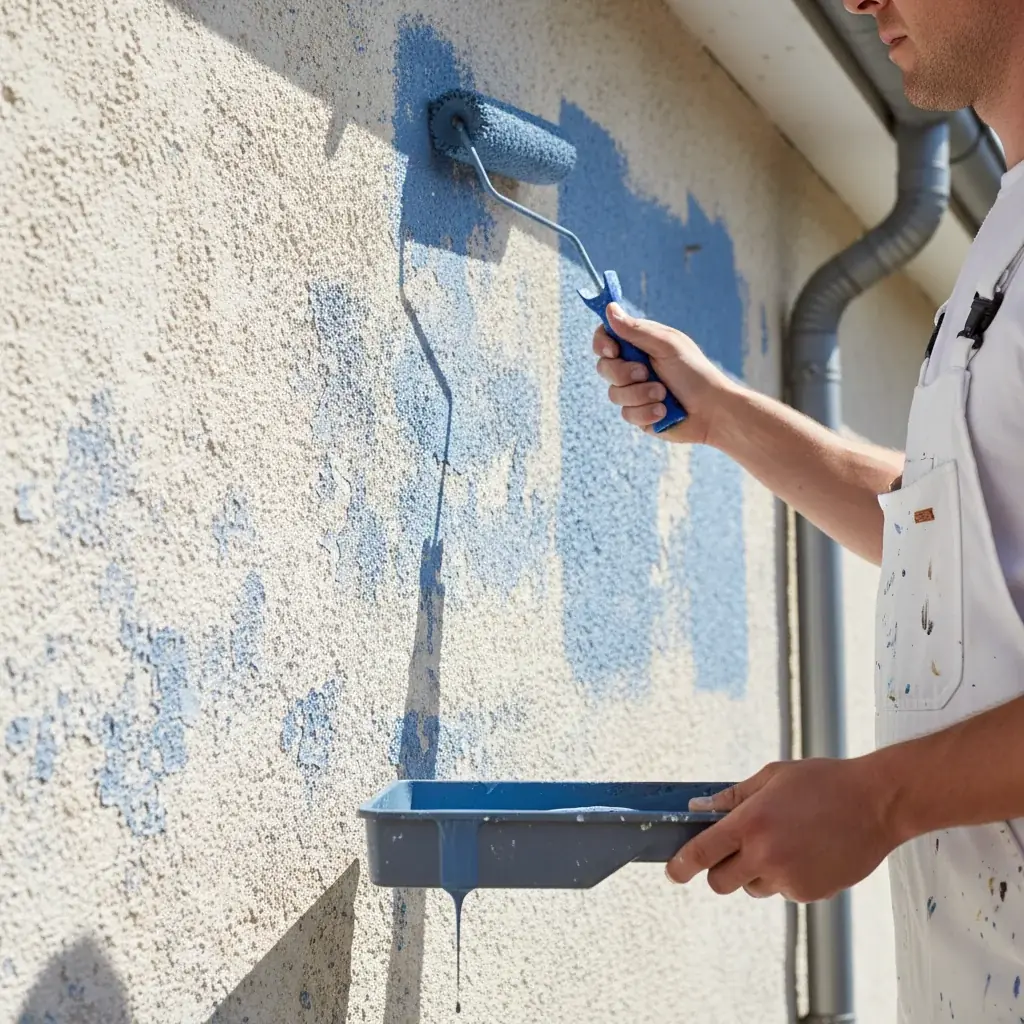
Poor Surface Preparation: This is the single most common reason for premature paint failure. You can use the most expensive paint in the world, but if you apply it over a dirty, chalky, or peeling surface, it simply won’t stick. Proper exterior paint preparation on stucco and other surfaces is non-negotiable. It involves a thorough power wash to remove dirt and failed paint, scraping and sanding any remaining loose areas, patching cracks, and applying the correct primer to create a stable, uniform surface for the topcoat to adhere to. Skipping any of these steps shortens the paint’s protective life.
-
Low-Quality Paint: A cheaper paint might save money upfront, but it costs more in the long run. Premium paints contain higher volumes of better-quality solids (pigments and binders). This creates a thicker, more durable, and more flexible film that better withstands UV rays and temperature changes.
Signs it’s time: chalking, fading, peeling, and hairline cracks
Your house will tell you when it needs to be painted. You just have to know what to look for, and reading these signs beats guessing off a calendar. Here are the four most common signals that your paint’s protective life is coming to an end.
Chalking
Run your hand over the surface of a wall, especially one that gets a lot of sun. If a powdery, chalk-like residue comes off on your hand, the paint is “chalking.” This is a sign that the sun’s UV rays have broken down the resin in the paint, leaving the pigment particles behind. A small amount of chalking is normal as paint ages, but heavy chalking means the protective film is gone and the stucco or wood beneath is becoming exposed.
Fading
This is the most obvious sign. The vibrant color you chose now looks dull, washed-out, and tired. Fading is also caused by UV exposure. It will be most prominent on the south and west-facing walls of your home. If the color difference between a shaded area (like under an eave) and an exposed area is dramatic, it’s a clear indicator that the paint is well past its prime.
Peeling, Blistering, or Flaking
If you see paint physically lifting away from the surface, you have an adhesion problem. This is a more serious issue because it means the substrate is exposed to the elements. Peeling can be caused by moisture getting behind the paint, applying paint to a dirty surface, or simply age. These areas need to be scraped, sanded, and primed before any new paint is applied.
Hairline Cracks
As paint ages, it becomes more brittle and loses its flexibility. The natural expansion and contraction of your home can cause the old paint to develop a network of fine, hairline cracks. While small at first, these cracks allow moisture to seep in, which can lead to larger cracks, peeling, and damage to the underlying surface. For stucco homes, it’s also important to distinguish between cracks in the paint and cracks in the stucco itself, which may require repair before you consider stucco painting.
How product choice changes the outcome
The quality of the paint you choose is just as important as the quality of the prep work. Painters in our network primarily use premium products from Dunn-Edwards and Sherwin-Williams because their real-world performance in our local climate is proven.
For example, a product like Dunn-Edwards Evershield is a strong choice for most San Diego homes. It’s a 100% acrylic paint that offers strong durability and color retention. For homeowners seeking the best protection, especially in harsh coastal or high-UV environments, painters in our network might recommend Sherwin-Williams Emerald Exterior, which offers exceptional resistance to blistering, peeling, and fading.
It’s worth understanding what a manufacturer’s paint warranty actually covers. These warranties typically cover product defects, meaning if the paint itself is faulty, the manufacturer will provide replacement paint. They do not cover the labor to re-prep and repaint the house, which is the bulk of the cost of any exterior painting project. That’s why choosing a high-quality product from the start is so critical: it’s the best insurance against having to do the job all over again sooner than expected.
Touch-up vs. full repaint: when each makes sense
Sometimes you don’t need a full-blown repaint. So when can you get away with a touch-up?
Touch-up makes sense for:
- Small, isolated damage: If you have a few small stucco patches or a scrape on a single wall and the rest of the paint is in good condition, a touch-up can work.
- Recent paint jobs: The newer the paint, the better the chance a touch-up will blend in. Old, faded paint is nearly impossible to match perfectly.
A full repaint is necessary when:
- You see widespread signs of failure: If you have chalking, fading, or peeling on multiple walls, a touch-up is just a band-aid. The underlying issue is that the entire paint job is failing.
- The signs are stacking up. Chalking plus fading plus early hairline cracking together mean the protective qualities are diminished, whatever the age of the last coat.
- You’re changing colors: This is an obvious one. A complete color change requires a full repaint for a uniform, professional finish.
Waiting too long to repaint can lead to more extensive repairs down the line, such as wood rot or significant stucco damage. Being proactive is always the smarter approach.
Frequently asked questions
How long does exterior paint last in San Diego?
It depends far more on exposure than on a fixed timeline. Coastal areas like La Jolla and Encinitas see paint wear faster because salt air and marine moisture break down the coating. Inland areas like Poway and El Cajon typically hold up longer with less humidity and no salt exposure, though intense UV still takes its toll.
How often should I repaint the outside of my house in San Diego?
Let the wall tell you. Watch for chalking, fading on south and west walls, hairline cracking, and failing caulk, and get an assessment when two or more show up together. Coastal homes should check more often than inland homes given the faster wear.
Does the type of paint affect how long it lasts?
Yes, significantly. Premium 100% acrylic paints, such as Dunn-Edwards Evershield or Sherwin-Williams Emerald Exterior, outlast budget options because they carry more binders and pigment per gallon. A cheaper paint may save money upfront but typically needs repainting sooner, costing more overall.
What are the signs my exterior paint needs replacing?
The four clearest signs are chalking (a powdery residue when you run your hand along the wall), visible fading especially on south and west-facing walls, peeling or blistering where the paint lifts away from the surface, and a network of hairline cracks that let moisture in. Any one of these on multiple walls means it’s time to plan a full repaint rather than spot touch-ups.
Does prep work really affect how long paint lasts?
Poor prep is the most common reason exterior paint fails early. Painting over a dirty, chalky, or cracked surface prevents proper adhesion, and no amount of premium product fixes that. Thorough power washing, scraping loose areas, patching cracks, and applying the right primer are what let the topcoat bond and hold up. Painters through our San Diego exterior painting service always start with a full prep assessment before any paint goes on.
Is it worth repainting before my paint fully fails?
Yes. Repainting once chalking and early fading show up, before widespread peeling starts, is almost always the better call than waiting until the substrate is exposed and needs repairs. Wood rot and stucco damage from deferred maintenance cost far more than the paint job itself.
When to call us
Figuring out the condition of your exterior paint can be tricky. If you’ve noticed any of the signs like chalking, peeling, or significant fading, it’s a good time for a professional assessment. We can help you understand exactly how much life your paint has left and build a clear, no-pressure plan for your home.
Call us at (858) 400-6422 and we’ll connect you with a vetted local painter.