A damaged wall shouldn’t go straight from wallpaper removal to paint. Stop at the torn area, document what’s visible, and have an independent professional assess it. The repair may involve sealing, patching, skim coating, or a broader drywall scope.
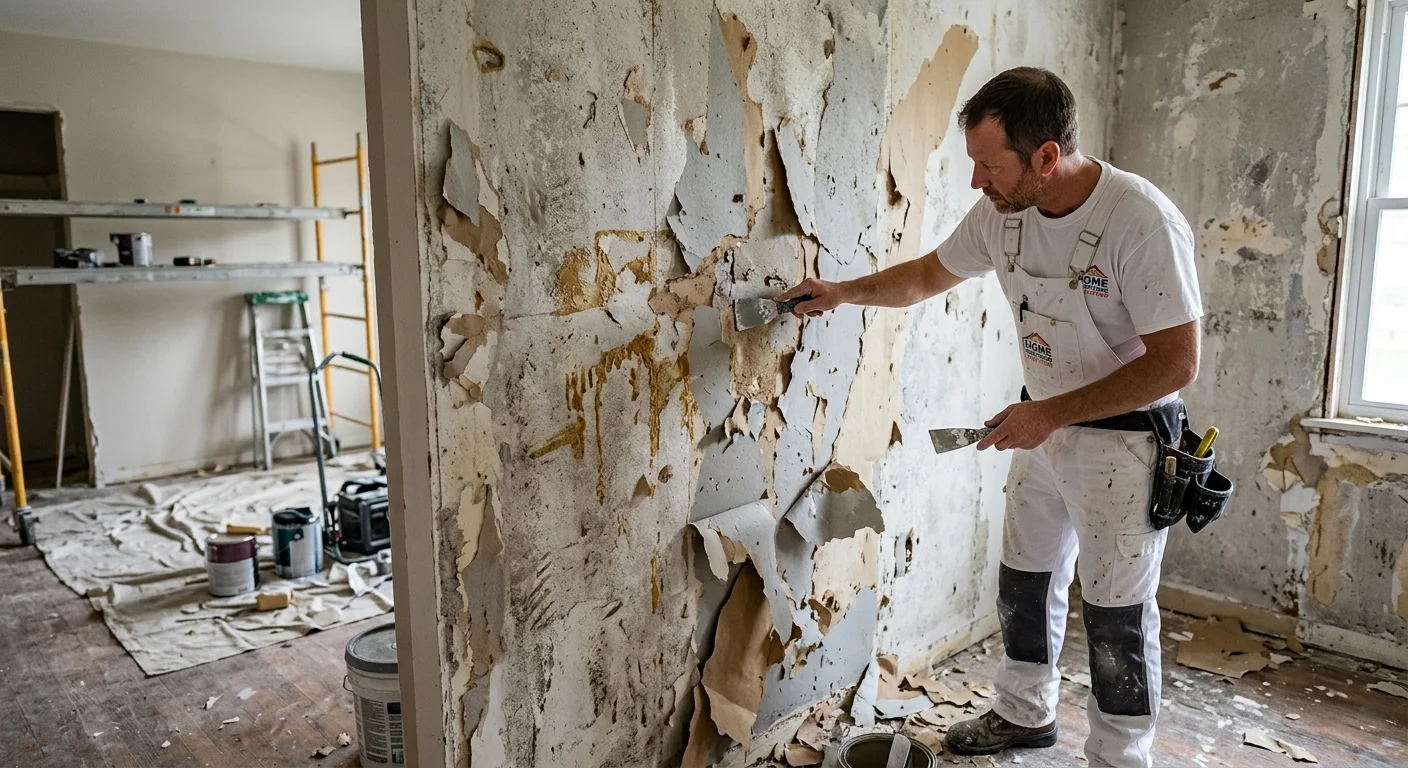
Inspect torn paper and exposed gypsum
Start by recording what the wall looks like now. Take a full-wall photo, then close photos of each damaged area. Include lifted face paper, frayed edges, exposed gypsum, gouges, raised seams, stains, and previous patches. Place a removable note near each area so its location stays clear.
Don’t treat every mark as the same problem. A small torn spot and damage spread across a full wall may lead to different proposals. Ask the inspecting professional to mark the boundaries and explain what remains stable. If panel replacement is recommended, ask which section needs replacement and why.
A stained, soft, or swollen area also deserves separate attention. Ask the professional to identify whether another trade should inspect it. Wallpaper damage alone doesn’t confirm a moisture source, so avoid guessing from appearance.
The home’s age matters when painted layers may be disturbed. The approved ACS-based local data classifies 49.6% of City of San Diego housing units as pre-1978. The share is 62.5% in El Cajon and 34.4% in Oceanside. Those figures don’t prove that a particular wall contains lead-based paint.
For paid work that disturbs painted surfaces in pre-1978 housing, the federal EPA Renovation, Repair and Painting program requires covered firms to be certified and use lead-safe practices. The rule includes containment requirements. It also prohibits machine sanding on painted surfaces unless the machine has a shroud or containment system with a HEPA vacuum attachment. Confirm the home’s construction year and discuss the rule before further disturbance.
Separate adhesive residue from surface damage
Adhesive residue and physical wall damage should get separate labels. A shiny, tacky, or discolored patch can be marked as possible residue until a professional confirms it. Missing face paper, exposed gypsum, cuts, and divots can be mapped as visible damage.
This distinction keeps the proposed scope readable. Ask for one line item covering remaining wallpaper and residue. Ask for another covering torn paper, patching, or broader wall repairs. That makes it easier to compare proposals without hiding several tasks under “wall prep.”
Our guide to wallpaper glue before painting focuses on residue left on an otherwise paintable wall. Torn drywall needs a separate assessment. A contractor should explain which areas need residue treatment and which need repair before coatings are considered.
Avoid choosing a cleaner, abrasive, or sanding method from appearance alone. Ask the professional to name each proposed material and show that its instructions cover the existing surface.
A test area can also be written into the proposal. Define its location, who approves it, and what happens if more paper lifts. The goal isn’t to promise a certain result. It’s to learn how that specific wall responds before the same method covers a larger area.
If wallpaper remains elsewhere, decide whether removal should continue before repairs begin. An independent pro can assess that sequence through a wallpaper removal and prep referral. Paint Pros San Diego makes the connection but doesn’t remove coverings or repair walls.
Compare sealing, patching, and skim-coat options
Sealing, localized patching, and skim coating describe different scopes. None should be selected automatically from the phrase “wallpaper removal damaged drywall.” The written proposal should connect the chosen scope to the damage visible on your wall.
A sealing proposal should identify every affected area. It should name the proposed sealer and the materials planned over it. Ask the contractor to cite the manufacturer’s instructions for surface acceptance, application, compatibility, and wait times.
A localized patching proposal should map each gouge, divot, or torn section. It should explain where patch material ends and the surrounding finish begins. The proposal should also identify planned sanding controls, cleanup, primer, texture work, and finish painting.
A skim-coat proposal should define whether it covers isolated sections or complete walls. Ask what surface standard the painter expects before primer. If only part of a wall will be skimmed, request a clear boundary and a texture plan.
Panel replacement is another possible recommendation, but it shouldn’t be assumed. Ask the professional to show the affected panel, describe the reason, and identify any work outside the painting scope. A separate drywall professional may need to inspect broader damage.
Get a written price and repair plan for the wall in front of you. Quotes depend on the measured scope and the professional’s proposed materials. Our San Diego drywall repair cost guide explains which scope details to compare without assigning a price to an unseen wall.
Before accepting a proposal, look for a complete sequence. It should address remaining covering, residue, damaged facing, surface repair, texture, primer, paint, and cleanup. “Repair as needed” leaves too much unresolved.
Plan texture matching before primer and paint
Texture matching begins with agreeing on the target. Photograph an unaffected section in the same room. Review it under the room’s usual daylight and evening lighting. Note whether the wall is smooth, sprayed, knockdown, or another finish based on what’s actually present.
Ask the professional how the repaired area will be compared with that reference. A sample or test patch can create an approval point before the full area proceeds. Put that step in writing if texture appearance matters to the decision.
No repair proposal should promise that a patch will become invisible. Existing texture, previous repairs, lighting, and the chosen finish all belong in the conversation. The professional should explain the expected result and any limits before work begins.
If a close localized match isn’t practical, compare broader options. Those might include finishing the complete wall, accepting a defined localized repair, or selecting a new texture for a clearly bounded area. Decide where that boundary falls before primer and paint are added.
Primer also needs a written specification. Ask for the product name, approved substrate, planned application, and manufacturer-directed drying or recoating interval. Those details must come from the selected product’s instructions and the wall’s assessed condition.
A drywall repair and texture match professional can help define this scope. Paint Pros San Diego refers homeowners to independent local pros. The professional who accepts the project chooses the materials, performs the work, and provides any warranty attached to that work.
Decide when a drywall repair pro should inspect
Bring in a drywall repair professional when the damage extends beyond a few clearly defined surface marks. Useful inspection triggers include widespread missing face paper, exposed or crumbling gypsum, damaged seams, affected corners, deep gouges, or several layers of earlier repair.
An inspection also makes sense when the wall feels soft, looks swollen, carries unexplained staining, or has cracks crossing the damaged area. Those conditions shouldn’t be diagnosed from a wallpaper photo. Ask the professional whether another qualified trade needs to investigate before finishing begins.
Call for an inspection when removal keeps exposing new damage. Continuing without a scope can make it harder to compare repair options. The professional can mark where removal ends, where repair begins, and whether separate drywall work is proposed.
Older homes need another decision point. If paid work will disturb painted surfaces in pre-1978 housing, ask whether the firm and renovator meet EPA RRP requirements. For covered sanding, containment, or cleanup, require the applicable lead-safe steps in the proposal.
Licensing should also be checked before signing. Ask each quoting professional to identify the work covered by their license. Then verify the information through the CSLB license check. Don’t rely only on a logo, business card, or verbal statement.
The final scope should answer five questions: what’s residue, what’s damaged, what gets repaired, how texture gets approved, and which products follow. If those answers aren’t clear, request a revised proposal before authorizing work.
When to call us
Call when wallpaper removal exposes torn paper, gypsum, damaged seams, or a texture problem that needs a written repair scope. Paint Pros San Diego is a referral service and doesn’t perform the physical work. Call us at (858) 400-6422 and we’ll connect you with a licensed local painter.