Yes, an independent painter can refinish many stained kitchen cabinets. The right scope depends on the cabinet material, existing clear coat, damage, and desired finish. Inspection should come before any promise to paint or restain them.
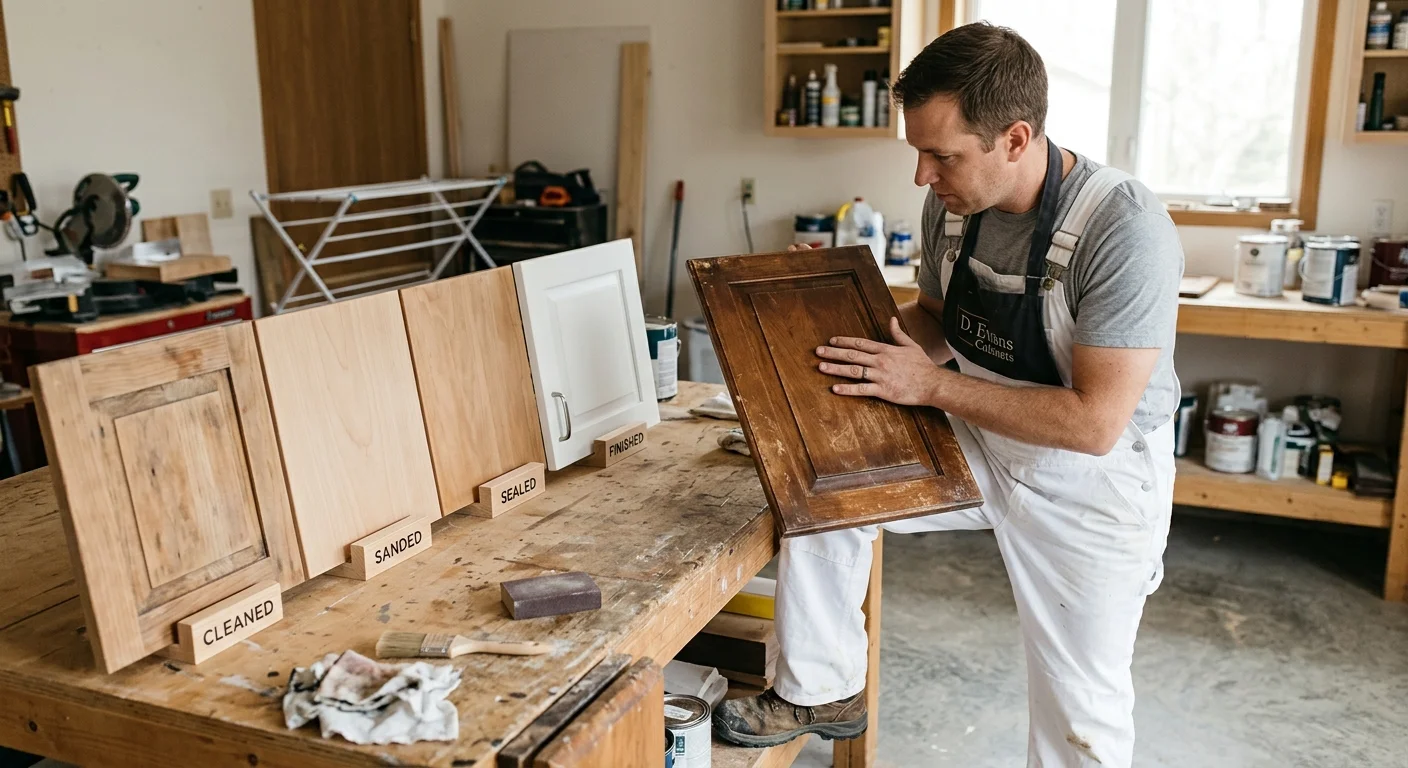
Identify the cabinet material and old finish
Refinishing stained kitchen cabinets starts with identification. “Wood cabinets” can describe solid wood, veneer, engineered panels, or several materials assembled together. Doors, face frames, drawer fronts, end panels, and cabinet interiors may not match.
The existing finish also needs a closer look. A stained surface may have varnish, shellac, another clear coating, or an older painted layer beneath it. A quoting painter should explain what appears to be on the cabinets. If the finish can’t be identified visually, ask how the painter will test it before preparing the entire kitchen.
Your desired result changes the evaluation. Keeping visible wood grain isn’t the same scope as applying an opaque painted finish. A painter should also confirm whether the door backs, cabinet interiors, shelves, and exposed end panels are included. Those details prevent two people from using “refinish” to mean different jobs.
California’s C-33 Painting and Decorating classification includes surface preparation and the application of stains, varnishes, shellacs, fillers, and paints. Before signing, verify the painter through the CSLB license check.
Housing age deserves attention in San Diego County. In the City of San Diego, 49.6% of housing units were built before 1978. The verified shares are 68.7% in La Mesa, 62.5% in El Cajon, 34.4% in Oceanside, and 27.5% in Carlsbad. Those figures don’t establish the age or contents of a particular cabinet finish. They show why the home’s construction date belongs in the initial conversation.
Our cabinet painting and refinishing service connects homeowners with licensed, independent local painters who can assess the existing surface.
Check grease, chips, and failed clear coats
The painter should inspect more than the door fronts. Ask for a close look around pulls, cooking areas, sink bases, drawer edges, crown details, and cabinet ends. These locations often reveal whether the finish is intact or whether a larger repair question needs attention.
Grease and cleaning residue should be discussed before sanding or coating. Ask what cleaning step appears in the written scope. The answer should name the surfaces included and explain how the painter will decide they’re ready for further preparation.
Chips need diagnosis, not quick labels. A chip may involve only the top coating, or it may expose an older layer or damaged cabinet material. The same applies to peeling, cloudy areas, and clear coat that separates from the stained surface. Ask the painter to mark representative defects and explain how each type affects the proposed scope.
Look closely at corners and profiles. Raised-panel doors and detailed trim create different access problems than flat slab doors. Hardware holes, old bumpers, and worn edges should appear in the inspection notes when they affect the finish area.
A small test section can make the proposal easier to evaluate. Ask the painter what the test will show and who approves the result. The test should address the actual finish system being proposed, not an unrelated sample board.
If you’re comparing a full cabinet project, the professional cabinet refinishing process explains how the broader sequence may be organized. For this decision, focus first on whether the existing stained finish is stable enough for the proposed preparation.
Compare stripping, sanding, and sealing scopes
Stripping, sanding, and sealing aren’t interchangeable line items. Each describes a different possible scope, and a proposal should explain where each method applies.
A stripping scope should identify which cabinet parts will be stripped. It should also state whether the goal is exposed wood, preparation for new stain, or removal of a failed coating. Don’t assume “strip cabinets” includes boxes, trim, interiors, or every edge.
A sanding scope needs the same clarity. Ask whether sanding is intended to remove a finish, smooth damaged areas, or prepare a retained coating for another layer. The California C-33 classification expressly includes surface preparation by scraping, sandblasting, or other means. That broad classification doesn’t tell you which method is suitable for your cabinets. The quoting painter still needs to describe the selected approach.
A sealing scope should name the product category and the problem it is meant to address. Zinsser Cover Stain is sold as an oil-based stain-blocking primer. Zinsser B-I-N is sold as a shellac-based primer. These are verified product examples, not automatic prescriptions for every stained cabinet.
Ask how the scope changes if the test area produces an unacceptable result. The written proposal should distinguish included preparation from repairs or material replacement that require another decision. It should also identify who removes and reinstalls doors, drawer fronts, hinges, pulls, and adjustable shelves.
Older homes add a safety question. Paid work that disturbs paint in pre-1978 housing can fall under the federal RRP rule. Covered work requires a certified firm and certified renovator. The rule also includes containment and specific controls for power tools used on painted surfaces. Review the EPA Renovation, Repair and Painting program and ask the painter how the rule applies to your home and discovered layers.
Review primer and finish compatibility
Cabinet painting over clear finish shouldn’t begin with a product name alone. The painter should connect the proposed primer and finish to the identified cabinet material, retained coating, preparation method, and test result.
Request the exact product names in the proposal. Verified cabinet and trim coating examples include Sherwin-Williams Emerald Urethane Trim Enamel, Benjamin Moore ADVANCE, and INSL-X Cabinet Coat. These names confirm that cabinet or trim coatings are available. They don’t establish compatibility with every stain, clear coat, primer, or cabinet material.
Ask the painter to explain the complete sequence. That includes cleaning, surface preparation, spot repairs, primer or sealer, and the finish coating. If different products are planned for doors and cabinet boxes, the proposal should say so.
Finish appearance also belongs in the test. Discuss visible grain, open seams, old dents, profile edges, and the degree of surface variation you’re willing to accept. An opaque coating changes color, but it doesn’t automatically create a featureless surface. Your approval should be based on the prepared test area and the painter’s written scope.
If you’re choosing between finish types, read the comparison of latex and alkyd cabinet enamel. Product selection shouldn’t replace surface diagnosis. It comes after the painter understands what’s already on the cabinets.
Ask how later touch-ups will be documented. Keep the coating names, color identification, sheen, and any approved sample with your project records. Any warranty comes from the independent painter, not Paint Pros San Diego. Review its terms directly with that painter before signing.
Know when painting isn’t the right repair
A new coating isn’t the answer to every worn cabinet. Pause the painting proposal when doors don’t align, hinges pull away, panels move, veneer lifts, or cabinet material has swollen or broken. Those conditions may need cabinet repair or replacement advice before a painter proposes a finish.
The same caution applies when the homeowner wants natural wood but the visible surfaces don’t match. A test section may reveal whether the desired stained result is realistic. If it isn’t, compare an opaque finish, selective component replacement, or full replacement without forcing the original plan.
Scope can make an otherwise suitable project a poor fit. Painting only the doors may leave stained face frames and exposed panels unchanged. Coating the exterior may still leave cabinet interiors, shelves, and door backs outside the proposal. Decide whether that boundary creates the result you expect.
When the cabinet layout no longer works, refinishing doesn’t change storage, door style, or appliance clearances. That decision is separate from surface condition. Our guide to cabinet painting versus replacement can help frame the larger choice.
Existing painted cabinets may raise another concern. If a light finish has discolored or chipped, don’t assume another coat alone resolves the cause. Review the discussion of why white cabinet finishes yellow or chip before comparing new proposals.
A careful painter should be willing to narrow the scope or decline unsuitable coating work. Get the material findings, test result, included surfaces, products, and exclusions in writing. That gives you a concrete proposal to compare.
When to call us
Call when a stained finish is peeling, chipped, difficult to identify, or headed toward a major color change. A qualified local painting pro can inspect the cabinets and propose a preparation and coating scope. Call us at (858) 400-6422 and we’ll connect you with a licensed local painter.