If you’re a Valley Center homeowner looking for a painting contractor, here’s the short answer. The painters we match handle interior, exterior, cabinet, and stucco repair-and-paint work across all of Valley Center, from the acreage homes along Cole Grade Road to the custom hill properties near Lake Wohlford and Hellhole Canyon. Rural Valley Center jobs run a wide range, mostly because homes are larger, lots are bigger, and many properties include outbuildings. Call (858) 400-6422 to get matched with a painter, or see our Valley Center painting service page for the full rundown.
What makes Valley Center different from the rest of the County
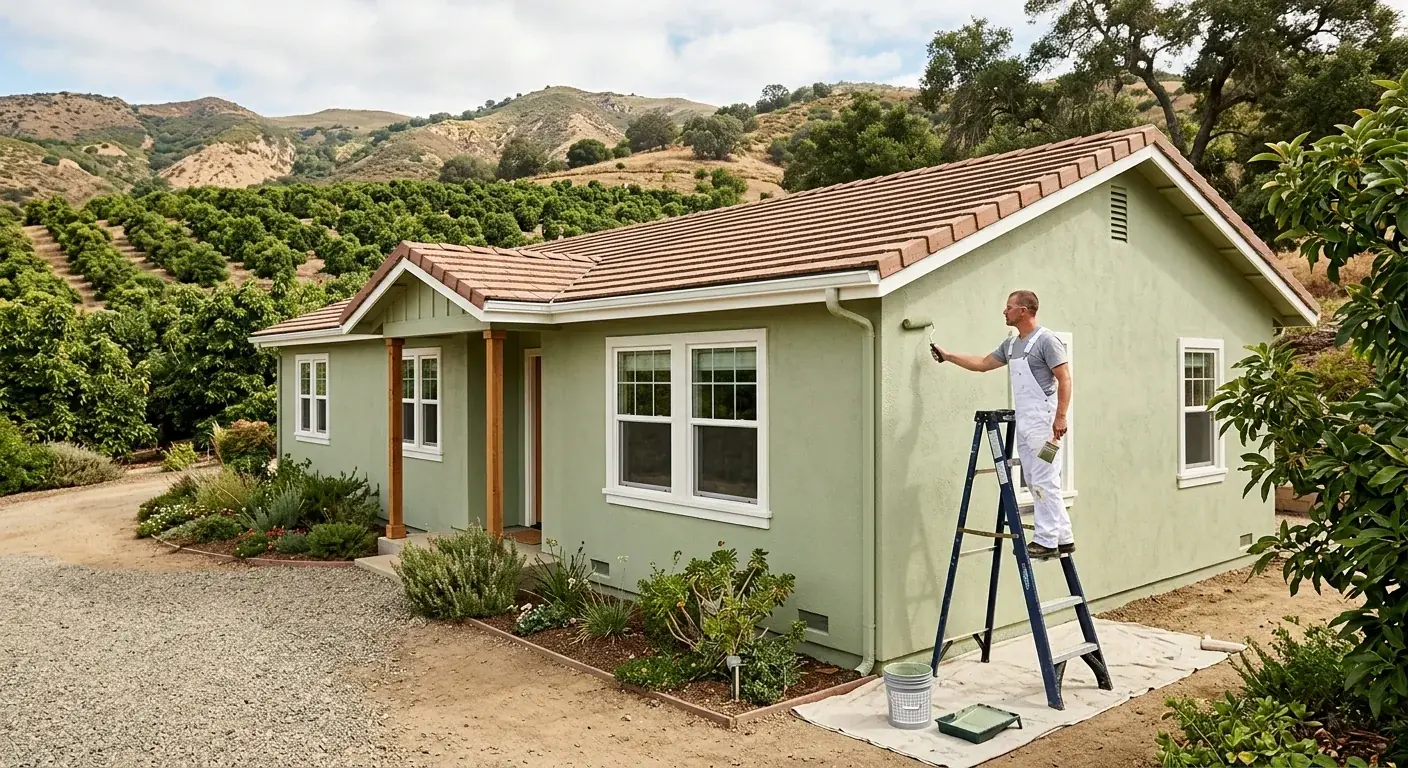
Valley Center is a rural inland community east of Escondido, and painting out here is its own animal. The housing isn’t tract development. It’s single-family homes on rural acreage, working orchards and avocado groves with a main house plus outbuildings, and a lot of custom homes in the eastern hills around Lake Wohlford and the Hellhole Canyon Preserve. A contractor who mostly works coastal tract homes will underestimate a Valley Center job almost every time.
Three things drive that difference. First, scale: many Valley Center homes exceed 3,500 square feet of paintable exterior surface, and that’s before you count barns, equestrian facilities, accessory dwellings, and grove outbuildings that share the same maintenance schedule. Second, wood: the older custom stock carries extensive cedar or redwood accent siding, decorative beam work, and substantial door and window casing, all of it weathered by years of unfiltered inland sun. Third, distance: travel time from central San Diego runs roughly 75 to 90 minutes each way, which factors into how a job is scheduled and crewed.
None of that is a problem if your contractor knows the area. It’s a problem if they don’t, because the bid will be wrong and the schedule will slip. Ask any painter you’re considering how often they actually work Valley Center and the surrounding rural North County. Hands-on familiarity with grove properties and large-acreage scope matters more here than anywhere else in the County.
Valley Center climate and the paint cycle
Valley Center sits in a hot, dry inland valley, and the climate sets the repaint clock. Any contractor working out here should be specifying for it.
Summer afternoons here run hot with strong, unfiltered UV, and the higher-elevation parcels near Lake Wohlford can also see occasional winter freeze nights. That combination, intense summer UV plus the odd freeze, is hard on both paint film and stucco. Painting in peak afternoon heat ruins jobs: the paint skins over before it bonds, you get lap marks, and the finish can blister. Painters in our network start Valley Center exterior work early and chase the shade around the property, wrapping south- and west-facing walls before the worst of the afternoon.
For stucco in good condition on protected walls, the baseline spec painters in our network reach for is premium UV-stable acrylic (Sherwin-Williams Emerald or Dunn-Edwards Evershield), which holds up well out here. On walls showing hairline cracking from years of heat-driven substrate movement, painters step up to elastomeric coating, which bridges that movement and holds longer than standard acrylic on a cracked substrate. South and west elevations show color drift sooner than protected inland walls, simply because of the higher UV load.
The honest takeaway: a properly prepped, premium Valley Center exterior holds up well, a little less on the hot-side walls. Anyone promising a specific year count on an inland acreage home is overselling, too much depends on elevation, exposure, and prep quality to put a number on it.
What drives cost for Valley Center homes
Painters in our network quote full-prep, two-coat jobs using mid-grade or better paint. Rural Valley Center jobs run higher than tract-home pricing for the reasons above, larger surfaces, more wood, and outbuildings, so the range of scope is wider.
Exterior, by home size (stucco and wood trim, full prep, two coats):
| Home size | Typical Valley Center example | What drives it |
|---|---|---|
| 2,000 sqft | older single-story on acreage | Single story, moderate trim, sound existing stucco |
| 2,800 sqft | 1990s custom home | More elevations, some cedar trim |
| 3,500 sqft | hill-area custom with cedar trim | Heavy cedar trim scope, access and staging |
| 4,500+ sqft | large estate or grove main house | Large surface area, complex rooflines, extensive trim |
Add-on structures (priced per structure, with the main-house job):
- Detached garage or shop: driven by square footage and door count
- Barn or equestrian structure: driven by size, height, and access
- Accessory dwelling or guest house: driven by square footage and trim scope
Full interior (whole house, walls only, mid-grade paint):
| Home size | Typical Valley Center example | What drives it |
|---|---|---|
| 2,000 sqft | older custom interior refresh | Wall square footage, color-change complexity |
| 2,800 sqft | full remodel repaint | Wall and ceiling square footage |
| 3,500+ sqft | large custom, hand-troweled texture | Texture-match difficulty adds labor time |
What pushes a Valley Center exterior toward the top of its range is almost always wood. Extensive cedar accent siding, decorative beams, and large weathered doors all need real prep, sanding, brightening, priming, and refinishing, not a quick recoat. Painters in our network line-item the wood scope separately so you can see exactly what the trim work costs versus the wall painting.
Cedar and redwood refinishing on Valley Center homes
This deserves its own section because it’s such a common Valley Center request. The older custom homes out here lean on natural wood, cedar siding, redwood accents, heavy decorative beams, and years of inland sun leave it gray and tired.
You’ve got two honest paths. For a natural-wood look, painters in our network power-sand to clean wood, brighten with oxalic acid to restore tone, then apply a premium semi-transparent exterior stain (Sikkens Cetol or similar). It keeps the wood character but needs more frequent refresh than a painted finish. For lower long-term maintenance, painters in our network prep the same way and lay down two coats of premium exterior trim paint, which holds far longer but covers the grain. Neither is wrong. It comes down to whether you want the natural look or the lower upkeep, and a good contractor will walk you through the trade-off instead of defaulting to whichever is easier for them.
Working around groves, ranches, and outbuildings
If you run a grove or keep horses, your paint project has to fit around your operation. Painters in our network coordinate scope across multiple structures on one project and phase the work so it doesn’t shut down grove activity or block ranch access. The main house, the barn, and the shop often share a maintenance schedule, and it’s usually more cost-effective to do them together while the crew and equipment are already on site. Painters in our network provide written per-structure scope with material specs and a timeline, so you know what’s getting painted, in what order, and when each building is back in service.
How to vet a Valley Center painting contractor
Most people searching for a painting contractor in Valley Center are comparing two or three before they commit. Out here, a few things matter more than the headline price:
- Did they walk the whole property? A real Valley Center quote follows an on-site walk-through of the main house and every structure, not a number off square footage. Rural scope is too variable to bid over the phone.
- Do they actually work rural North County? Ask how often they paint Valley Center, Pauma, and acreage homes. Grove and large-lot experience shows up in the schedule and the prep plan.
- Is the wood scope spelled out? Cedar and beam refinishing is where Valley Center bids diverge. It should be its own line, not buried in “prep.”
- Is the quote flat-rate and in writing, per structure? You should know the total and the per-building breakdown before work starts.
- Do they offer an in-home consultation first? Painters in our network do. The in-home estimate is quoted in writing, and you can talk through scope, color, and phasing before you decide.
Our full breakdown on how to hire a painter in San Diego covers contracts, insurance, and the questions worth asking. For the inland climate side, how often to repaint stucco in San Diego and our elastomeric vs acrylic guide are useful companion reads for Valley Center’s heat-driven cracking. The neighboring Escondido painting contractor guide covers the same crews and overlapping service area.
Services we cover across Valley Center
Every painting service the painters we match run countywide is available in Valley Center, on the same crews:
- Exterior painting in Valley Center: stucco, cedar trim, UV-stable and elastomeric systems for hot-side walls.
- Interior painting in Valley Center: walls, ceilings, hand-troweled texture matching, low-VOC paint.
- Cabinet painting in Valley Center: sprayed factory finish, a kitchen reset without the remodel.
- Stucco painting and repair in Valley Center: crack repair first, then a coating built for the substrate.
Cabinet refinishing in particular is a frequent part of Valley Center interior remodels. If you’re weighing it, our cabinet refinishing in San Diego guide covers cost and durability.
Valley Center painting FAQ
How often should I repaint my Valley Center home exterior?
Repaint timing on premium UV-stable acrylic depends most on elevation and sun exposure for homes with stucco in good condition. South and west walls show color drift sooner from the inland UV load. Homes with hairline cracking from heat-driven substrate movement benefit from elastomeric coating, which holds longer than standard acrylic on a moving substrate and bridges movement standard acrylic can’t.
Can you handle a main house plus outbuildings on the same project?
Yes. Working orchards, groves, and ranches usually have outbuildings, barns, and accessory structures on the same maintenance schedule as the main house. The painters we match coordinate scope across multiple structures, phase the work to minimize disruption, and provide written per-structure scope with specs and timeline.
My Valley Center home has weathered cedar siding. What are my options?
Cedar refinishing is regular Valley Center scope. Painters in our network power-sand to clean wood, brighten with oxalic acid to restore tone, then either apply a premium semi-transparent stain (Sikkens Cetol or similar) for a natural look that needs more frequent refresh, or two coats of premium exterior trim paint for a lower-maintenance painted finish.
How much does an exterior repaint cost in Valley Center?
For a typical 2,000 to 2,800 square foot Valley Center home, exterior repaint cost tracks prep scope, wood trim volume, and paint selection. Larger estates and grove main houses run higher, and outbuildings are priced per structure. Painters in our network provide written flat-rate quotes after an on-site walk-through.
Do you offer a consultation before giving a quote?
Yes. Given the drive, painters in our network schedule Valley Center walk-throughs efficiently and arrive prepared to walk every structure. The painter talks through scope, color, and phasing, then puts a written flat-rate quote in your hands.
Get a Valley Center painting estimate
If you’ve got a Valley Center home, a grove property, or an acreage estate that’s due for paint, the painter we match walks all of it, talks through the right spec for the inland climate and your wood scope, and puts a flat-rate number in writing per structure. Call (858) 400-6422 or request a quote through our Valley Center painting page. Vetted local painters, and you talk to a person when you call.