Two baseboard painting quotes can describe very different jobs. One may cover basic coating, while another includes repairs, caulking, primer, and detailed protection. The right baseboard painting services quote makes those differences clear before you hire.
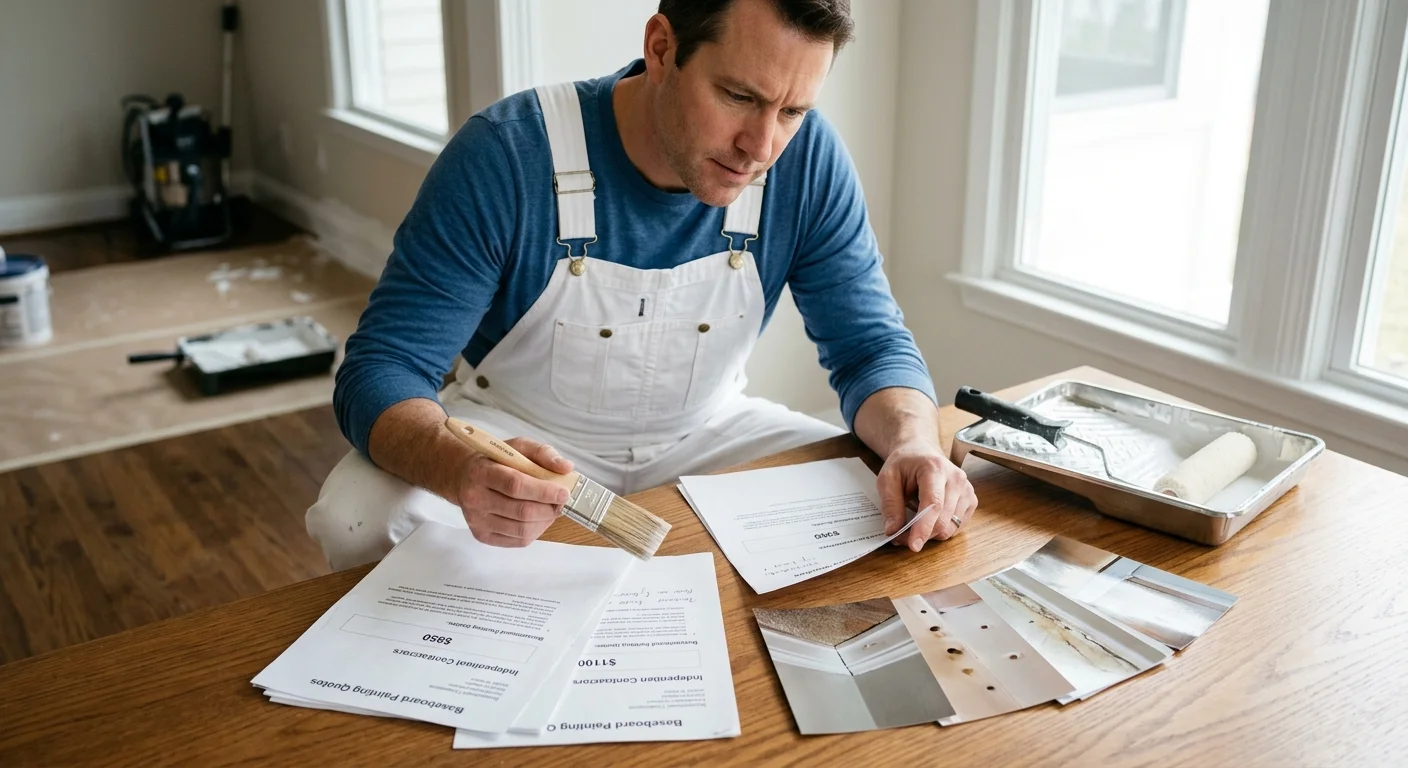
Count the baseboards, doors, and trim in scope
Start by confirming exactly which surfaces each painter counted. “Paint the trim” can mean baseboards alone, or it can include door casings, window trim, doors, crown molding, and built-ins. Those aren’t interchangeable scopes.
Walk through the property with each quoting painter. Identify every room, hallway, closet, landing, and stair area included. Note whether the baseboards continue behind furniture or appliances. Ask whether both visible faces and top edges are part of the work.
Doors need their own count. A quote should distinguish doors from their frames and casings. It should also say whether both door faces and all painted edges are included. If hardware must come off, confirm who handles it.
Small spaces often create the biggest comparison problems. Closets, utility rooms, kitchen toe kicks, and short transition walls can disappear from a loose estimate. So can trim inside a garage entry or around a sliding door.
Ask each painter to use the same scope list. You can compare totals only after the surfaces match. If one painter measures linear footage and another lists rooms, request enough detail to reconcile both methods.
Our trim, doors, and baseboards service explains the broader work category. The San Diego trim and baseboard guide can also help you identify surfaces before quote appointments.
Finish this step with a written room-by-room list. Attach photos when a corner, doorway, or built-in could be misunderstood. That record gives every baseboard painting company the same starting point.
Check caulk, nail holes, and damaged joints
A coating quote shouldn’t hide the condition of the trim. Inspect the baseboards with each painter before comparing the proposed work. Mark open seams, visible nail holes, dents, chipped edges, separated joints, and damaged corners.
Pay close attention where trim meets the wall. Some gaps may be listed for caulking, while others may need a different repair. Ask the painter to separate those conditions in writing. “Minor prep included” doesn’t tell you which defects will disappear.
The same applies to failed or uneven caulk. Confirm whether the painter will remove loose material, apply new caulk, or simply paint the existing line. Our guide to caulking baseboards before painting explains why this deserves its own conversation.
Damaged wood or MDF should be identified separately from ordinary filling. Ask whether a quoted repair means filling, rebuilding an edge, replacing a section, or leaving it untouched. Don’t assume the painter and homeowner share the same definition of “repair.”
Older painted trim also deserves a careful review. Local housing ages vary widely. Approved Census-based data places the estimated pre-1978 housing share at 49.6% in San Diego, 61.6% in Coronado, and 40.8% in Chula Vista.
Paid renovation work that disturbs paint in pre-1978 housing can fall under the EPA Renovation, Repair and Painting program. Covered work requires a certified firm and certified renovator using lead-safe practices. Ask how the quoting painter will evaluate older coatings before sanding or other disturbance begins.
The final quote should list included repairs and unresolved damage. That division prevents a cosmetic painting scope from being mistaken for trim replacement.
Review preparation and finish in each quote
Preparation is where short descriptions become hard to compare. Ask each painter to list the planned steps in order. Useful entries include cleaning, removing loose paint, dulling glossy surfaces, sanding repairs, controlling dust, spot priming, caulking, and applying the finish.
Don’t accept “standard prep” without a written definition. One painter may include every visible nail hole. Another may include only loose paint and obvious gaps. The wording matters more than the label.
Primer also needs a clear scope. Ask whether the quote includes full priming, spot priming, or no primer. The answer may depend on existing coatings, exposed material, stains, repairs, or a major color change. Have the painter explain what condition would change the plan.
Next, compare the proposed finish. Each quote should identify the manufacturer, product line, color, and sheen. It should state whether the painter expects to brush, roll, spray, or combine methods. If coat count depends on coverage, that condition should appear in writing.
Doors require extra detail when they share the project. Ask how painted faces, edges, and contact points will be handled. Confirm how the painter will tell you when doors can return to normal use. If door contact is already a concern, read our guide to painted doors that stick after repainting.
Baseboards are often bundled into a larger interior painting project. When walls and trim appear in one quote, separate their preparation, products, colors, and finish requirements. This makes later changes easier to identify.
A useful comparison has matching rows for every painter. List cleaning, repairs, caulk, primer, application, and finish. Then copy each quote’s exact language into those rows. Blank spaces become questions instead of surprises.
Confirm furniture protection and cleanup
Baseboard work happens close to flooring, walls, furniture, and everyday traffic. The quote should explain how the painter plans to protect those areas. Ask for specifics about floor coverings, masking, furniture clearance, wall protection, and access through occupied rooms.
Confirm who moves furniture before work begins. If the homeowner must clear smaller items or create a working path, put that responsibility in the scope. Large pieces may need a separate plan. Don’t rely on a verbal understanding.
Access details can change from one San Diego property to another. A condo may have parking, elevator, or building rules. A home with stairs may need a different protection plan across landings. An occupied room may require coordination around children or pets. Tell every quoting painter about those conditions.
Cleanup deserves its own paragraph in the quote. Ask whether it includes removing masking materials, collecting dust, clearing debris, reinstalling removed hardware, and returning moved items. If leftover labeled paint matters to you, ask whether that’s part of the handoff.
Also confirm what “complete” means. Will the painter conduct a walkthrough with you? How should you mark missed spots or accidental paint transfer? Who records any remaining corrections?
These questions don’t tell the painter how to run the job. They define the result you’re comparing. A lower written total may reflect less protection or cleanup. A higher total may include tasks that another quote leaves with the homeowner.
Identify exclusions before accepting a quote
Read the exclusions before focusing on the total. A clear quote should show what the painter isn’t agreeing to handle. Common discussion points include trim replacement, wall repairs, moving heavy furniture, removing hardware, closet interiors, window trim, doors, and touch-ups after other trades.
Ask what happens if the painter uncovers damage after preparation begins. The quote should explain how additional work is described and approved. You should know whether the original scope stays intact while a separate change is considered.
Color and finish decisions also need boundaries. Confirm whether the quoted scope assumes one trim color, whether doors use the same product, and what happens if you change selections later. Keep those answers in the signed documents.
Don’t assume a warranty applies. If an independent painter offers one, request the terms in writing. The document should identify what that painter covers, what’s excluded, and how a concern must be reported. Paint Pros San Diego doesn’t provide the painter’s warranty.
Before signing, ask the quoting painter for license and insurance documentation. Verify the contractor through the CSLB license check. Make sure the name on the quote matches the party you expect to contract and pay.
Paint Pros San Diego is a referral service. We connect homeowners with licensed, independent local painters. We don’t perform the work, set the painter’s price, or enter the painting contract.
Your final comparison should place matching scopes side by side. Review surfaces, repairs, preparation, finish, protection, cleanup, and exclusions. The clearest quote is the one that leaves the fewest decisions unstated.
When to call us
A qualified local painter makes sense when damaged trim, older coatings, detailed preparation, or several rooms make the scope difficult to define. We can help you connect with an independent pro for baseboards, doors, and related interior trim. Call us at (858) 400-6422 and we’ll connect you with a licensed local painter.