The door closed fine for years, and now it drags on the frame or won’t latch the same day the paint dried. Before you assume something’s wrong with the door itself, separate two very different problems that look identical from across the room: a coating that’s still tacky or built up too thick, and a door that’s genuinely out of alignment. One is a painting issue with a straightforward fix. The other needs a carpenter, not more sanding.
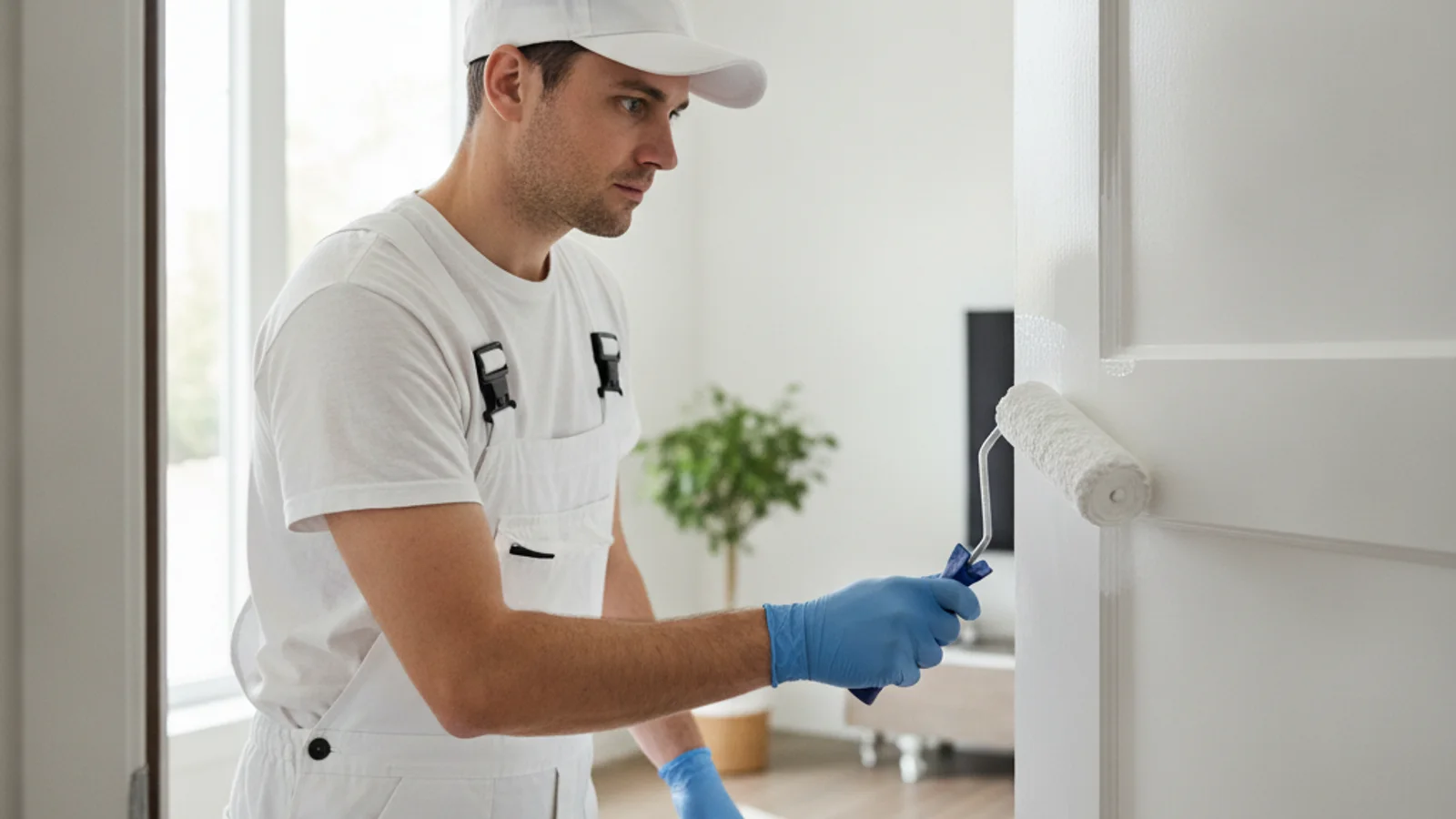
Why is my door paint sticking?
Door paint sticking after a repaint is almost always the coating, not a broken door. The film is still curing, the edge picked up extra thickness, or paint got into the hinges. A door that dragged before anyone opened a can is a fit problem. Use the checks below before you plane anything.
Separate paint tack from a misaligned door
Fresh enamel paint goes through distinct phases as it hardens, and knowing where a door falls in that timeline matters before you touch it. Paint is dry to the touch within hours, but full cure, the point where the film has hardened all the way through and reaches its final durability, takes considerably longer and depends on the product, the room’s temperature, and humidity. A door that sticks slightly in the first few days after painting and gradually stops sticking as the days pass is very likely just an incompletely cured coating that hasn’t finished hardening yet, not a structural problem.
A door that sticks in exactly the same spot every time, that dragged even before the last coat went on, or that shows a visible gap on one side and none on the other, is a different situation. That’s a fit problem: the door or frame has shifted, and no amount of additional cure time will fix it. San Diego’s older housing stock, especially the Craftsman and Spanish-style homes common in North Park, South Park, and parts of Coronado, has had decades for foundations to settle slightly and door frames to rack out of square as a result. A repaint doesn’t cause that kind of movement. It just makes an existing misalignment obvious for the first time, because a fresh coat of paint adds a small amount of thickness right where the door and frame were already close.
The practical test: close the door slowly and note exactly where it catches. Paint buildup drags evenly along a section of the edge. A misaligned door catches at one specific point, often top or bottom on one side, and the gap around the rest of the door frame is uneven when you look at it straight on.
Check hinges, stops, edges, and weatherstripping
Before assuming it’s the paint, walk the door’s full perimeter. Hinges get painted over more often than people realize, especially when a homeowner or a rushed painter skips masking them off. Paint in a hinge barrel or on the hinge leaves can bind the door’s swing just enough to cause dragging that has nothing to do with the door’s edge itself.
The door stop, the strip of trim the door closes against, is another common culprit. If the stop got a heavier coat than the door edge, or if it was reset slightly during prep work, the reveal between the door and the stop shrinks and creates drag exactly where the two coated surfaces meet.
Weatherstripping on exterior doors compresses differently once it’s been painted over, which is a mistake in itself since weatherstripping generally shouldn’t be painted at all. If a painter coated over foam or rubber weatherstripping on an exterior door, that seal can compress unevenly and create resistance that reads as the door sticking.
Check the top and bottom edges of the door too, particularly on interior doors that were removed for painting and reset. If the door went back on its hinges even slightly off from where it started, the top corner or bottom corner can now catch the frame where it never did before. Slide a piece of paper along the closed door’s edge on every side. If it slides freely on three sides and catches on the fourth, that pinpoints exactly where the buildup or the misalignment sits, which makes the fix a lot faster to identify.
Review preparation on the contact points
The contact edge of a door, the strip that meets the frame when the door closes, is one of the trickiest spots to paint well because it’s easy to either skip it or over-apply. A painter working carefully will scuff-sand that edge lightly between coats and check the door against the frame before calling the job done, catching buildup before it becomes a sticking point.
Multiple coats applied without adequate dry time between them are a common cause of excess thickness right at the edge, since each coat adds a small amount of film buildup and paint doesn’t level itself out the way people expect. If a door had several coats applied close together, especially with a thicker enamel, the edge can end up noticeably thicker than it was before, enough to eliminate the small gap a door needs to swing freely.
This is also where door type matters. A solid-core interior door and a hollow-core door take paint at the same rate, but a solid door’s added weight over time can make a marginal hinge or frame issue more noticeable than it would be on a lighter hollow door.
Match primer and enamel to the existing coating
Compatibility between the old finish and the new one affects both appearance and cure time. A bonding primer designed for glossy or previously painted surfaces helps the new coat adhere properly and cure at a normal rate. Skipping primer, or using a primer not suited to the existing finish, can leave the topcoat softer and tackier for longer than expected, which shows up as stickiness at the exact point where the door meets the frame under normal closing pressure.
Latex and alkyd enamels cure on different timelines and shouldn’t be mixed carelessly over each other without the right prep step in between. If you’re not sure what was on the door before, that’s a reasonable thing to ask the painter doing the work, since it changes both the primer choice and how long you should expect the door to feel slightly tacky before it’s fully hardened.
For doors getting a full repaint rather than a touch-up, the guide on painting a metal front door and the paint sheen guide both cover product choices that affect how a door’s edges perform once they’re closed against the frame day after day.
Know when a carpenter should inspect first
If a door was already dragging before it got painted, if the gap around the door is visibly uneven on opposite sides, or if the sticking hasn’t eased up several weeks after the paint fully cured, that points to the door or frame itself rather than the coating. Structural movement, swelling from moisture intrusion, and hardware that’s failing mechanically are carpentry and door-hardware problems, not paint problems, and diagnosing them from appearance alone isn’t reliable. An independent painter handles paint preparation and the coating itself. A carpenter or door specialist is the right call for adjusting hinges, planing an edge, or evaluating whether a frame has racked out of square. Getting that order right saves you from sanding down a door edge that was never the actual problem. The trim, doors, and baseboards and interior painting service pages cover the painting side of a repaint once any structural issue has been ruled out.
When to call us
A door that’s still tacky a day or two after painting usually just needs time to finish curing. A door that catches at the same spot every time, gapped unevenly, or dragged before it was ever painted needs an inspection before more paint goes on. Call us at (858) 400-6422 and we’ll connect you with a licensed local painter.