Yes, wallpaper can sometimes be painted over, but it isn’t right for every wall. A local painter should inspect the covering, seams, underlying wall, and repair needs before recommending removal or a coating-over scope.
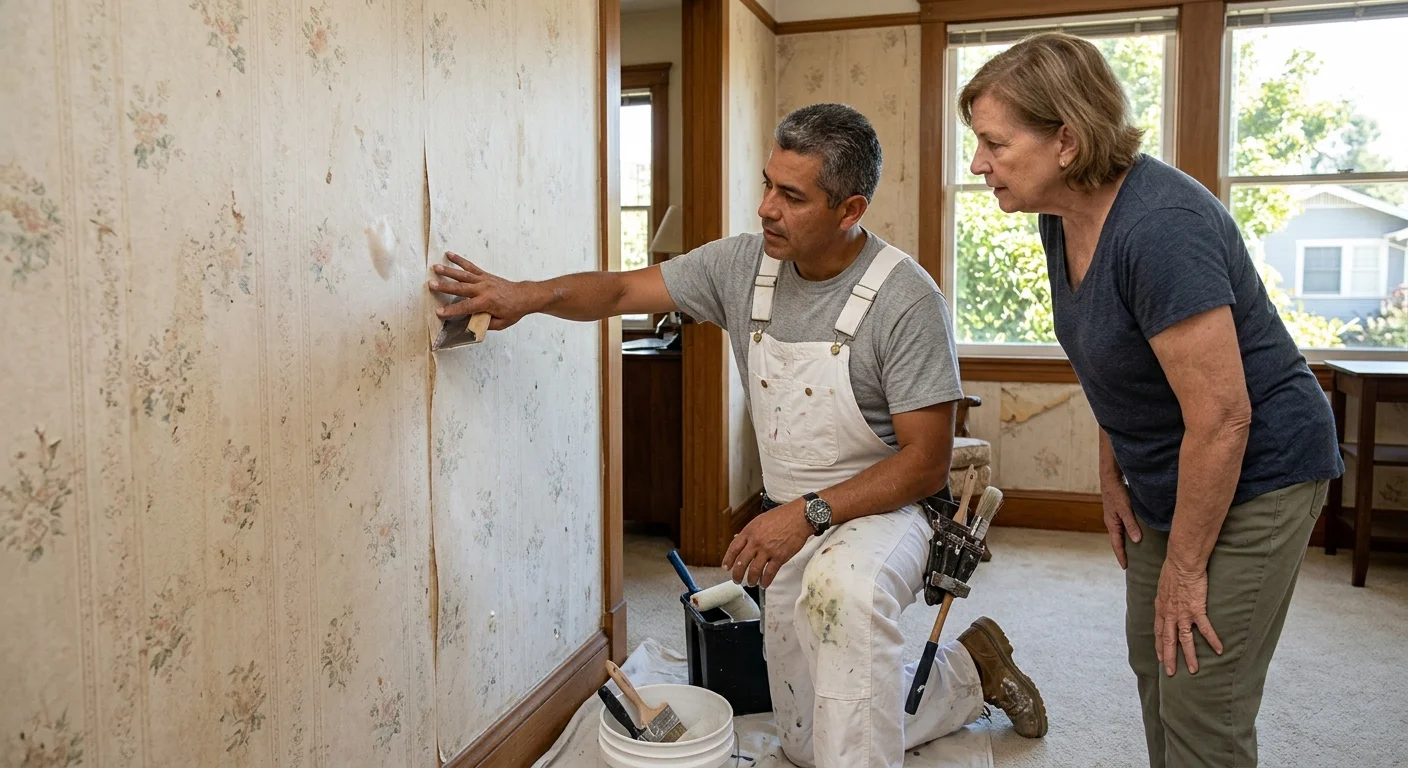
Decide whether the wallpaper is firmly bonded
The first decision isn’t about paint color. It’s whether the existing covering can reasonably remain in place.
A room may look fine from the doorway. Closer inspection can reveal different conditions near corners, windows, outlets, baseboards, and prior patches. Those areas belong in the painter’s review. One neat section shouldn’t decide the scope for an entire room.
Ask the painter to record which walls appear firmly bonded. The quote should also identify areas that remain uncertain. If one wall differs from the others, it may need its own recommendation. That gives you a room-by-room decision instead of one blanket answer.
The age of the home doesn’t settle this question. It does affect what information the painter needs before disturbing older surfaces. Verified ACS housing data places 49.6% of San Diego housing units in the estimated pre-1978 group. The share is 68.7% in La Mesa and 27.5% in Carlsbad. Those figures don’t prove that a home contains wallpaper or lead-based paint.
Build year should still appear in the project intake. Firms performing paid renovation, repair, or painting that disturbs lead-based paint in pre-1978 housing must follow the EPA Renovation, Repair and Painting program. Ask the painter whether the planned scope triggers those requirements.
A sound decision starts with the actual walls. It shouldn’t come from the neighborhood, home age, or a photo alone.
Check seams, bubbles, and wall damage first
Visible conditions help the painter define what requires closer review. Walk the room slowly before discussing products or colors. Note every seam, bubble, lifted edge, puncture, stain, patch, and uneven area you can see.
Don’t limit that review to the center of each wall. Look around doors, windows, outlets, switches, ceilings, and baseboards. Check inside closets if their walls are included. Photograph each concern and label its room and location. These notes make competing quotes easier to compare.
Ask the painter to separate observations into clear groups:
- Wallpaper that may remain
- Wallpaper recommended for removal
- Areas needing further inspection
- Visible wall damage
- Prior repairs that affect the proposed scope
This isn’t a do-it-yourself adhesion test. It’s a practical record of what the painter saw and how that inspection shaped the quote. If the recommendation is to paint over wallpaper seams, ask how those seams appear in the written scope. The estimate shouldn’t hide that decision inside a broad phrase such as “wall preparation.”
San Diego County homes don’t share one wall history. A room in National City may have passed through different owners and finish choices than a room in San Marcos. Even two rooms in the same home can differ. Actual wall conditions matter more than a citywide assumption.
When several conditions appear together, request two written options if both remain possible. One can cover leaving the wallpaper. The other can cover removal and any related evaluation. You can then compare defined scopes instead of comparing vague promises.
Compare removal with a coating-over scope
The useful comparison isn’t “easy versus hard.” It’s one documented scope against another. Each option should state what stays, what comes off, and what happens if the exposed wall differs from expectations.
A coating-over quote should identify the inspected rooms and walls. It should state which covering remains and which visible defects are included. It should also name the proposed primer and paint products without making unsupported performance promises.
A removal quote should define the areas included in wallpaper removal and preparation. It should state whether adhesive cleanup, wall evaluation, drywall repair, primer, and painting appear in the same scope. If another professional handles part of the work, the quote should make that division clear.
Don’t assume removal creates a paint-ready wall. The condition underneath isn’t fully known until the covering comes down. The separate guide to wallpaper glue before painting explains why adhesive residue needs its own project decision. Your quote should say who assesses it and whether resulting work needs approval.
Compare exclusions as closely as inclusions. Ask how each painter handles newly exposed conditions, added repairs, and changes to the agreed scope. A low total without clear boundaries isn’t directly comparable to a detailed proposal.
Paint Pros San Diego connects homeowners with licensed, independent local painters. The homeowner contracts and pays the selected professional directly. Before signing, verify that professional through the CSLB license check. Also ask for current insurance documentation and the painter’s written terms.
Plan repairs, primer, and paint after inspection
An online answer can’t select a repair method or primer for an unseen wall. Those choices belong after inspection, when the painter can connect each proposed step to an observed condition.
Ask for a sequence that follows the decision already made. It should show where wallpaper remains, where removal occurs, and where wall repair enters the project. It should also identify the professional responsible for each part.
The written scope should answer several practical questions. Which rooms are included? Are ceilings, trim, doors, and closets excluded? What visible defects are covered? Which named primer and paint products are proposed? What happens if removal exposes a condition that wasn’t visible during quoting?
Don’t accept “prep as needed” as the only description. That phrase doesn’t tell you what the price includes. A clearer scope lists the known work and explains how unknown work receives approval.
Primer deserves the same restraint. This page can’t confirm that one primer fits every wallpaper, adhesive, wall surface, or prior coating. Ask the quoting painter to name the selected product and explain why it matches the inspected wall. Keep that answer with the proposal.
For a pre-1978 home, also ask whether planned work may disturb painted surfaces. Under the EPA RRP rule, covered renovations require a certified firm and certified renovator. The rule also includes warning signs, containment, specified cleaning practices, and HEPA vacuum attachments for covered power-tool work on painted surfaces.
That question matters across San Diego, La Mesa, National City, and other communities with older housing. It doesn’t decide whether wallpaper stays. It helps define how an approved scope must be handled.
Know when drywall repair belongs in the quote
Drywall repair should appear as a separate decision, not a surprise line item after work begins. If the painter sees torn facing, holes, failed patches, dents, or uneven prior repairs, ask whether a drywall professional should inspect them.
The quote should identify known damaged areas by room and wall. It should also distinguish existing damage from conditions that might appear after wallpaper removal. That separation gives everyone a shared record before the covering changes.
Some projects need one professional for removal and another for the wall. Others may be quoted together by a painting professional whose scope includes the required repair. Paint Pros San Diego doesn’t perform either service. We connect homeowners with licensed independent pros who assess and complete the contracted work.
The pros we connect you with can assess whether drywall repair and texture matching belong in the scope when the project clearly extends beyond wallpaper. If removal has already exposed damage, read the guide about what happens when wallpaper removal tears drywall. It covers that separate problem without treating every covered wall as damaged.
Ask how repaired areas will be recorded in the proposal. The scope should state which walls receive repair, who completes it, and whether texture matching is included. It should also show where repair ends and painting begins.
Don’t let an uncertain wall become an undefined allowance. If the extent can’t be confirmed before removal, the contract can state the approval process for additional work. That protects the comparison between painters and keeps the original decision visible.
When to call us
Call when wallpaper condition, hidden wall damage, or competing project scopes make the decision unclear. Call us at (858) 400-6422 and we’ll connect you with a licensed local painter.