Some laminate kitchen cabinets can be considered for painting, but there isn’t a universal yes. The painter first needs to identify the surface, inspect every failing edge, and check the proposed coating manufacturer’s instructions.
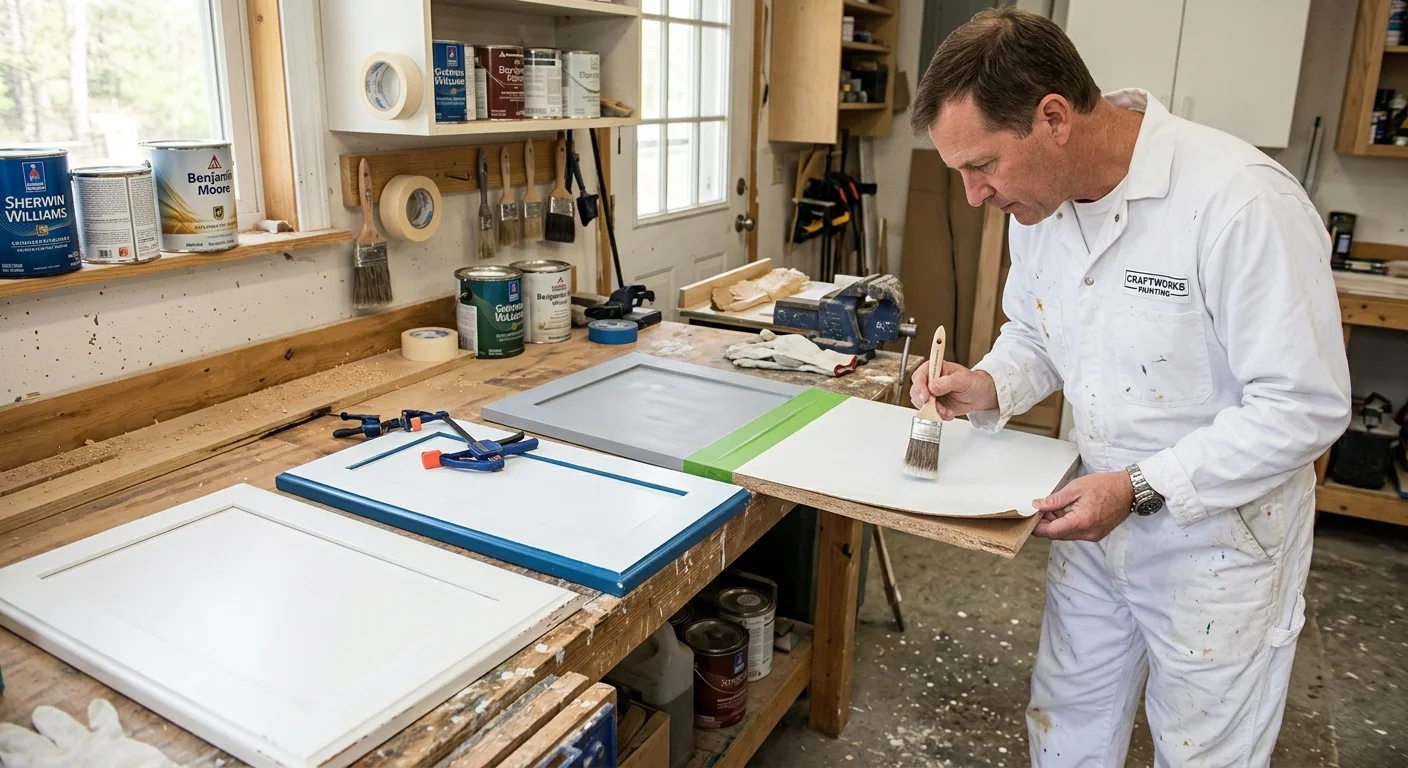
A smooth door that looks intact can still have an uncertain finish history. A loose covering or damaged panel presents a different decision. Treat the inspection as a material check, not just a color appointment.
Identify laminate, thermofoil, and painted surfaces
Homeowners often use “laminate” for several smooth cabinet surfaces. Labels such as laminate, thermofoil, melamine, and factory finish can also appear in listings or renovation paperwork. Those names shouldn’t be treated as interchangeable when a coating system is selected.
Start with any records available for the kitchen. Look for an invoice, cabinet manufacturer label, model number, or material schedule. Labels may appear inside a door, beneath a drawer, or on the back of a removable component. The manufacturer is the right source for confirming the original construction.
Next, have the painter inspect an inconspicuous edge. Visible seams, wrapped corners, an exposed core, or an older painted layer can provide clues. They don’t replace documentation. A previous owner may also have coated the cabinets, which means the visible surface isn’t necessarily the original one.
Ask the painter to write the identified or suspected surface into the proposal. If the material can’t be confirmed, the proposal should say that plainly. It should also identify how the coating manufacturer’s instructions will be checked before work begins.
This distinction matters because “painting laminate cabinets” describes the goal, not a complete specification. A painter still needs to match the preparation and coating proposal to the actual door face, cabinet box, trim, and exposed edges.
Our cabinet painting and refinishing service connects San Diego County homeowners with licensed independent painters. The painter you hire should inspect the cabinets directly and explain any uncertainty before proposing a scope.
Check peeling edges and damaged panels first
A loose edge needs attention before anyone discusses sheen or color. Photograph lifting corners, open seams, cracks, chips, soft areas, and places where the face has separated. Open every door and drawer so the inspection covers more than the most visible fronts.
Mark each problem with removable tape. That gives the quoting painter a clear repair list. It also helps separate isolated damage from a repeated condition across the kitchen. Check doors near the sink, cooking area, dishwasher, and frequently handled drawers, but don’t assume the location proves the cause.
Ask the painter to classify each item in writing:
- Suitable for the proposed preparation and coating system
- Repair needed before coating
- Component replacement worth discussing
- Material or cause not confirmed
That written distinction protects the scope from becoming vague. “Prep cabinets” doesn’t explain whether a loose edge will be repaired, excluded, or replaced. It also doesn’t identify who supplies a replacement door or matching panel.
Don’t ask paint to serve as the repair plan. First decide what will happen to every loose, damaged, or uncertain component. Then ask whether the repaired area remains compatible with the proposed primer and finish, based on the product manufacturer’s current instructions.
When damage appears across many doors, compare the cabinet painter’s proposed scope with the decision points in cabinet painting versus replacing. That comparison shouldn’t begin with a promised lifespan or assumed price. It should begin with the condition of the existing parts and the amount of unresolved repair work.
Compare cleaning, repair, and preparation scopes
Two proposals can both say “refinish laminate kitchen cabinets” while describing very different work. Compare the steps, exclusions, and product specifications line by line. The wording should show what happens before any finish coat is considered.
A useful scope identifies the doors, drawer fronts, cabinet boxes, end panels, toe kicks, trim, and removable hardware. It should state which pieces are included. It should also identify surfaces that won’t be coated.
Cleaning needs a defined standard. Ask which product will be used and which manufacturer instruction governs it. The painter should explain how residue from the cleaning step will be handled before later products are applied. Avoid accepting an unnamed “degreasing” step without a product or method.
Repair language should connect to the defects found during inspection. Ask whether loose edges, holes, open seams, damaged corners, and exposed core areas are included. If a repair material is proposed, request its name and confirm its compatibility with the following coating steps.
Preparation should be equally specific. The scope should identify any abrasion method, dust control, masking, removal, labeling, and reinstallation. It should also say which steps depend on the cabinet material or the coating maker’s directions. A generic promise to “prep as needed” leaves too much undecided.
Primer and finish products should be named. Approved market examples of cabinet coatings include Emerald Urethane Trim Enamel, ADVANCE, and Cabinet Coat. A product’s existence doesn’t establish that it suits your specific laminate. The painter still needs to check its current technical instructions and proposed system.
For a broader view of sequencing, read the professional cabinet refinishing process. Use that page to organize questions, then rely on the written proposal and current manufacturer documents for your kitchen.
Older San Diego County homes may add another concern. Paid work that disturbs painted surfaces in pre-1978 housing can fall under the federal EPA Renovation, Repair and Painting program. Ask the painter whether the planned work disturbs an older painted surface and whether that rule applies.
Review a test area with the cabinet painter
A sample area gives you something specific to review before the full kitchen proceeds. It isn’t a promise of future performance. It also doesn’t replace the product maker’s instructions or a written project scope.
Choose a location with the painter. An extra door, removable panel, or inconspicuous interior-facing area may be considered. The selected area should match the surface that will receive the proposed system. Testing a different material doesn’t answer the laminate question.
Record the test steps. The painter should identify the cleaning product, repair material, preparation method, primer, finish, and application sequence used. Keep the product names and technical documents with the proposal.
The sample also needs the full review interval stated by the product manufacturer. Dry appearance alone isn’t enough to define when a coating may be evaluated. Don’t invent a waiting period. Use the current label or technical data, and have the painter explain which interval applies.
Review the test area under the kitchen’s normal lighting. Look at color, sheen, texture, edges, corners, and transitions between components. Open and close the test component if the painter says it’s ready for handling. Ask how the result compares with the finish described in the proposal.
Any adhesion check should follow a method supported by the coating manufacturer or another applicable written specification. Random scratching can damage the sample without answering the right question. If no applicable test method or compatible system can be confirmed, document that uncertainty instead of turning it into a guarantee.
Before selecting a contractor, use our guide to comparing kitchen cabinet painting contractors. San Diego County homeowners should also verify the contractor through the CSLB license check before signing.
Know when replacement deserves consideration
Painting deserves consideration when the painter can identify a workable surface, address the visible defects, and support the proposed system with current product instructions. Replacement deserves a closer look when those questions remain unresolved.
Start with the doors and drawer fronts. If many components have loose coverings, open seams, damaged corners, or an uncertain core condition, ask for separate options. One option can cover repair and coating. Another can address replacement of affected components. Keep assumptions out of both scopes.
Next, look beyond the surface. Make sure doors align, drawers operate, and hinges attach where expected. Record any functional concern before requesting a paint proposal. A finish-focused scope shouldn’t hide a separate cabinet repair problem.
Appearance can also drive the decision. Painting changes the visible finish. It doesn’t automatically change the door profile, cabinet layout, storage, hardware placement, or every seam. If those features are the real source of dissatisfaction, compare that goal against the limits stated in the painter’s proposal.
Ask these final questions:
- What cabinet material was confirmed?
- Which damaged components are excluded?
- What repairs occur before coating?
- Which product instructions support the proposed system?
- What did the sample show?
- What remains uncertain?
- Who provides any replacement parts?
- Which warranty, if any, comes directly from the hired painter?
Paint Pros San Diego doesn’t perform the work or issue a workmanship warranty. We match homeowners with licensed, independent local painters. The homeowner contracts with and pays the selected professional directly.
When to call us
Call when the cabinet surface is uncertain, edges are lifting, or proposals describe different preparation plans. Call us at (858) 400-6422 and we’ll connect you with a licensed local painter.