Choosing between a stucco color coat and exterior paint starts with the wall, not the label. Neither option is automatically better for every San Diego house. Choose after a qualified pro identifies the existing finish, records needed repairs, and names the exact proposed system.
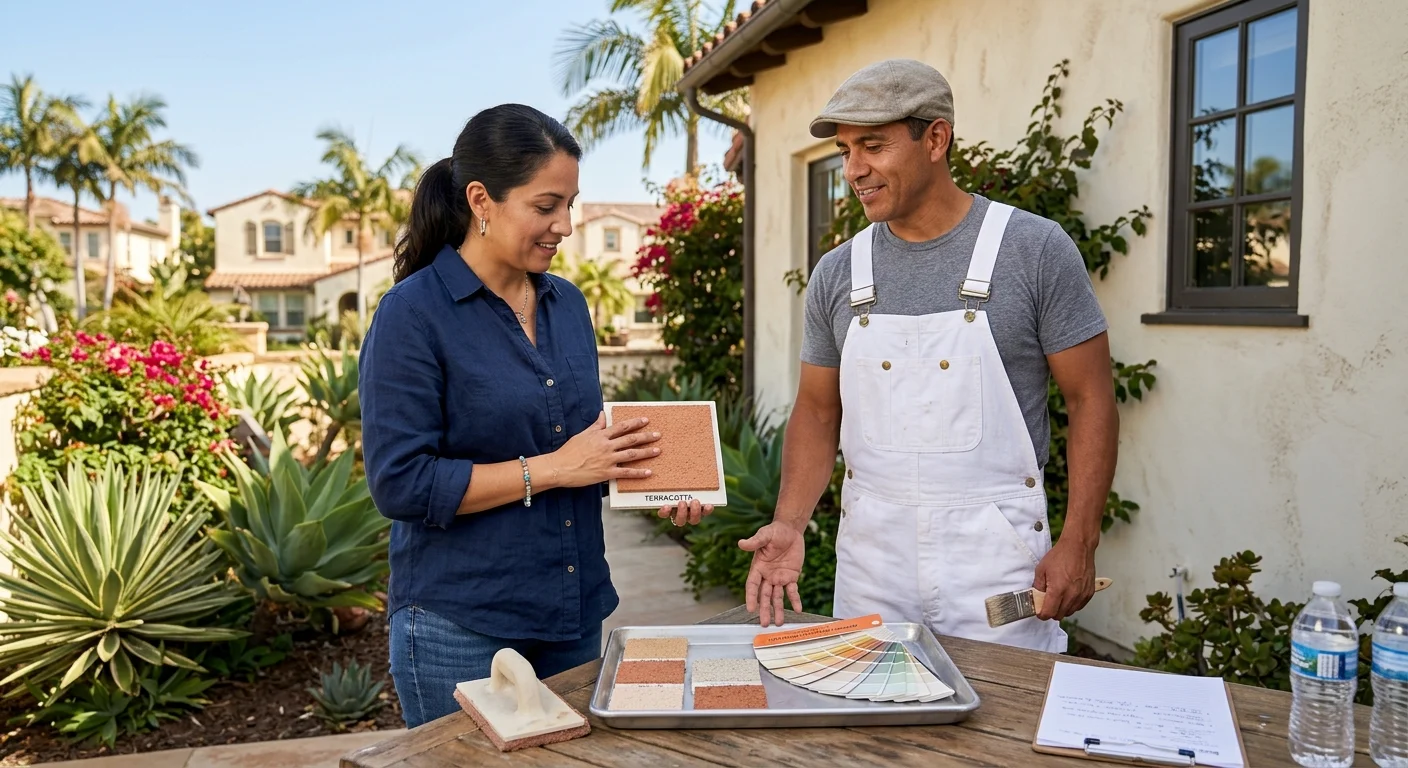
Identify the existing stucco finish and coating
First, determine what’s already covering the stucco. Don’t select a new finish from appearance alone. Color, texture, patches, and earlier repairs can make the surface difficult to identify.
This site’s approved research doesn’t contain a reliable visual test for distinguishing every color coat from every paint product. It also doesn’t confirm one compatibility rule that applies to every stucco wall. Ask the stucco professional or painter to document how the existing surface was identified.
Useful evidence may include old invoices, product containers, construction records, or HOA architectural files. If those aren’t available, the written scope should address:
- Whether the surface appears bare or previously coated
- Any visible peeling, residue, patches, cracks, or loose areas
- Which parts of the wall remain uncertain
- Whether a test area will be completed before final approval
- The exact manufacturer and product proposed for the work
Don’t let a broad label such as “stucco finish” replace those details. Our stucco painting and repair referral service can connect you with licensed local painters who assess the wall and prepare their own scopes.
The house’s age also matters when painted surfaces may be disturbed. San Diego has 559,653 housing units, and an estimated 49.6% were built before 1978, based on ACS 2023 five-year data. That figure doesn’t identify the finish on your home. It does show why the construction year belongs in the preparation discussion.
Paid renovation, repair, or painting work that disturbs paint in pre-1978 housing falls under the EPA Renovation, Repair and Painting program. For more local context, see our guide to stucco painting in San Diego.
Compare a color coat with exterior paint
The practical comparison begins with two written proposals. One may describe a color coat. The other may specify exterior paint. Neither label provides enough information by itself.
No approved primary source for this site confirms a universal color-coat formula, lifespan, maintenance interval, price, or compatibility rule. Those points couldn’t be verified for every product sold under that name. The current manufacturer’s instructions for the exact product should govern the material questions.
Compare both proposals using the same checklist:
- Exact product name and manufacturer
- Proposed color and finish
- Areas included and excluded
- Existing surfaces identified by the bidder
- Cleaning and preparation steps
- Crack and patch treatment
- Primer, if one is proposed
- Sample area and approval process
- Instructions you should keep after completion
- Conditions that could change the scope
A paint proposal might name a verified masonry or stucco coating such as Sherwin-Williams Loxon XP or Dunn-Edwards EVERSHIELD. Those are current product names, not proof that either one fits your house. Ask the painter to connect the recommendation to the manufacturer’s current instructions and the observed wall conditions.
Some paint bids also compare acrylic and elastomeric products. That’s a separate product decision, covered in our guide to elastomeric versus acrylic paint for San Diego stucco. Don’t let that comparison substitute for the broader color-coat-versus-paint decision.
The stronger proposal is the one you can verify. It should name the product, define the preparation, and explain unresolved conditions. If two bidders use the same label but describe different scopes, compare the written details rather than assuming the materials match.
Check cracks, patches, and prior repairs first
Cracks and patches belong in the scope before you discuss the final color. Don’t assume a new finish will resolve an underlying condition. A qualified professional should examine the wall and state what will be repaired, left alone, or referred for another evaluation.
Walk every elevation with the person preparing the bid. Photograph visible conditions and note their locations. The review should record:
- Cracks and openings
- Previous patches
- Peeling or loose material
- Stains or discolored areas
- Chalky residue
- Changes in texture
- Gaps around openings and penetrations
- Areas that can’t be assessed from the ground
A photograph alone doesn’t confirm why a condition developed. Ask the bidder to separate observations from conclusions. If the cause can’t be confirmed, the proposal should say so and identify who can evaluate it.
Include repaired and patched areas in the sample plan. That lets you judge the proposed result on the actual house. Ask what happens if the test area doesn’t meet the agreed appearance.
Older painted stucco needs another discussion. When covered work disturbs paint in pre-1978 housing, the EPA rule requires a certified firm and certified renovator. Its work-practice standards include warning signs, containment, controlled waste handling, and cleaning verification. Power sanding or grinding on painted surfaces requires a shroud or containment system with a HEPA vacuum attachment.
Those requirements apply to the firm performing covered work. Paint Pros San Diego is a referral service and doesn’t perform preparation or repairs. Before signing, confirm who will do the work and how any applicable lead-safe requirements appear in the contractor’s scope.
Review color, texture, and maintenance goals
The right finish should match what you want to see and manage. Write those goals down before bids arrive. Otherwise, contractors may solve different problems while appearing to quote the same job.
Your list might include:
- Keep the existing texture visible
- Change the body color
- Match a repaired section
- Reduce visible variation between elevations
- Coordinate trim and stucco colors
- Follow an HOA-approved palette
- Receive written cleaning and care instructions
Ask for a sample on the house, not only a small hand sample. Include representative texture, an older section, and a repaired area when possible. View it from several normal sightlines and under the light conditions you care about.
San Diego County also needs site-specific discussion. A coastal property near Pacific Beach or Coronado shouldn’t receive a generic climate explanation copied from an inland proposal. The verified climate sources for this site show that conditions measured near San Diego International Airport don’t represent every inland area. Rainfall also changes with elevation and distance from the coast.
Those facts don’t prove which finish will perform better at your address. Ask each bidder which observed site conditions affected the recommendation. If the contractor makes a lifespan or maintenance claim, request the current manufacturer document supporting it. This site’s approved research doesn’t verify a fixed service life for either option in San Diego.
Color approval may also involve someone besides the homeowner. Review HOA rules before authorizing a sample. In the City of San Diego, routine residential repainting doesn’t appear on the general list of projects requiring building permits. Exterior repainting in the Old Town San Diego Planned District may be subject to review. Confirm current requirements with the relevant city department or architectural reviewer.
Ask the stucco professional to document the scope
A usable proposal should tell another reader what will happen without relying on a sales conversation. Ask the bidder to revise vague phrases such as “prep as needed” or “repair cracks” into observable tasks and named materials.
The final scope should identify:
- The contractor and license information
- Each wall, feature, and surface included
- Existing finish observations
- Unresolved conditions
- Repair locations and proposed treatment
- Cleaning and preparation methods
- Exact materials and products
- Primer or intermediate steps, if proposed
- Color, finish, and sample approval
- Protection and containment measures
- Conditions that could require a revised scope
- Documents provided after completion
Verify the contractor through the CSLB license check before signing. California’s C-33 painting classification includes surface preparation and the application of materials used to decorate or protect structures. That doesn’t establish whether a particular stucco color coat belongs in a specific painter’s proposed scope. Ask the quoting professional to explain the license classification and any subcontracting in writing.
Paint Pros San Diego doesn’t select products, set prices, perform the work, or issue warranties. We connect homeowners with licensed, independent local painting professionals. You contract with and pay the selected professional directly.
If the project includes trim, doors, siding, or other exterior surfaces, ask whether those items appear in the same proposal. Our exterior house painting service can help you find a local painter for that broader scope.
Keep the signed scope, product records, color information, photographs, and care instructions together. If a later repair is needed, those documents give the next professional something more reliable than a guess.
When to call us
When the finish is unknown, repairs are scattered, or competing bids name different systems, the job needs a qualified local painting pro. Call us at (858) 400-6422 and we’ll connect you with a licensed local painter.