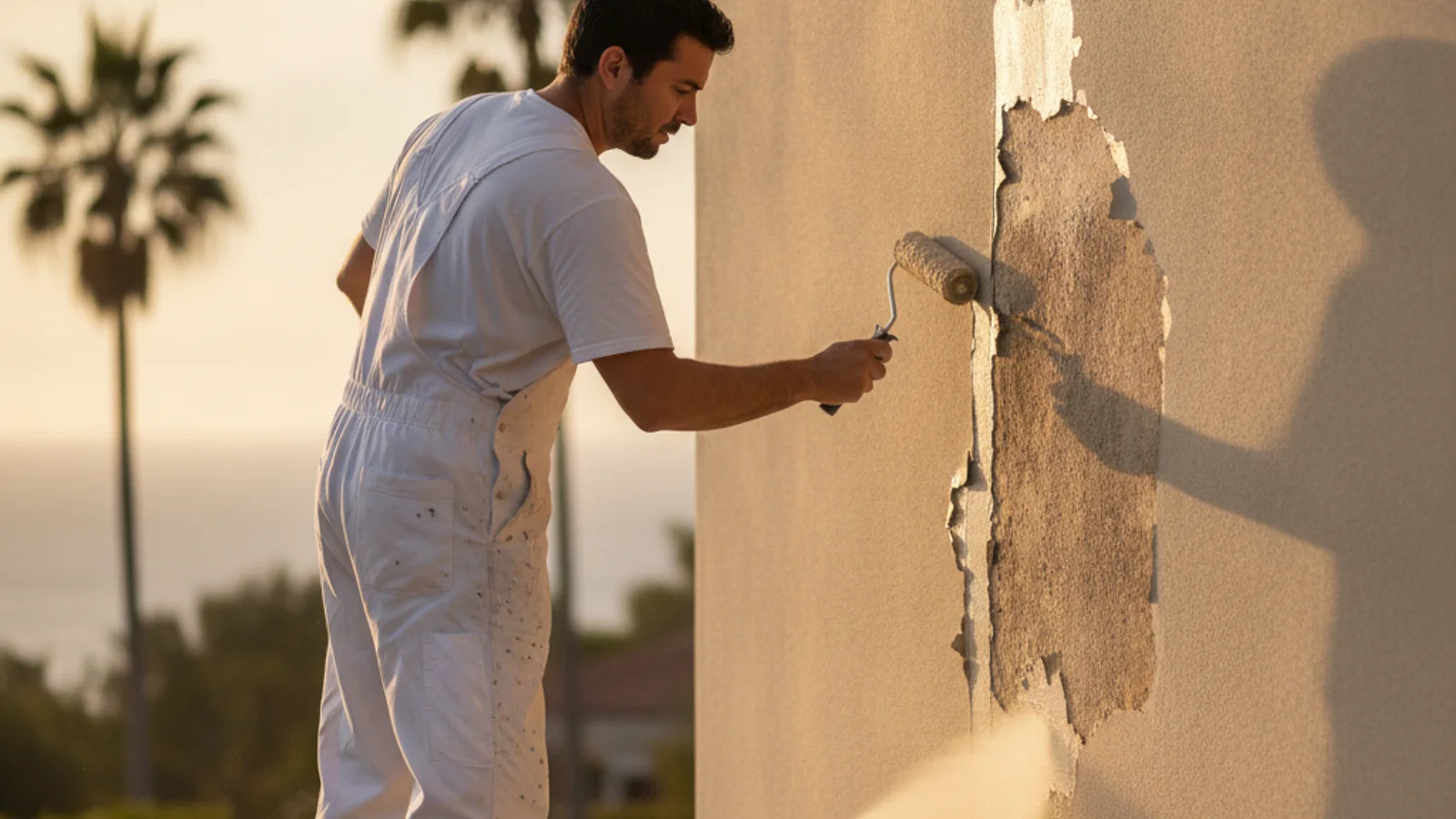
Pressure washing painted stucco sounds like routine upkeep until the spray strips away more than dirt. If the paint underneath is already loose, chalking, or cracked, water pressure can peel it off in sheets instead of just cleaning the surface. The coating’s actual condition has to drive the decision, not just how dirty the wall looks.
Check the coating before choosing water pressure
Before any washing starts, the coating itself needs a close look. Run a hand across the surface. Chalky residue that transfers to your palm means the paint film has broken down and lost much of its bond to the wall. Pressing on a suspect area and feeling it give, flake, or bubble slightly is a sign the coating has already separated from the stucco underneath, even if it looks intact from a few feet away.
Cracks change the calculation too. A wall with existing hairline or wider cracks lets water push behind the coating at those points, which can widen a crack or force paint to lift at the edges even at settings that would be fine on a sound wall. The common stucco problems guide covers how to tell a cosmetic hairline crack from one that needs repair before any cleaning or repainting happens.
San Diego County’s housing stock isn’t uniform. The U.S. Census Bureau’s ACS 2023 5-Year data puts the share of pre-1978 housing units at 62.5 percent in El Cajon, 47.8 percent in Santee, and 40.8 percent in Chula Vista. Those figures don’t diagnose a coating. They do make the home’s construction year a practical question before washing or surface prep. If the work will disturb paint on a pre-1978 home, ask how the painter will handle the EPA RRP requirements.
Property access is another local difference. A one-story house in El Cajon may offer a straightforward perimeter walk. A multi-story home in the central city or a hillside lot in La Jolla can make ladder placement and hose access harder. Ask the quoting painter to map the route around the house, then show where the coating is sound and where it’s failing. The cleaning method should come from the wall’s condition and the property’s access, not a neighborhood stereotype.
Do not assume every side of the house is in the same condition. Walk the full perimeter with the quoting painter, ask them to point out visible chalking, staining, cracking, or loose paint on each wall, and ask whether the cleaning plan should change from section to section.
Separate surface dirt from failing paint
Surface dirt, dust, cobwebs, and light mildew sit on top of an otherwise sound coating and typically come off without disturbing the paint underneath. Failing paint is a different problem hiding under the same dirty appearance, and the two get confused constantly because a dirty wall and a failing wall can look nearly identical from the sidewalk.
A simple test helps separate the two. Wipe a small, inconspicuous section with a damp cloth and light hand pressure. If dirt comes away and the paint underneath looks intact and firmly bonded, the wall is likely dealing with ordinary surface grime. If the cloth pulls color, chalk, or small paint flakes with it, the coating itself is compromised, and pressure washing that section is more likely to accelerate damage than clean it.
Mildew and algae staining deserve their own check. Dark streaking, especially on north-facing walls or areas shaded by trees, is usually organic growth rather than dirt, and treating it correctly matters before any water pressure gets involved. A painter should be able to tell you whether a stain will clean off or whether it has actually etched into a failing coating.
Efflorescence, the white, powdery mineral deposit that sometimes appears on stucco, can also get mistaken for either dirt or paint failure. It forms when moisture moves through the wall and leaves mineral salts behind on the surface as it evaporates. Efflorescence on its own usually brushes or washes away, but note its presence and mention it to whoever inspects the property before repainting.
Plan washing around San Diego’s rainy season
The National Weather Service reports that roughly 85 percent of San Diego’s rainfall falls from November through March. Coastal San Diego averages about 4 inches annually, while inland and mountain areas receive more. A project in coastal North County shouldn’t use the same annual rainfall assumption as one farther inland or at higher elevation.
For washing tied to repainting, check the forecast for the property. Sequence the work so the washed wall can be inspected before repairs and coating begin. During the wetter November-through-March period, leave room in the schedule for weather changes instead of treating washing and repainting as one fixed appointment. A current forecast still matters during the rest of the year.
Water-use rules can vary by water district. Before washing in Ocean Beach, Santee, Chula Vista, or anywhere else in the county, confirm any current restrictions with your own water provider.
Adjust cleaning around cracks, trim, and openings
Even on a wall in reasonably good shape, certain areas call for a different approach than the broad wall surface. Cracks, whether hairline or wider, are vulnerable points where concentrated water pressure can force moisture behind the coating rather than just rinsing the surface. These spots typically need a gentler pass, or should be addressed through repair first and cleaned after.
Trim, window and door openings, and any caulked transitions are similarly sensitive. Caulk that’s already aged or pulling away from the substrate can fail faster under direct pressure, and water forced past a compromised seal at a window can end up inside the wall rather than staying on the exterior. The pressure washing before painting guide covers how a proper pre-paint wash is planned around these same vulnerable points on a wall that’s actually sound enough to clean.
Vents, light fixtures, and any penetrations through the stucco also deserve a lighter touch and, in some cases, covering before cleaning begins. These are common paths for water intrusion regardless of the coating’s condition, and a painter experienced with exterior work should flag them before starting rather than working around problems as they come up.
Electrical outlets and any exterior fixtures wired into the wall need to be identified and protected before water gets anywhere near them. This sounds obvious until a cleaning crew is moving fast across a large wall and an outlet cover blends into the surrounding color. Walking the wall with the crew before they start and marking anything that needs protection takes a few minutes and avoids a problem that’s far more costly than a missed spot of dirt.
Let the painter inspect damage before repainting
If pressure washing reveals paint coming away in sheets, exposed stucco, or cracks that widened during cleaning, that information should guide the repaint plan. A painter should inspect the wall after cleaning to confirm what’s actually sound and what needs repair, since cleaning often reveals the true extent of a problem that dirt was previously hiding.
Repair work on exposed or damaged stucco should happen and fully cure before any new coating goes on. The exterior painting service and stucco painting and repair service cover how that repair-then-repaint sequence typically works, and a painter walking the property afterward can tell you which sections are ready for paint and which need more attention first.
Permit questions depend on the jurisdiction. Painting and similar finish work is exempt from building permits in unincorporated areas of San Diego County, but individual cities may differ. In the Old Town San Diego Planned District, exterior repainting may be subject to City Manager review. City of San Diego homeowners who are unsure should contact the Development Services Department before repainting.
Don’t assume the whole wall needs the same repair just because one section revealed damage. A painter should be able to point to exactly which areas need patching, crack filling, or a deeper look, and which sections cleaned up fine and are ready to move straight to primer. Treating an entire wall as compromised because one section failed usually means paying for repair work the wall didn’t need.
Know when gentler cleaning deserves consideration
Not every stucco wall needs full pressure washing. On a coating that’s already showing chalking, hairline cracking, or age-related brittleness, a softer approach, sometimes called soft washing, that relies more on cleaning solution and lower pressure than raw water force can remove dirt and mildew with less risk of stripping compromised paint.
Ask a painter or a pressure washing pro to assess the wall and recommend an approach based on what they actually see, rather than assuming the highest setting on the machine is always the right one. The goal is a clean wall that’s ready for its next coat of paint, not a wall that’s technically clean but now needs more repair than it did before someone turned the water on. The pressure washing service page covers what that assessment typically includes.
When to call us
Stucco that chalks on touch, flakes when pressed, or already shows cracking needs an inspection before anyone points a pressure washer at it. Call us at (858) 400-6422 and we’ll connect you with a licensed local painter.