Yes, you can paint most garage doors yourself, and it’s one of the highest-impact exterior jobs for the money. A steel or wood single door is a manageable materials cost and a full Saturday, dry time included. Wash it, knock down rust or gloss, mask the track and hardware, prime the bare spots, then roll and brush two thin coats of exterior enamel. The biggest factor here isn’t technique, it’s which way your garage faces. A door catching hours of afternoon sun needs a different color and product than one in shade.
This is the working version, written by a San Diego painting company: what to buy, what to skip, and the one thing you should never do to a garage door that you’d absolutely do to a front door.
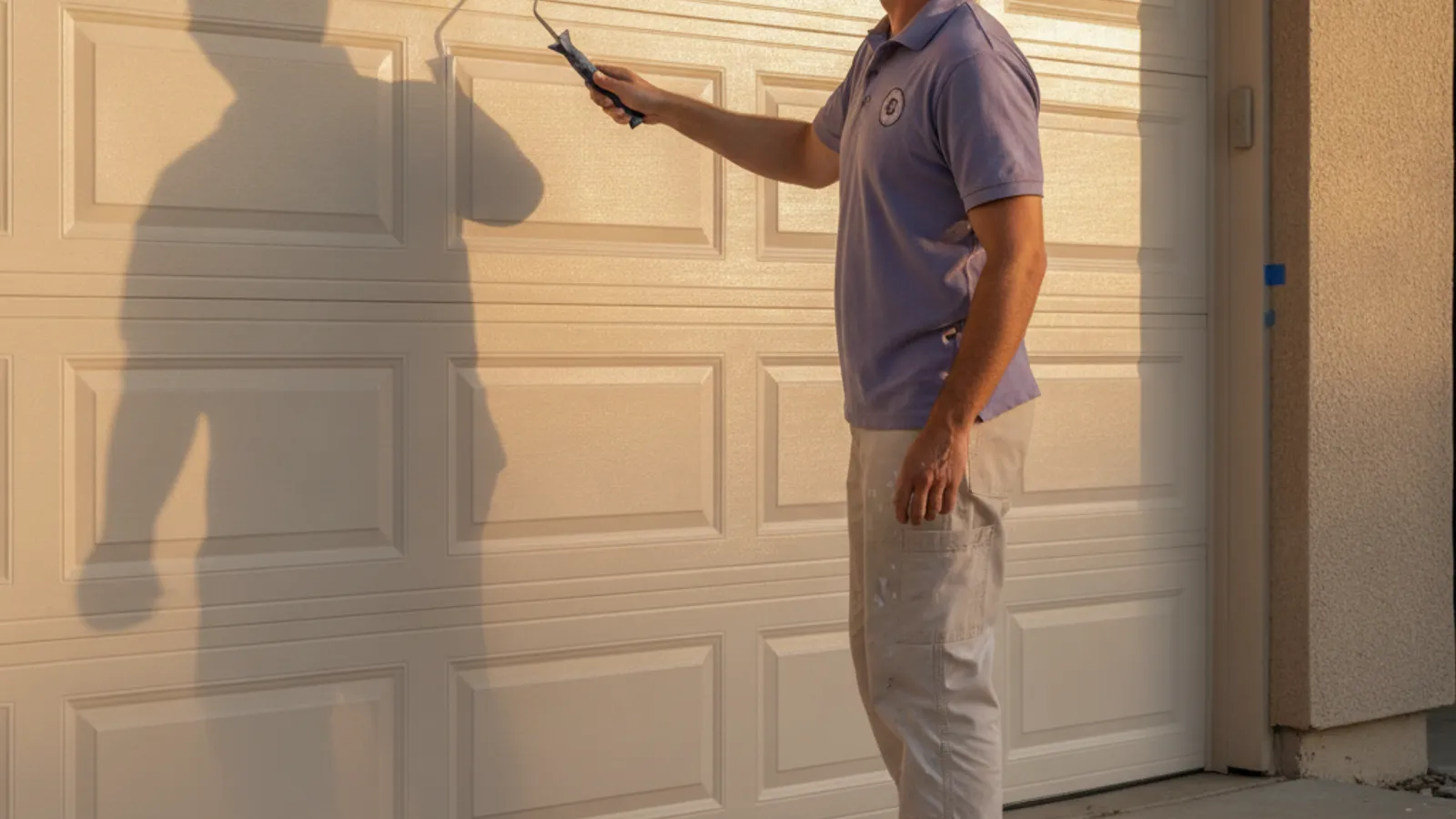
Can you paint a garage door, or should you replace it?
Almost every garage door is a repaint candidate. Faded color, chalky old paint, surface rust on steel, and weathered grain on wood all paint up clean. Replacement makes more sense when the door has dents that have creased the steel skin, soft or rotted wood panels, or an insulated door where the foam core has trapped moisture and bubbled the face. Short of that, a repaint gets you most of the way to a new-door look for a fraction of the cost, and holds up well in San Diego, longer in shade.
What do you need to paint a garage door?
Spend on the two things that show up in the finish: primer and paint. For steel, use a rust-inhibiting metal primer on bare spots, Rust-Oleum Clean Metal Primer or a Zinsser equivalent. For wood, a stain-blocking exterior primer like Zinsser Cover Stain handles knots and old weathering. For the finish coat, a 100% acrylic exterior enamel in satin or semi-gloss is the standard: Sherwin-Williams Resilience, Dunn-Edwards Evershield, or Behr Marquee Exterior.
Tools: an angled sash brush for the recessed panel edges, a 3/8-inch nap roller for the flat sections, 150 and 220-grit sandpaper, painter’s tape, a degreaser like Krud Kutter, and a drop cloth. Budget for a modest tools-and-materials spend on a single door, more for a double-wide.
Should you paint the door in place, or take it apart?
In place, every time. This is the one place a garage door job is nothing like a front door job. A front door comes off its hinges with a screwdriver and a hammer tap. A sectional garage door runs on torsion or extension springs under serious tension, wired into a track that isn’t meant to come apart for painting. Don’t disconnect springs, cables, or track hardware to make the job easier.
Close the door fully, disconnect the electric opener at the manual release if you can reach it safely, and paint it standing closed in the frame. Slower than laying a door flat on sawhorses, but it’s the only safe way to do this yourself.
Step by step: how to paint a garage door
1. Clear the area. Pull the car out, sweep the driveway, and close the door fully for one flat working plane.
2. Mask what you’re not painting. Tape the weatherstripping, track edges, photo-eye sensors, any windows in the door, and the trim around the opening. Drop cloth on the driveway for drips.
3. Wash the door. A degreaser and a scrub brush pull off road grime and the chalky film that builds fast on a sun-facing door. Rinse and let it dry fully, a full day if humid.
4. Sand rust and gloss. Knock rust spots to bare metal with 150-grit, feather the edges, then scuff the whole door with 220-grit for grip. Wipe with a tack cloth.
5. Prime bare spots. Spot-prime sanded-to-metal areas, exposed wood grain, or rust stains. Prime the whole door if you’re going dark to light, or the old paint is chalky.
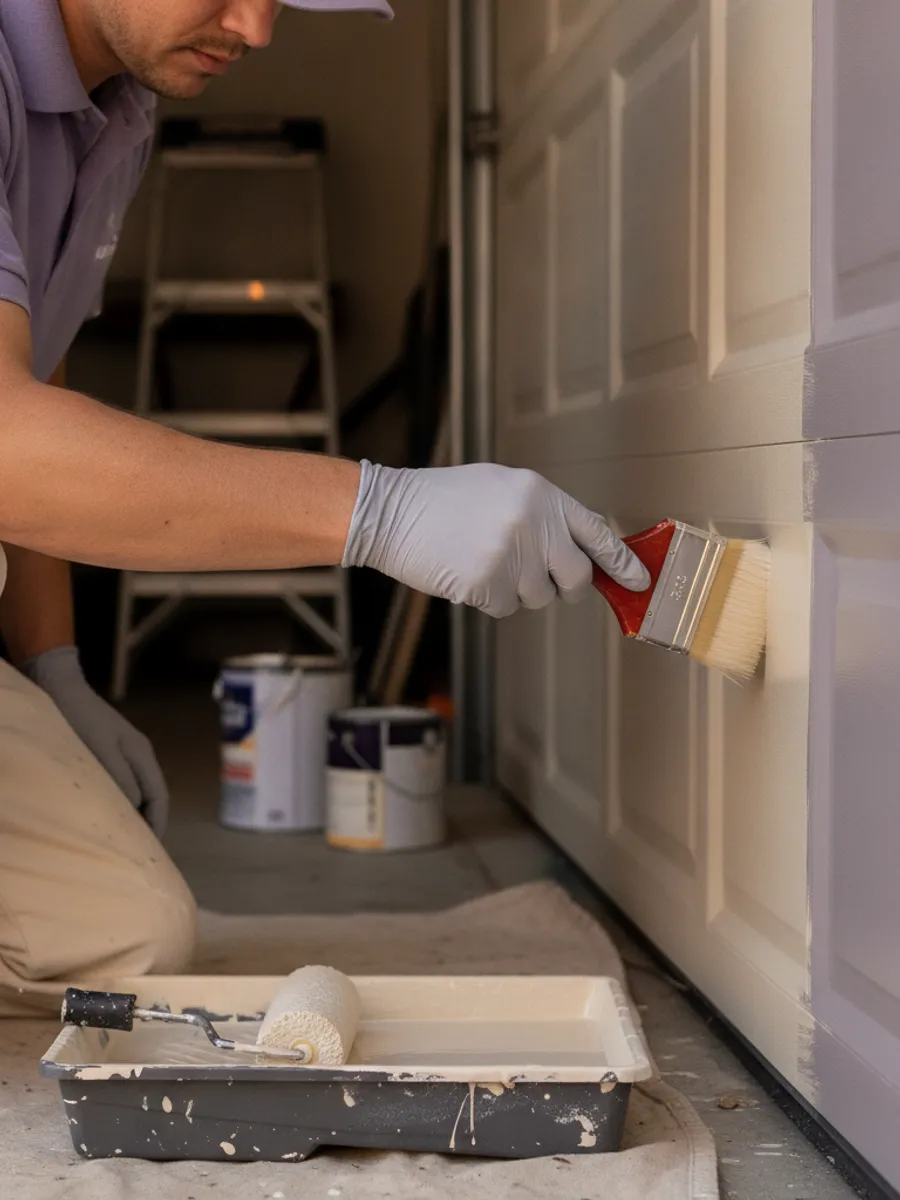
6. First coat, panels first. Brush the recessed panel edges and seams, then roll the flat sections while that paint is still wet so the two blend without lap marks. Work top to bottom in sections.
7. Light sand, second coat. Once the first coat is dry to the touch, usually a few hours in San Diego’s afternoon air, knock it down with fine sandpaper and repeat.
8. Cure before you run the door. Dry to the touch isn’t cured. Give it a full day before repeated use, and reinstall hardware only once the paint is hard.
What’s the best paint and sheen for a San Diego garage door?
Satin is the sweet spot for most steel and wood doors here. It resists the chalking that flattens matte paint over time, and it hoses clean of pollen and dust. Semi-gloss reads sharper on a modern flat-panel door.
Color matters more on a garage door than almost anywhere else on the house. Garage doors run bigger and flatter than a front door, and one facing west or south soaks up hours of direct sun. A very dark color on a non-insulated steel door can get hot enough to warp or bow a panel, especially on a wide double door. If your garage faces the afternoon sun, stick to a mid-tone or a fade-resistant line, and save true black for a shaded door. Our popular exterior house paint colors for San Diego guide has the palettes homeowners are choosing right now, and matching the door to the front entry is a common ask in a color consultation.
How long does a painted garage door last in San Diego?
It depends on exposure more than a fixed number, with the same coastal-versus-inland split as the rest of the house. Homes near the water in Pacific Beach, Coronado, and Encinitas pick up more salt film and need a rinse-down more often. Inland homes in Santee, El Cajon, and Escondido see less salt but harder, longer sun, so heat and UV are the bigger factor on a west-facing door. Watch for fading, chalking, and any peeling at the panel seams as your signal to plan a repaint. Sprinkler overspray on the bottom panel is the same slow killer it is on a front door, so keep sprinklers aimed away from the garage.
When to call a pro instead
A door with a rusted-through panel or deep dents needs body work, not paint. An insulated door with a factory baked-on finish sometimes needs a specific bonding primer for real adhesion, and a pro will know which one to spec. If you want a true sprayed finish on a wide double door with no brush marks anywhere, that’s an HVLP job, not a roller. For the rest of the house at the same time, our exterior painting service covers the whole envelope, and our trim, doors, and baseboards service covers the garage door, front door, and everything in between.
Frequently asked questions
Can you paint a garage door without taking it apart?
Yes, and you should. Close the door fully and paint it standing in place. Sectional doors run on spring-loaded tracks that aren’t built to come apart for painting, unlike a front door you can lift off its hinges.
Do you need to prime a garage door before painting?
Prime any bare metal, rust spots, or exposed wood grain, and prime the whole door if you’re switching dark to light or the old paint is chalky. Use a rust-inhibiting metal primer on steel and a stain-blocking primer on wood. Sound, glossy paint in a similar color can sometimes skip a full prime coat after a thorough scuff sand, but always spot-prime bare or rusted spots first.
What kind of paint should you use on a steel garage door?
A 100% acrylic exterior enamel in satin or semi-gloss. Sherwin-Williams Resilience, Dunn-Edwards Evershield, and Behr Marquee Exterior all resist chalking under direct San Diego sun. Skip flat and eggshell on any exterior door.
Can you paint an insulated garage door?
Yes, but check the factory finish first. Many insulated steel doors carry a baked-on coating that needs a bonding primer for new paint to grip, not a standard metal primer. Test a hidden corner: if new paint scratches off easily once dry, prime the whole door with a bonding primer first.
Why does my garage door fade faster than the rest of my house?
It’s usually bigger, flatter, and more exposed than a front door, and a west or south-facing door takes the full brunt of the afternoon sun with almost no shade. That UV load breaks down cheaper paint faster and can build up enough heat to warp a very dark, non-insulated panel. A fade-resistant enamel and a mid-tone color both help it hold up longer.
What determines the cost to have a pro paint a garage door in San Diego?
Door size (single vs. double-wide), prep needs like rust or wood repair, and whether it’s sprayed or brushed are the biggest drivers. It’s often priced lower when bundled into a larger exterior or trim job. Call (858) 400-6422 for a Paint Pros San Diego estimate.
Next steps
A garage door is one of the biggest single surfaces on the front of your house, and it’s an easy DIY win if you respect one rule: leave the springs and track alone and paint it in place. Wash it, knock down the rust and gloss, prime the bare spots, and lay two thin coats of satin or semi-gloss enamel, panels first with a brush, then blended in with a roller.
If the door is part of a bigger repaint, or you’d rather hand it off, call (858) 400-6422 and we’ll match you with a vetted local painter. See our exterior painting service page for the whole house, our trim, doors, and baseboards service for the doors and details, and our guide on how to paint a metal front door in San Diego if the entry is next on the list.