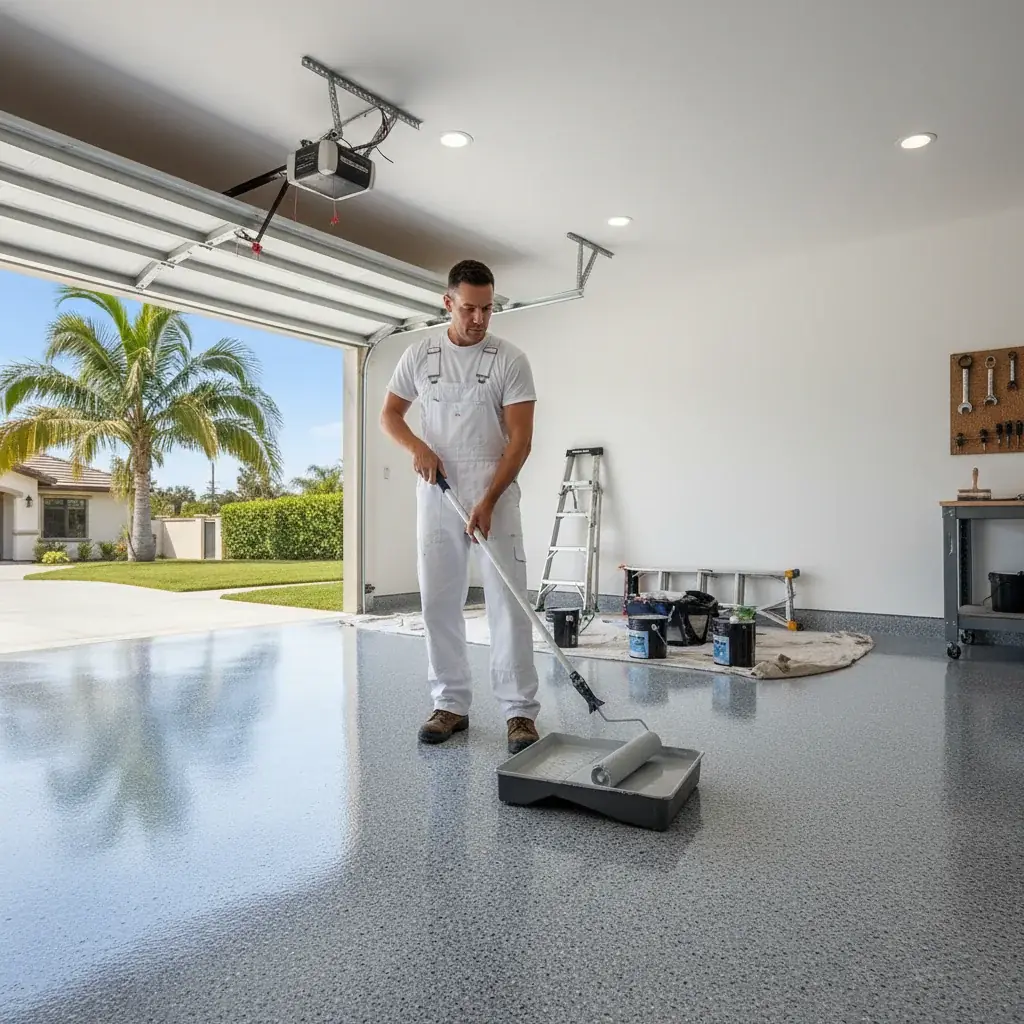
Epoxy garage floor coating in San Diego: find the right installer
A quality epoxy garage floor in San Diego holds up well for years when installed over properly prepped concrete, with cost tracking square footage, flake system, and topcoat choice. Coastal humidity makes prep more critical here than in drier climates: skip the moisture test and you’ll see delamination within a year. Fast-cure polyaspartic systems are also available for homeowners who need the garage back in use sooner. The epoxy installers we match you with are licensed, insured, and familiar with SD County’s coastal conditions.
What a real San Diego epoxy job includes
Not all quotes cover the same scope. A complete installation from a reputable contractor includes at minimum: diamond grinding (not acid etching), a moisture vapor emission test, crack and spall repair, a full epoxy base coat, a broadcast flake layer, and a commercial-grade polyurethane or polyaspartic topcoat.
Diamond grinding is the step that separates durable floors from short-lived ones. It opens the concrete’s pores so the epoxy bonds mechanically, not just chemically. Acid etching is cheaper and faster, but the bond it produces is significantly weaker, especially on concrete that’s absorbed motor oil or seen decades of moisture cycling. The coating crews in our San Diego network use diamond grinding as standard on every residential job.
The moisture test matters because San Diego’s soil and slab-on-grade construction create real vapor pressure, particularly in coastal zip codes and areas near Mission Bay or the San Diego River. A contractor who skips this step is gambling with your floor’s longevity.
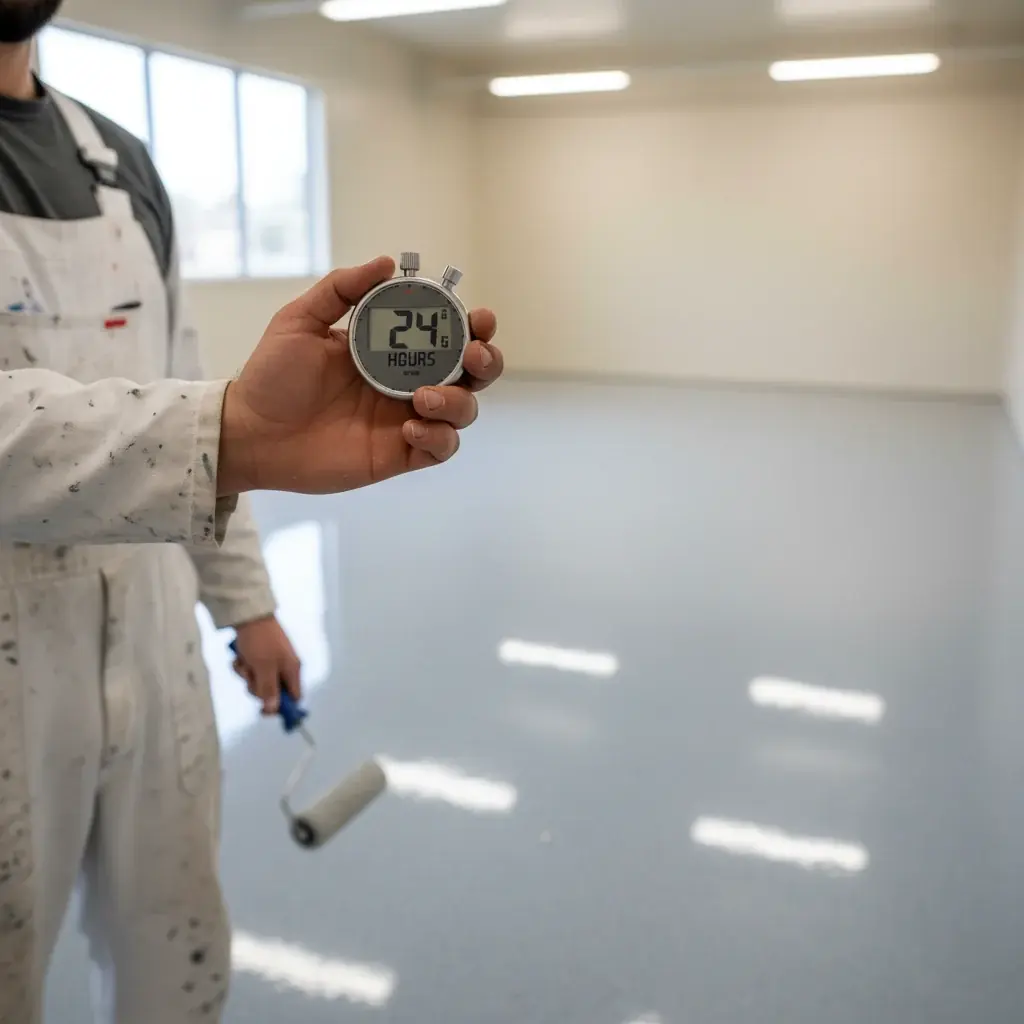
Once prep is done, coating a typical two-car garage takes time to do right; your installer schedules the days based on garage size and the system used. Cure time also varies by system: standard epoxy needs longer before you can drive on it than polyaspartic systems do.
Residential vs. commercial epoxy flooring
Residential garage floors and commercial concrete floors have different requirements, but the same installers often handle both. For a home garage, the priorities are usually aesthetics, durability under daily vehicle traffic, and ease of cleaning. Full-broadcast flake systems in grays, tans, or blues are the top sellers across San Diego County right now.
Commercial jobs, such as warehouse floors, showrooms, auto shops, and retail spaces, typically demand higher film build, greater chemical resistance, and compliance with slip-resistance standards. The installers we match for commercial projects understand the difference in spec and price accordingly.
If you’re coating a gym conversion, a finished garage studio, or a home-based business space, tell us during the estimate so we can connect you with a crew that’s done that scope before.
Why coastal San Diego concrete needs more prep
Salt air, temperature swings, and the region’s clay-heavy soils combine to make SD County concrete more prone to moisture migration than inland markets. Garages within a few miles of the coast, from La Jolla down through Chula Vista and out to Coronado, often test higher for moisture vapor emission than homes in El Cajon or Santee. Garage floors in El Cajon and other East County areas see larger temperature swings that create different expansion stress on the coating system.
A contractor who does most of their work in Phoenix or Las Vegas may not adjust their prep protocol for coastal SD. The crews in our network have installed on San Diego slabs specifically, and they factor in vapor barriers and flexible topcoats when the site calls for it.
How to vet an epoxy installer before you hire
Three things worth confirming before you sign anything:
First, verify their California C-33 license through the CSLB license lookup. Any contractor applying coatings in California should hold a valid C-33 (painting and decorating) or C-61/D-40 license. Unlicensed work leaves you without recourse if the floor fails.
Second, ask what surface prep method they use. “We grind the concrete” is the right answer. “We etch it” or “the painters we match prep the surface” without specifics is a flag.
Third, ask what topcoat they use and get the product name in writing. A commercial-grade polyurethane or polyaspartic topcoat (not a DIY big-box product) is what separates a 10-year floor from a 3-year one.
The epoxy installers we match you with carry their licensing and insurance documentation, and painters in our network collect proof of both before they join our network.
Frequently asked questions
How much does an epoxy garage floor cost in San Diego?
Epoxy garage floor cost in San Diego tracks square footage first, then the system: solid-color epoxy is the entry point, flake systems cost more, metallic systems cost more still, and polyaspartic-only systems typically cost the most. For a full cost breakdown with what drives the price up or down, read our garage epoxy floor cost guide.
How long does epoxy last in San Diego’s climate?
A properly installed flake system over diamond-ground concrete holds up for many years in typical San Diego conditions. The variables that shorten that: UV exposure (standard epoxy yellows; a polyaspartic topcoat prevents it), moisture vapor from the slab, and how much tire traffic the floor sees. Coastal garages with windows or frequent door-up exposure benefit from a polyaspartic topcoat for UV stability.
Should I get epoxy or polyaspartic for my San Diego garage?
For most SD County homeowners, the hybrid approach works best: an epoxy base coat for build and adhesion, then a polyaspartic topcoat for UV resistance and faster cure. Pure polyaspartic systems cost more but cure in a single day. Pure epoxy is less expensive but yellows over time in sun-exposed garages. For a full side-by-side comparison, see our polyaspartic vs epoxy guide.
How long does installation take?
Installation timeline depends on garage size, prep needs, and the coating system. Diamond grinding and prep happen first, then the coating goes down. Cure time before you can drive on it varies by system, with polyaspartic curing faster than standard epoxy. Your installer will confirm the schedule for your job.
Can you coat a garage near the coast?
Yes, but prep matters more. Concrete near the ocean and bay tends to test higher for moisture vapor emission, which requires a vapor-tolerant primer or barrier coat before the epoxy goes down. Contractors who don’t test and adjust for this see early delamination. The crews in our network account for coastal conditions as part of their standard process.
Will epoxy installers you match walk the property before quoting?
Yes. The installers we match come out for an in-home walkthrough, quoted in writing after they see the job. An in-person estimate is worth doing because slab condition, square footage, and moisture levels vary enough that phone quotes are rarely accurate.
What areas of San Diego County do you cover?
We match homeowners with installers across all of San Diego County, from Oceanside and Carlsbad in the north down through Chula Vista and National City in the south, and from the coast out to Santee, El Cajon, and Ramona. If you’re in San Diego County, we can line up estimates.
Ready to get your garage floor coated? Call (858) 400-6422 to connect with a vetted local epoxy installer. We cover all of San Diego County, and your installer quotes the job in writing after seeing it.