Drywall repair after electrical work starts with one important check: the other trade must be finished with the opening. The same rule applies to drywall repair after HVAC work. Confirm the access is no longer needed, then define the board, texture, primer, and paint scope.
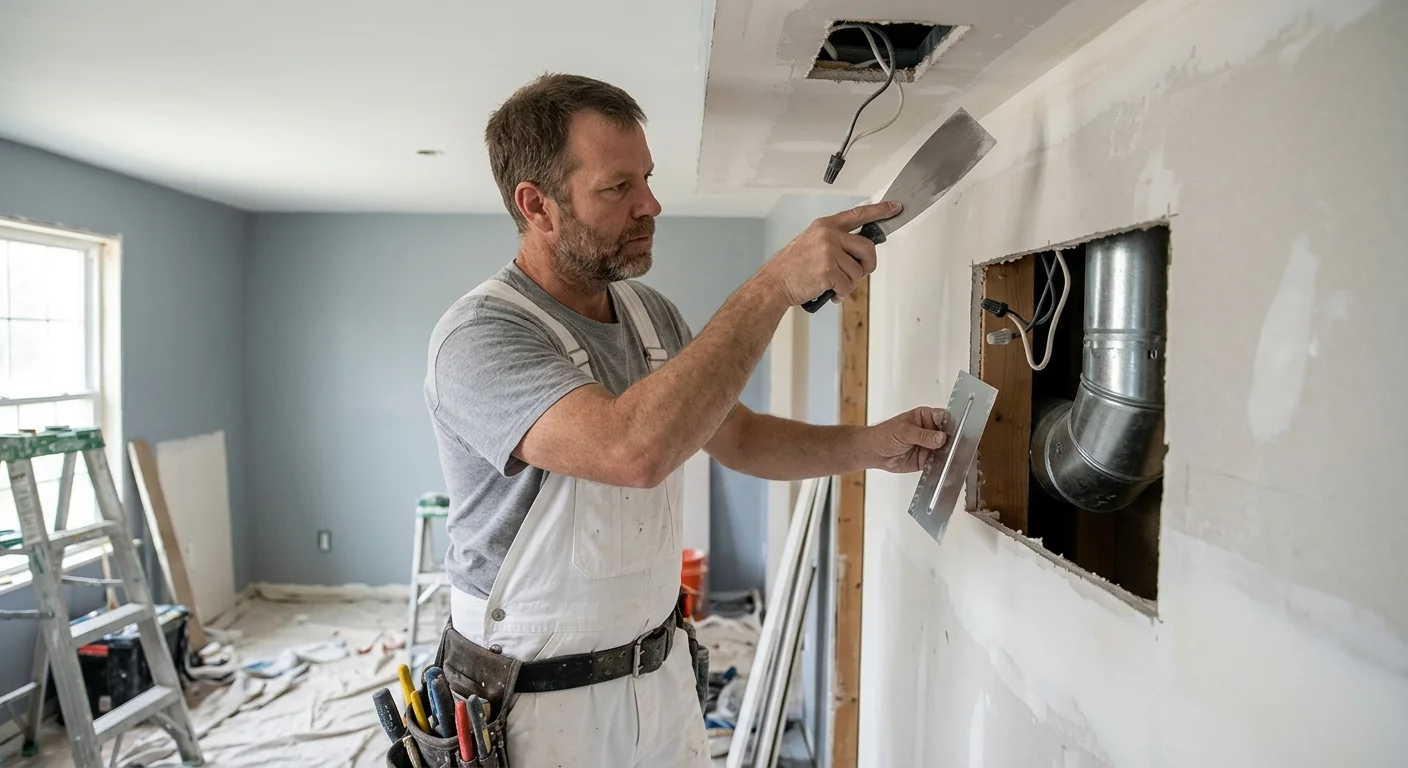
Confirm the trade work is complete
An opening may look ready to close while the electrical or HVAC scope remains active. Before requesting drywall repair, ask the original trade contractor whether the wall or ceiling can be closed. Get that answer for every opening, not just the largest one.
The drywall professional or painter shouldn’t approve electrical or HVAC work. That decision belongs with the contractor responsible for that trade. The repair professional needs a clear starting point and a defined surface to restore.
Walk through the room with the completed trade scope in hand. Mark each opening and ask whether anything must stay accessible. Include small exploratory cuts, notches near outlets, ceiling openings, and areas hidden behind furniture. Photograph each location before another contractor arrives.
Also confirm whether another visit is expected. A return visit can affect which openings are ready for repair. If the answer remains unclear, pause that specific patch and ask the trade contractor for direction. Closing an uncertain opening only creates another coordination problem.
For a clean quote, describe the completed work without asking the painter to evaluate it. For example, say that an electrician finished access through one wall and confirmed closure. Or explain that an HVAC contractor completed ceiling access but identified one location that must remain open.
Keep approvals in writing when possible. A short message identifying the openings ready to close gives every contractor the same scope. It also separates trade completion from the appearance of the finished wall.
Inspect openings, edges, and backing
Once closure is confirmed, the repair professional can inspect the drywall itself. Every opening should appear separately in the estimate. A large ceiling cutout, a narrow wall channel, and several small access holes aren’t one generic repair.
Ask the quoting professional to describe the condition of each opening. The scope should identify damaged edges, missing board, nearby cracks, and any areas excluded from the repair. It should also state whether the opening offers suitable support for the proposed patch or needs additional repair planning.
Don’t cover the openings with furniture before the estimate. Clear visibility helps the contractor describe what is included. Point out nearby outlets, vents, switches, thermostats, trim, and cabinets. The painter can then explain how those items affect access without approving or altering another trade’s work.
Housing age also matters before painted surfaces are disturbed. In the City of San Diego, an estimated 49.6% of housing units were built before 1978. The figure is 62.5% in El Cajon and 40.8% in Chula Vista. These citywide figures come from the Census Bureau’s 2023 five-year housing data.
For pre-1978 housing, the federal EPA Renovation, Repair and Painting program may apply when renovation work disturbs painted surfaces. The rule requires covered work to be performed by a certified firm using certified renovators. It also includes containment, cleaning, and other work-practice requirements.
Tell the quoting professional when the home was built. If the date isn’t confirmed, check property records and discuss that uncertainty before work starts. Our drywall repair and texture match service can connect you with a licensed local painter for the repair scope.
Separate board repair from texture matching
Board repair and texture matching should appear as separate parts of the proposal. One closes the opening. The other addresses the visible finish around it. Keeping them separate makes competing estimates easier to compare.
Ask each professional to identify the existing texture in the affected room. Then ask how far the texture work will extend beyond the new patch. Don’t settle for phrases such as “match existing” without a stated boundary. The proposal should show whether the texture applies only to the patch, a wider blended area, or a larger wall or ceiling section.
A texture match shouldn’t be presented as a promise that the repair will disappear. Ask what variation may remain under daylight, ceiling lights, or light entering from the side. Get the contractor’s visual expectations before choosing the scope.
Previous repairs deserve attention too. A wall may contain several texture patterns, paint layers, or patch boundaries. Ask which existing area the new work will follow. If the surrounding finish is inconsistent, request options instead of assuming one small patch can resolve the entire surface.
Ceilings often need their own discussion. Record whether the opening crosses a flat field, a corner, or another visible transition. Also identify every affected room. An opening between two spaces can create different texture and paint decisions on each side.
The same planning issue appears after pipe access, though the preceding trade is different. Our guide to drywall texture after plumbing repair shows how to separate access closure from finish expectations. For electrical and HVAC openings, keep the same boundary clear: the painter repairs the approved surface but doesn’t certify the trade work behind it.
Plan primer and paint across the repaired area
Texture completion doesn’t define the full painting scope. Before signing, ask whether the proposal includes primer, finish paint, or both. Have the contractor identify the exact surfaces included, along with any areas that will remain untouched.
Start with the repair boundary. A proposal might describe only the patched area, a wider section, or an entire wall or ceiling plane. Ask the painter to mark that boundary during the walkthrough. Written room names and surface descriptions are clearer than terms such as “affected area.”
Next, document the existing paint information you already have. Share the product name, color name, sheen, and leftover container when available. If those details aren’t known, say so. Don’t turn an uncertain color into a guessed specification.
Ask how the painter will evaluate the visual transition between old and new work. The answer should address both texture and paint. A completed texture match doesn’t automatically promise an invisible paint transition. Lighting, viewing angle, and the condition of the surrounding finish can affect the homeowner’s acceptance of the result.
Primer should also be a named scope item. Ask which repaired surfaces will receive it and how that step appears in the estimate. The separate guide to primer after drywall repair can help you prepare those questions without assuming every opening has the same needs.
If the project extends beyond the repaired spot, compare it with a defined interior painting scope. That may include the full wall, ceiling, connected room, trim, or another agreed boundary. The contractor should describe those surfaces before work begins.
Finally, decide how approval will happen. Choose who will review the texture and who will approve the paint boundary. Put both decisions in the written scope so appearance expectations don’t get confused with completion of the earlier trade.
Confirm who handles fixtures and final access
Electrical and HVAC projects often leave items near the repair zone. These may include switch plates, grilles, thermostats, registers, access panels, or other components. List what is present, then assign responsibility for every item.
Ask the electrical or HVAC contractor which components it will remove, reinstall, or adjust. Ask the painter which nearby surfaces are included in the drywall and paint scope. Neither conversation should leave the repair professional responsible for approving the underlying trade work.
Use a simple room-by-room list. Identify the opening, nearby fixture, responsible contractor, and final condition requested. For example, note that one ceiling opening is ready to close while another location must remain accessible. Record that distinction before drywall work starts.
Access panels require a direct decision. Ask the original trade contractor whether permanent access is needed and where it should remain. If the answer isn’t confirmed, don’t ask the painter to make that call. The drywall estimate can exclude the location until the responsible trade provides direction.
Also clarify masking and protection around fixtures that stay in place. The proposal should state what the painter will work around and what another contractor must handle. Avoid relying on a verbal assumption made during separate site visits.
Before final payment, review the written scope rather than the memory of the walkthrough. Confirm that each approved opening was repaired. Check the agreed texture boundary, paint boundary, and excluded areas. If another trade still has unfinished work, keep that issue separate from the painter’s completed scope.
For regulated painting work, verify the contractor through the CSLB license check before signing. Paint Pros San Diego is a referral service. You’ll contract with and pay the independent professional directly.
When to call us
Call when the electrical or HVAC contractor has confirmed which openings can close, but the drywall, texture, or paint scope remains unclear. Call us at (858) 400-6422 and we’ll connect you with a licensed local painter.