Commercial tenant painting in San Diego should begin with a written, room-by-room scope. The owner, property manager, tenant, and painter need one shared record of repairs, colors, access, protection, approvals, and exclusions. That record reduces confusion as the suite moves toward occupancy.
Define which tenant spaces are ready for paint
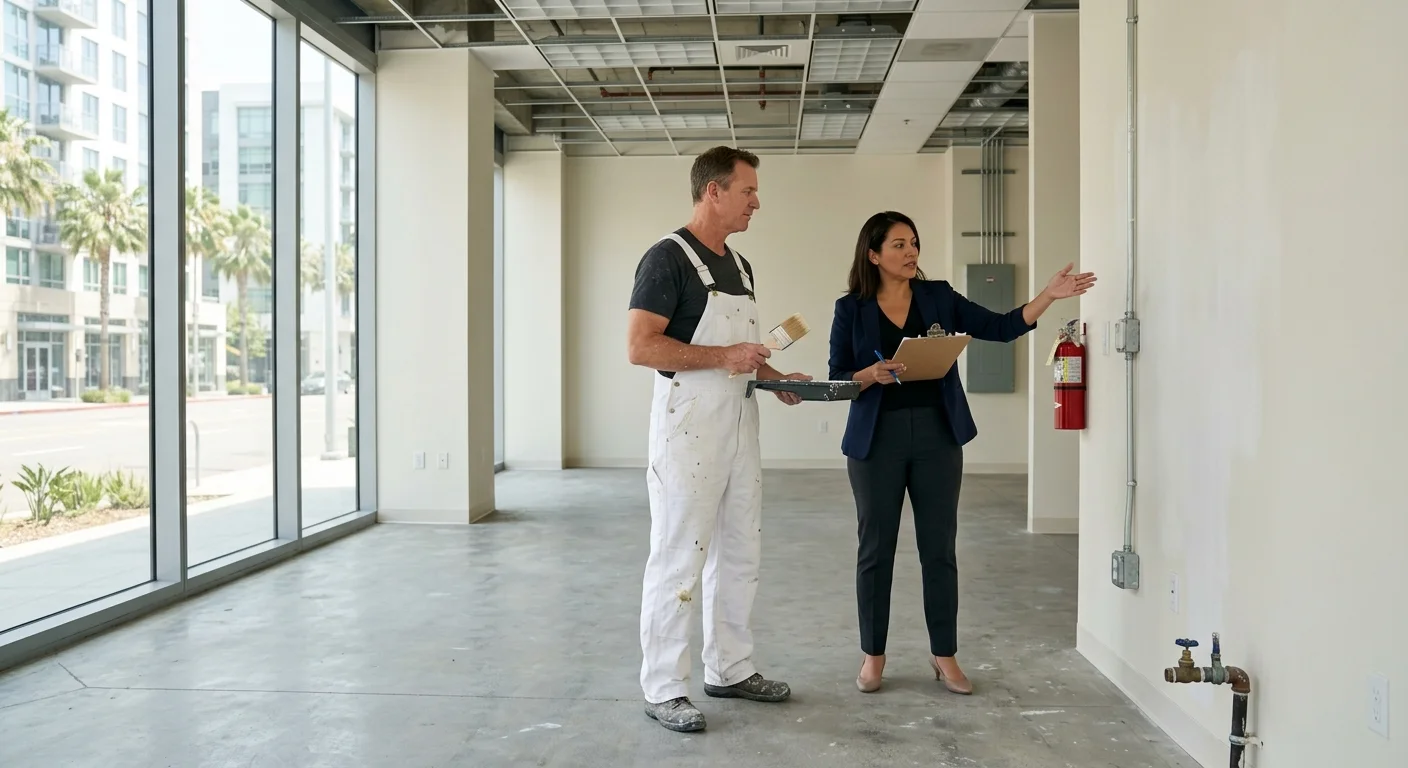
A vacant suite isn’t automatically paint-ready. First, identify which rooms are part of the project. Mark private offices, open work areas, restrooms, corridors, storage rooms, and utility areas separately. Include doors, frames, trim, ceilings, and built-ins only when they belong in the scope.
Next, decide what “ready” means for each space. Demolition should be finished where painting will occur. Wall-mounted equipment that’s staying should be identified. Items scheduled for removal shouldn’t become obstacles that painters must work around. New millwork, flooring, signs, and data equipment also need a clear place in the sequence.
Walk the property with the prospective painter. Use a floor plan when one exists. Give each room a name or number that appears in the proposal. “Paint the back area” leaves too much room for interpretation. “Paint walls and door frames in offices 201 through 206” gives everyone a usable reference.
A Kearny Mesa office, Downtown storefront, and Chula Vista medical suite may require different access plans. The same principle applies across San Diego County: define the actual work area before comparing proposals.
Record the current condition during the walkthrough. Note stains, patched openings, adhesive residue, damaged corners, glossy surfaces, and existing accent walls. Photos can support the written scope, but they shouldn’t replace it.
For a broader overview of hiring and planning, read the commercial painting guide for San Diego. The commercial painting service page also explains the referral options available through Paint Pros San Diego.
Separate repairs from the painting scope
Paint won’t settle disagreements about damaged drywall, loose trim, failed sealant, or unfinished carpentry. Those conditions need decisions before the painting proposal is approved. Otherwise, one bidder may include repairs while another prices only coating work.
Create two lists during the site walk. The first covers painting preparation, such as cleaning, scraping, sanding, spot priming, and filling minor surface defects. California’s C-33 painting classification can cover surface preparation and the application of paints and related materials. It does not prove the same painter is licensed for every tenant-turnover repair. The second list covers work that may need a different scope, such as replacing drywall sections, rebuilding trim, moving electrical devices, or correcting active water entry.
Don’t assume “wall repair” means the same thing to every bidder. Identify each opening, crack, torn area, or removed fixture location. State whether the expected finish must match nearby texture. If drywall work is substantial, review the available drywall repair and texture-match service before requesting painting proposals.
Ask the painter to show repairs and painting as separate line items or clearly defined sections. That makes exclusions easier to spot. It also lets the property manager assign unfinished work without rewriting the entire painting scope.
Moisture stains require special attention. A scope can include stain-blocking primer, but the party responsible for finding and correcting the source should be named separately. Product examples for stain blocking include Cover Stain and B-I-N. Their inclusion should still depend on the surface, existing coating, and written product specification.
The final proposal should distinguish existing damage from painter-caused damage. It should also explain who approves added repairs discovered after work begins. Paint Pros San Diego makes referrals, but the customer and independent painter set the project scope directly.
Coordinate access with independent trades
Commercial space painting before move-in often overlaps with flooring, electrical, data, signage, millwork, and cleaning. A useful plan assigns access by area, not by vague promises about when everyone will finish.
Start with work that could damage painted surfaces. Cutting walls, moving outlets, installing cabinets, and running cable may create holes or dust. Finish those tasks before final wall coatings whenever the project sequence allows. Door hardware, wall graphics, shelving, and mounted screens may fit better after painting.
List every trade expected onsite. Then mark the rooms each trade needs and the surfaces it may touch. A floor installer may need clear perimeter access. A sign company may need confirmed wall colors before placing graphics. A data installer may need ceiling access after nearby walls are coated. These decisions belong in the shared schedule and floor plan.
Access details also matter. Identify the approved entrance, loading path, elevator procedure, parking instructions, key or lockbox process, and alarm contact. Don’t assume a tenant’s instructions replace the building manager’s rules. The person granting access should be named before the painter arrives.
For occupied neighboring suites, record any restrictions supplied by property management. Note shared corridors, restrooms, entrances, and building systems that must remain available. The painter can then describe protection and sequencing around those boundaries.
Confirm who can direct the painter. Conflicting instructions from an owner, tenant, designer, and broker can change the scope without clear approval. Choose one project contact and one backup. Written change approval should come from an authorized party.
Some facilities involve more than ordinary architectural painting. Review the distinctions in commercial versus industrial painting when the space includes production equipment, unusual substrates, or specialized operating areas.
Review protection, products, and cleanup
Protection should be written as specifically as the paint scope. Identify floors, windows, fixtures, counters, equipment, fire devices, signs, and finished millwork that will remain in place. State whether each item will be removed, covered, or worked around.
The proposal should describe basic surface preparation by substrate. Painted drywall, unfinished patches, metal frames, wood trim, masonry, and previously coated doors don’t necessarily receive the same preparation or product. Ask the painter to identify the primer, finish coating, sheen, color, and application area in writing.
Named products make proposals easier to compare. Ultra Spec, Scuff-X, Emerald, ProClassic, and BREAK-THROUGH are examples of current coating lines that may appear in a specification. A product name alone doesn’t establish suitability, lifespan, or warranty coverage. Ask the quoting painter why the selected system fits each surface and how it matches the property requirements.
The guide to durable paint for San Diego commercial buildings offers more questions for comparing coating specifications. For office walls, reception areas, and similar rooms, the interior painting service page provides additional project context.
Cleanup also needs boundaries. Identify who removes masking, empty containers, disposable coverings, and project debris. State whether existing furniture will remain onsite and who moves it. If another vendor provides final cleaning, define the handoff condition expected from the painter.
Special rules may apply in some spaces. Paid renovation work that disturbs paint in pre-1978 housing or child-occupied facilities falls under the EPA Renovation, Repair and Painting program. Covered projects require a certified firm and certified renovator. Required practices include warning signs, containment, controlled waste handling, and HEPA-equipped power tools when covered painted surfaces are sanded or ground. Confirm applicability before disturbance begins.
Confirm approvals and exclusions before work begins
A complete commercial tenant painting proposal should tell you what is included, what is excluded, and who approves changes. Review it against the walkthrough notes and marked floor plan before signing.
Confirm the approved colors, sheens, and locations. Don’t rely on color names alone. Record the manufacturer, product line, color name, color identifier, and approved sample location. If the tenant’s brand standards control the selection, attach the relevant specification.
Then review exclusions. Common discussion points include ceilings, closets, mechanical rooms, exposed structure, door faces, frames, baseboards, cabinets, exterior entries, wall graphics, and areas behind fixed equipment. These aren’t automatically included or excluded. The signed scope should decide each one.
Ask who supplies paint and related materials. Confirm how unused material will be handled. Identify the process for substitutions if a selected product isn’t available. Any substitution should receive written approval from the authorized project contact.
Verify the painter’s CSLB license before signing through the CSLB license check. Ask the quoting painter for current insurance documentation and any warranty terms they offer. Paint Pros San Diego doesn’t hold the trade license, perform the painting, set prices, or provide project warranties.
No single commercial repainting permit rule was confirmed for every jurisdiction in San Diego County. For a City of San Diego property, confirm current requirements with the Development Services Department. For another incorporated city, check with that city’s permitting authority. County Planning and Development Services is the appropriate starting point for an unincorporated property.
Finish with signatures or written approval from the parties who control the space and budget. Keep the approved proposal, floor plan, samples, and changes together. That package becomes the working record when the tenant, property manager, and painter need the same answer.
When to call us
Call when a vacant or changing tenant space needs a qualified local painter and a clearly defined scope. Paint Pros San Diego can connect owners, tenants, and property managers with licensed, independent local painting professionals. Call us at (858) 400-6422 and we’ll connect you with a licensed local painter.