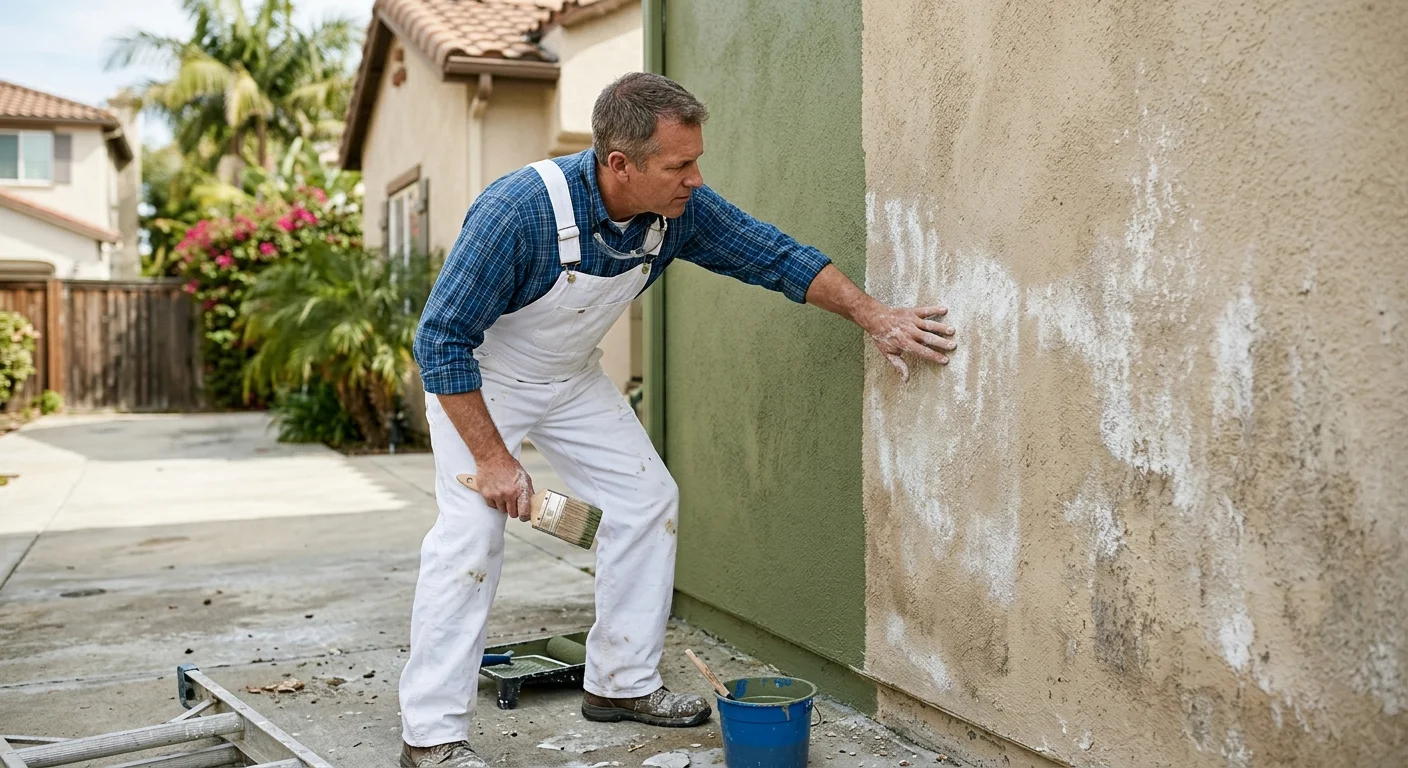
A pale powder on your hand can signal chalking exterior paint. It identifies a surface condition, but it doesn’t prove why the coating changed. A painter should inspect the residue, substrate, and surrounding finish before recommending prep.
Recognize chalking without guessing the cause
Chalky exterior paint usually gets noticed during ordinary contact. Someone brushes against a wall, wipes the siding, or leans a ladder against it. A light-colored powder then appears on the hand, cloth, or equipment.
That transfer is the useful starting observation. It isn’t a complete diagnosis. Dust, material from the coating, and residue coming through the coating can look similar from several feet away. Color alone doesn’t settle the question.
Start by documenting the wall before cleaning it. Photograph the full elevation and a close view of the powder. Note whether it appears across one broad area or in isolated patches. Include sheltered areas, exposed walls, trim lines, and the lower wall in that comparison.
Use a clean cloth on a small test area. Record the cloth color and what the surface looks like afterward. Don’t treat one wipe as proof of a cause. The goal is to give the quoting painter a repeatable observation.
Look for other visible conditions nearby. These may include peeling edges, blisters, open cracks, glossy patches, or a cracked pattern. If the coating has a patterned surface failure, compare it with our guide to alligator cracking in exterior paint.
Timing also adds context. National Weather Service data says most San Diego rainfall occurs from November through March. Coastal San Diego receives less annual rain than inland and mountain areas. Record whether the residue appeared before or after wet weather, but let the painter decide whether that timing matters.
Check stucco, wood, and metal separately
A house can show similar white powder across different materials. That doesn’t mean every surface belongs in one repair category. Ask the painter to inspect stucco, wood, and coated metal as separate parts of the scope.
On stucco, note whether the powder stops at trim or continues across repaired patches. Photograph cracks, patched areas, and places where the surface feels loose. Don’t scrape or break material merely to identify it. A visual inspection can first establish where closer testing may be needed.
White powder on painted stucco also shouldn’t be labeled from a photograph alone. Ask whether the residue appears to sit on the finish, come from a failing coating layer, or involve the material beneath it. The answer affects the proposed preparation. Our overview of common stucco problems in San Diego explains other visible conditions worth documenting. A painter experienced with stucco painting and repair can then separate coating work from substrate repairs.
On wood, photograph boards, joints, exposed edges, and peeling areas separately. Note where the powder transfers and where the finish remains firm. The proposal should say which wood areas need preparation instead of describing the entire elevation as one surface.
For coated metal, document bare spots, staining, seams, fasteners, and remaining finish. Ask the painter to identify the existing surface as closely as possible. The quote should distinguish metal preparation from nearby stucco or wood work.
This material-by-material review makes bids easier to compare. It also prevents a broad phrase such as “prep exterior” from hiding several different tasks.
Review cleaning and surface preparation
A repaint proposal should explain what happens between inspection and the new finish. “Clean and paint” leaves too much unanswered when visible powder transfers from the wall.
Ask each painter to define the cleaning method by surface. The scope should identify which areas will be cleaned, what loose material will be addressed, and how the painter will judge the prepared surface. Ask the painter to set pressure, chemical ratios, and cleaning steps after inspecting the wall and reviewing the coating manufacturer’s instructions.
A small test area can make the proposal more concrete. Ask the painter to show how the chosen process changes the residue and the underlying finish. The test area should dry before anyone judges its condition. Record the accepted result so the same standard can be used elsewhere.
Pressure washing isn’t automatically a complete preparation plan. It is one possible part of a scope, depending on what the painter finds. Our guide to pressure washing before painting in San Diego covers the questions homeowners should ask before that work begins.
The age of the home also matters when preparation will disturb old paint. Census data indicates that 49.6% of San Diego housing units were built before 1978. Federal rules require EPA-certified firms to follow lead-safe practices when paid renovation, repair, or painting work disturbs lead-based paint in pre-1978 housing. Review the EPA Renovation, Repair and Painting program and ask the painter for the applicable certification details before work begins.
Match primer and finish to the existing coating
Choosing a primer from the wall color isn’t enough. The quoting painter should first identify the substrate, the condition of the remaining coating, and what can be confirmed about the existing finish.
Ask for the exact primer and finish products in the written proposal. Each should be tied to specific surfaces. A proposal might list one system for stucco and another for wood or metal. Product names without locations still leave the application unclear.
The painter should also explain why the selected products fit the prepared surface. Ask which manufacturer instructions support that choice. If the old coating can’t be identified, the scope should acknowledge that uncertainty. It should also explain how the painter will evaluate adhesion or compatibility before broad application.
Don’t accept “premium paint” as a complete specification. Request the manufacturer, product line, finish, and intended surface. Named products such as Sherwin-Williams Loxon XP or Dunn-Edwards EVERSHIELD are current coating examples, but a familiar name doesn’t prove suitability for every chalky wall. Inspection and written specifications still matter.
A sample area can help separate color approval from coating approval. Color shows appearance. The sample also gives the painter a defined place to assess the proposed system over the prepared surface. Ask what must be accepted before work continues across the elevation.
For a larger exterior house painting project, compare proposals line by line. Cleaning, repairs, primer, finish, and excluded work should appear as separate items. That structure helps reveal whether two painters are pricing the same scope.
Know when failing layers need wider removal
A small chalky area doesn’t automatically establish the condition of the whole house. Likewise, powder across one wall doesn’t prove every elevation needs identical treatment. Wider removal should follow inspection findings, not a guess based on one photograph.
Ask the painter to map the affected areas. The map can identify firmly attached coating, loose edges, exposed substrate, previous patches, and areas that remain questionable after cleaning. It should also separate chalking from peeling, cracking, or damaged stucco.
The written scope needs a clear boundary for removal. Ask what visible or tested condition would cause the painter to expand beyond the original area. Also ask how any added area would be documented before the scope changes. This avoids vague language that leaves the homeowner unable to compare bids.
Where several coating layers are visible, request an explanation of what will remain and what will be removed. The painter should tie that decision to the observed surface and selected coating instructions. Ask the painter to explain any proposed scraping, sanding, blasting, or chemical removal method in the written scope.
Pay closer attention when powder appears beside lifting edges or deep patterned cracks. Those conditions may indicate that the project involves more than surface cleaning. The painter should name each condition separately and explain its proposed treatment.
Before signing, verify the contractor through the CSLB license check. Paint Pros San Diego is a referral service. The customer hires and pays the independent painter directly, so the painter’s scope, credentials, and product terms should be clear in writing.
When to call us
Call when chalky residue covers broad areas, appears beside peeling or cracks, or leaves you unsure how much preparation belongs in the quote. Call us at (858) 400-6422 and we’ll connect you with a licensed local painter.