The paint on your stucco or trim has split into a pattern of small, blocky cracks that looks a lot like reptile skin. That’s alligator cracking, and it’s a real warning sign, but it doesn’t tell you on its own whether the problem is the paint film, the surface underneath, or both. Here’s how to read it correctly before deciding what fixes it.
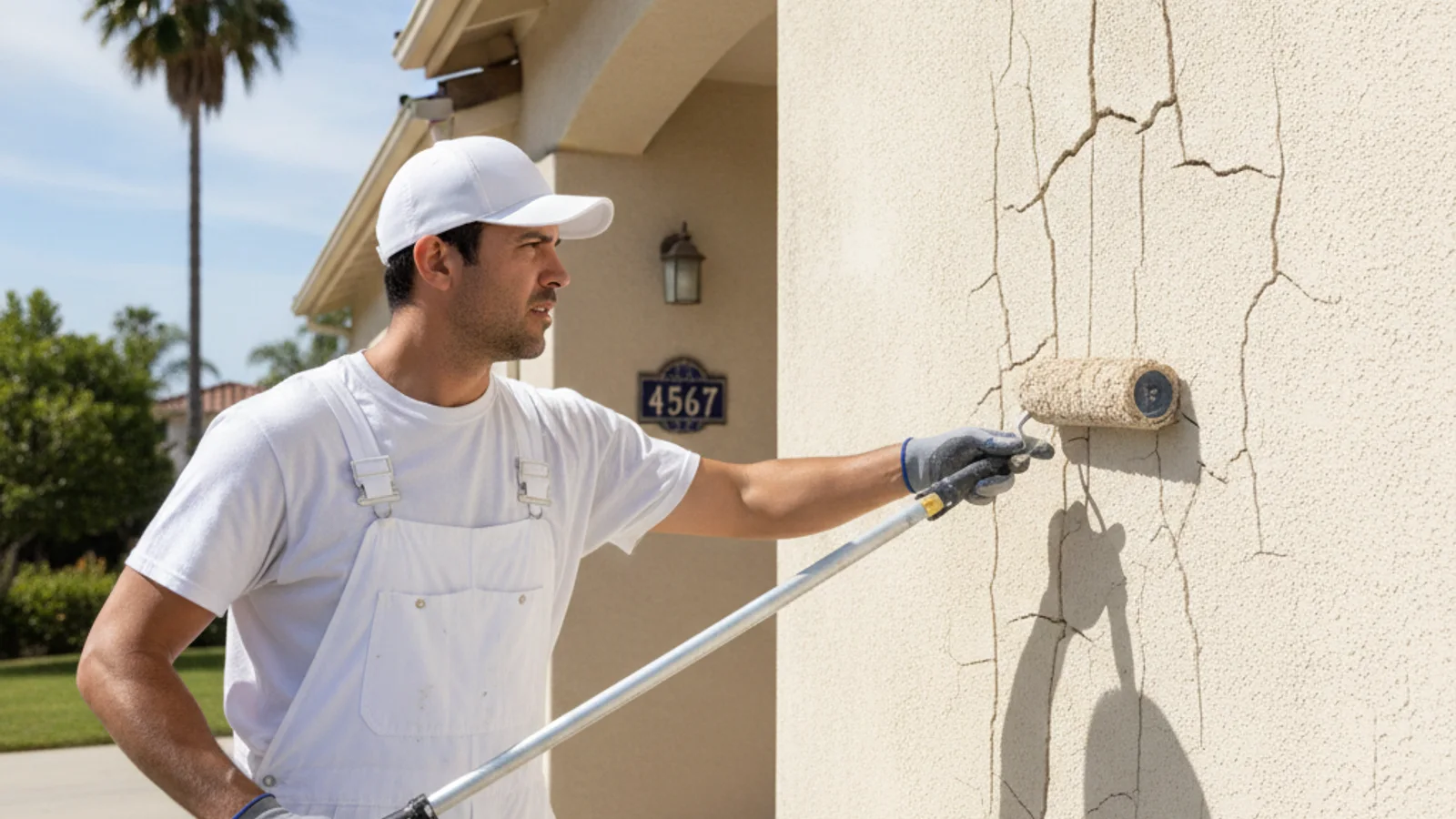
What is alligator cracking paint?
Alligator cracking paint is a blocky, scale-like split in the paint film, not a single hairline in the stucco. It means the coating has lost flexibility. It is not, by itself, proof that the wall is failing. The checks below separate a dead film from a crack in the wall.
Recognize the blocky crack pattern
Alligator cracking gets its name from the pattern itself: a grid of small, roughly rectangular or hexagonal cracks that break the paint film into distinct segments, similar to scales on reptile skin. It’s different from a single hairline crack running in one direction, and different from fine spiderweb cracking, which tends to be much finer and more randomly distributed across a wider area.
This pattern shows up most on older paint films that have gone through repeated cycles of expansion and contraction, usually from sun exposure and temperature swings, without enough flexibility left in the coating to keep up. It’s common on stucco, but it also turns up on painted wood trim, fascia boards, and any surface a full exterior painting project would cover, anywhere multiple coats have built up over years of repainting.
Where the cracking sits on the house matters too. South- and west-facing walls that take the most direct sun tend to show it first and worst, since UV exposure is one of the biggest drivers of paint film breakdown over time. A north-facing wall in the same house, with less sun and more shade, often looks fine while a south wall a few feet away is already alligatored.
Coastal homes have their own version of the same stress, driven more by repeated dampness from the marine layer than raw heat, but the visual result on the paint film can look similar enough that location alone isn’t a reliable way to guess the cause.
Separate coating failure from stucco cracking
This is the distinction that actually decides the repair, and it’s easy to get wrong from a distance. Alligator cracking that stays confined to the paint film, cracks that don’t go any deeper than the coating itself, is a coating problem: the paint has aged out, lost flexibility, and needs to come off and be replaced with a proper system.
A crack in the stucco itself is a different problem entirely. Stucco cracks from foundation movement, seismic settling, or simple curing over time, and those cracks run through the actual substrate, not just the paint on top of it. When a stucco crack telegraphs through a paint film, you’ll often see the crack line staying consistent and continuous even where the surrounding alligatoring pattern changes, because it’s following a break in the wall itself rather than a breakdown across the whole coating.
A painter distinguishes the two by close inspection and, where needed, gently probing the cracked area to see whether the crack is limited to the paint layer or extends into the stucco. The common stucco problems guide covers what stucco-specific cracking looks like and how it differs from a coating issue, and the stucco crack repair before painting guide walks through what actually needs to happen to a structural crack before any new paint goes on.
Check older layers before choosing a repair
Alligator cracking is more common on houses carrying several decades of paint layers, and San Diego County has a wide range of housing ages that makes this check worth doing before assuming you know what’s under the surface. In cities like La Mesa, where roughly 68.7% of the housing stock predates 1978, or El Cajon, at about 62.5%, it’s common to find three, four, or more paint layers stacked on top of each other, each one applied without fully removing what came before. In newer areas of the city of San Diego, where about 49.6% of units predate 1978, that layering is often less extreme, but it still shows up on homes that have been repainted multiple times.
Multiple stacked layers change how alligator cracking behaves. Older, thicker layers underneath can crack and flake even after a newer topcoat goes on over them, because the failure originates below the visible surface. A painter inspecting alligator cracking on an older home needs to consider not just the topcoat but everything underneath it, since a full removal down to a sound base is sometimes the only way to stop the cracking from coming back through a fresh coat.
Remove unsound paint before priming
Whatever the cause turns out to be, painting over alligator cracking without removing the failed material first just locks the problem under a new coat, and it usually reappears within a season or two. The unsound paint has to come off: scraping, sanding, or in more severe cases pressure washing and mechanical removal, until what’s left is firmly bonded to the surface underneath.
Testing for adhesion matters here. A painter can check by scoring a small section and seeing whether the surrounding paint lifts easily, which tells you how far the removal needs to extend beyond the visibly cracked area. Skipping past a firm edge and priming over paint that’s still loosely attached just moves the failure point outward instead of solving it.
Once the surface is down to sound material, the correct primer depends on what’s exposed, whether that’s bare stucco, bare wood, or an older paint layer that’s still intact and firmly bonded. A stain-blocking or bonding primer is often part of that step, and the specific product should be chosen based on what the painter finds during removal, not decided in advance.
Removal method matters for another reason too: dust. Sanding or scraping old exterior paint on a home built before 1978 raises the possibility of lead-based paint, and a firm working on that kind of surface should be certified under the EPA’s Renovation, Repair and Painting program and follow its required containment and cleanup practices. Ask the painter directly whether the home’s age puts the job under that rule, rather than assuming it doesn’t apply just because the house looks updated.
Ask a painter to document the repair scope
Because alligator cracking can come from more than one cause, and because the right fix depends on what’s actually happening under the surface, get the repair scope in writing before work starts. The proposal should describe how much of the failed coating gets removed, what primer is being used and why, and whether any stucco or wood repair is included separately from the paint work itself.
If a painter proposes painting directly over alligator cracking without mentioning removal, that’s worth questioning directly. Ask what testing was done to confirm the existing coating is sound enough to paint over, and get that answer in writing along with the rest of the scope. Before signing, you can also confirm the contractor’s current standing through the CSLB license lookup.
When to call us
Alligator cracking is worth having inspected in person, since telling coating failure apart from a stucco or substrate crack isn’t something you can reliably do from a photo. Call us at (858) 400-6422 and we’ll connect you with a licensed local painter.