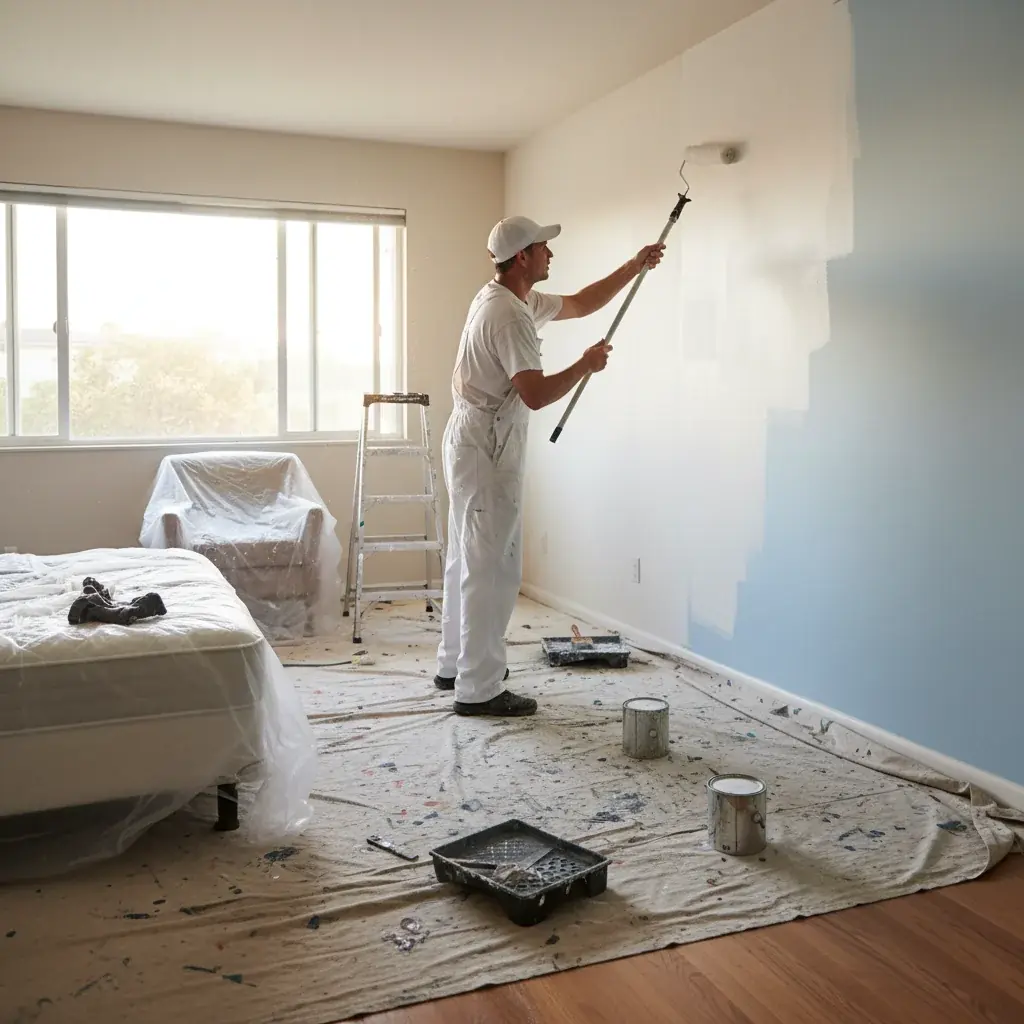
The direct answer for California landlord painting law San Diego is simple: California sets no fixed statewide repainting schedule. A landlord may deduct for tenant-caused damage beyond ordinary wear. Any deduction must be reasonable and tied to restoring the unit’s starting condition. Different rules cover documentation, deadlines, and pre-1978 housing.
That means a turnover repaint isn’t automatically a tenant charge. The landlord must separate ordinary wear from tenant-caused damage. The move-in record, move-out condition, and proposed repair scope all matter.
What California landlord painting law San Diego actually says
California Civil Code section 1950.5 supplies the main security deposit rules. It doesn’t require landlords to repaint every two years, three years, or after every tenant. California has no fixed statutory repainting interval.
Section 1950.5(b)(2) allows a security deposit to cover tenant-caused damage. Ordinary wear and tear is excluded from that permitted use.
Section 1950.5(e)(2)(A) goes further. A landlord can’t charge the tenant or deposit for ordinary wear and tear. That protection covers wear that existed before the tenancy, occurred during it, or accumulated across multiple tenancies.
Section 1950.5(e)(2)(B) sets the restoration standard. Charges for materials, supplies, or labor must be limited to a reasonable amount. The work must restore the unit to its condition when the tenancy began, excluding ordinary wear.
The statute uses a restoration standard, not an automatic repainting fee. A proposed deduction should therefore connect the documented damage to the work needed for restoration.
Use the move-in condition as the starting point
Start the turnover review with the unit’s documented move-in condition. Compare the same walls, ceilings, doors, and trim at move-out. This keeps the decision tied to the statutory restoration standard.
A practical review has four parts:
| Review point | What to establish |
|---|---|
| Starting condition | What the paint and surfaces looked like when the tenancy began |
| Ending condition | What changed by the time the tenant moved out |
| Cause | Whether the proposed repair addresses tenant-caused damage or ordinary wear |
| Repair scope | What work is reasonably necessary to restore the starting condition |
Avoid deciding from a label alone. “Scuff,” “stain,” or “wall damage” doesn’t document the starting condition or cause. Photographs and written condition records provide a clearer comparison.
Useful records can include:
- Dated move-in photographs of each painted surface
- The tenant’s move-in condition checklist
- Lease documents describing existing paint damage
- Move-out photographs taken from similar angles
- A written painting scope identifying affected surfaces
- Receipts or invoices supporting applicable deductions
These records also help a painter understand the requested scope. For a San Diego unit, that might mean separating isolated repair areas from a broader interior painting project.
Follow the deposit statement deadline
California Civil Code section 1950.5(h)(1) requires an itemized statement of security deposit deductions. The landlord must furnish it no later than 21 calendar days after the tenant vacates.
The statute also contains a limited documentation exception. Under section 1950.5(h)(4)(A), receipts or invoices aren’t required when repair-and-cleaning deductions together don’t exceed $125.
That exception concerns the supporting receipts or documentation. The 21-day itemized statement requirement appears separately in section 1950.5(h)(1).
California law doesn’t set a standard painting charge or paint “useful life” figure for this calculation. The approved standard is a reasonable amount necessary to restore the original condition, excluding ordinary wear. A landlord facing a disputed deduction should consult a landlord-tenant attorney or the California Department of Consumer Affairs.
Property managers budgeting the work can review the San Diego interior painting cost guide. Use the guide for planning, not as an automatic tenant charge.
Check lead rules before disturbing older paint
Pre-1978 housing brings a separate set of federal responsibilities. Before a lease takes effect, landlords must provide the EPA pamphlet “Protect Your Family From Lead In Your Home.” They must also disclose known lead-based paint or hazards and provide available lead records or reports. These duties come from 42 U.S.C. section 4852d and 40 CFR Part 745, Subpart F.
Painting work is governed by a different requirement. Under the EPA Renovation, Repair and Painting Rule, a paid firm disturbing painted surfaces in pre-1978 housing must be EPA-certified and follow lead-safe work practices. That rule appears in 40 CFR Part 745, Subpart E.
The distinction matters. The landlord handles the pre-lease disclosure duties. The paid renovation firm must meet the RRP requirements for covered work.
San Diego’s housing age makes this more than a remote concern. The following figures come from the Census Bureau’s ACS 2023 five-year housing data:
| Area | Total housing units | Share built before 1978 |
|---|---|---|
| San Diego | 559,653 | 49.6% |
| Chula Vista | 90,535 | 40.8% |
| El Cajon | 35,264 | 62.5% |
| Oceanside | 66,744 | 34.4% |
These figures cover all housing units. They aren’t counts of rentals or confirmed lead hazards. They show why the property’s construction date belongs in the turnover checklist.
For covered work, the RRP rule requires a certified firm and certified renovator. Warning signs must remain through cleaning verification. The work area must contain dust and debris. Furniture, rugs, and window coverings must be removed or sealed under sheeting.
Power sanding or grinding on painted surfaces requires a containment system with a HEPA vacuum attachment. Waste must remain contained and secured at the end of each workday.
Before hiring, confirm the property’s year built and discuss the exact preparation work. The San Diego painter hiring guide provides a useful framework for comparing professionals.
Plan the turnover repaint around documented scope
Once the legal review is complete, define the painting scope separately. Identify the rooms, surfaces, preparation, and finish work involved. Don’t let an unresolved deposit dispute become a vague painting request.
For properties within the city, the San Diego painting service page explains available referral options. Paint Pros San Diego is a referral service. We connect landlords and property managers with licensed, independent local painting professionals.
The customer hires and pays the professional directly. Paint Pros San Diego doesn’t perform the work, set prices, or provide warranties.
This article offers general information, not legal advice. Contact a landlord-tenant attorney or the California Department of Consumer Affairs about an active dispute. For help finding a local painting professional, call (858) 400-6422.
Frequently asked questions
Does California landlord painting law San Diego set a repaint deadline?
No. California law doesn’t set a fixed statewide repainting schedule for rental units. The deposit rules instead focus on ordinary wear, tenant-caused damage, and reasonable restoration costs.
Can a landlord charge a tenant for painting?
A landlord may apply the deposit to tenant-caused damage, excluding ordinary wear and tear, under Civil Code section 1950.5(b)(2). Any painting deduction must also meet the reasonable restoration standard in section 1950.5(e)(2)(B).
How much can a landlord charge for painting?
California law doesn’t provide a fixed painting amount or statutory paint lifespan. The charge is limited to a reasonable amount necessary to restore the unit’s starting condition, excluding ordinary wear. Seek legal guidance when the amount or cause is disputed.
When must painting deductions be itemized?
The landlord must furnish an itemized statement no later than 21 calendar days after the tenant vacates. That deadline comes from Civil Code section 1950.5(h)(1).
Are receipts always required for a painting deduction?
No. Section 1950.5(h)(4)(A) provides an exception when repair-and-cleaning deductions together don’t exceed $125. This exception addresses supporting receipts or documentation, not the separate itemized statement deadline.
What lead-paint rules apply during a rental repaint?
Landlords have disclosure duties before leasing pre-1978 housing. A paid firm disturbing painted surfaces in that housing must be EPA-certified and follow the RRP Rule’s lead-safe work practices.