For bathroom cabinet refinishing in Poway, start with the vanity’s condition, not its color. Confirm the cabinet material, damaged areas, existing finish, and proposed coating system before accepting a painter’s scope. That review helps separate a focused refinishing project from repairs or replacements that weren’t discussed.
Identify the cabinet material and existing finish
Begin with the door backs, drawer edges, cabinet frame, and exposed side panels. Those areas can help the painter identify solid wood, veneer, MDF, laminate, or a mix of materials. Don’t assume every visible surface uses the same material.
Ask the painter to document the existing finish as well. It may be paint, stain under a clear finish, or an older coating that isn’t immediately identifiable. The proposed preparation and primer should account for what’s already there. If the painter can’t identify the old finish, ask how compatibility will be checked before the full vanity is coated.
Look closely for swollen edges, soft sections, open joints, peeling coatings, water marks, and previous spot repairs. Check the toe kick and the cabinet floor beneath the sink. Refinishing isn’t a substitute for correcting damaged material or an active plumbing problem. The written scope should identify which defects will be repaired and which are excluded.
Poway’s housing age also deserves attention. Census data shows that 49.2% of Poway housing units were built before 1978. That citywide figure doesn’t establish the age of your vanity, so confirm when the cabinet was installed or last replaced.
If paid work will disturb painted surfaces in pre-1978 housing, the federal EPA Renovation, Repair and Painting program may apply. The rule requires certified firms and certified renovators for covered work. Don’t infer the cabinet’s age from the house alone. Ask the quoting painter how the vanity and coating history will be evaluated.
Account for bathroom use before choosing a finish
A bathroom vanity has a different use pattern than kitchen cabinetry. Wet hands reach for doors and drawers. Water can collect near the sink edge. Toiletries, cleaners, and grooming products may touch the finish. Steam may also be present, depending on the room and its ventilation.
Walk through those conditions with the painter. Point out the surfaces beside the sink, tub, shower, and toilet. Show any edges that have swollen or changed texture. Note where the existing finish has chipped, softened, stained, or separated. These details belong in the assessment, even when the damage looks minor.
The finish discussion should cover more than color. Ask about the proposed sheen, primer, topcoat, and manufacturer guidance for the cabinet material. Have the painter explain the cleaning instructions that apply to the finished surface. Don’t accept a vague label such as “cabinet paint” without an exact product name.
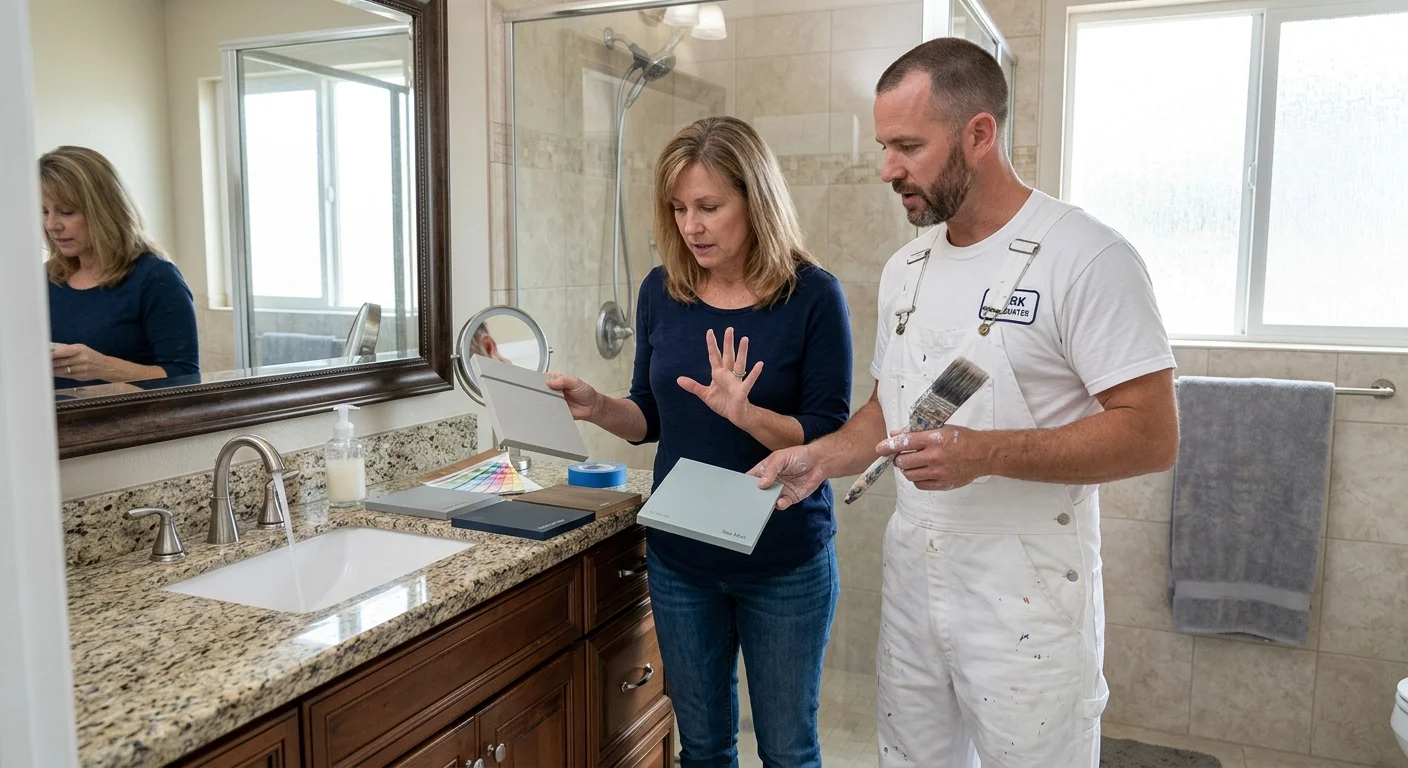
Light also changes how a finish looks. Review the sample beside the vanity, mirror, countertop, flooring, and wall color. Examine it under the bathroom’s normal lighting. A removable door or sample board gives you a more useful reference than a small color chip.
White remains a common consideration, but the name alone doesn’t define the result. Undertone, sheen, preparation, and the existing substrate still need review. Our guide to white cabinet finish problems explains what to examine when an existing white coating has changed color or started chipping.
Review cleaning, repair, and preparation
The preparation scope should be written in plain language. “Prep and paint” doesn’t tell you what happens before the finish goes on. Ask the painter to identify the cleaning method, planned repairs, sanding approach, dust control, primer, and application method.
Start with an itemized condition review. Cabinet faces can collect hand oils, cosmetics, cleaner residue, and material from previous touch-ups. Ask how those surfaces will be cleaned and how the painter will confirm they’re ready for the next step. The answer should address the actual vanity, not a generic cabinet process.
Repairs also need boundaries. Confirm whether the scope includes loose joints, damaged edges, dents, old hardware holes, failing caulk, or separated veneer. Ask what happens if hidden damage appears after doors or hardware come off. Plumbing, countertop, sink, and wall repairs should be listed separately if they aren’t included.
Sanding should follow the material assessment. Thin veneer, laminate, MDF edges, and solid wood shouldn’t be treated as interchangeable surfaces. Ask which areas will be sanded, which tools will be used, and how dust will be contained.
For covered pre-1978 work, EPA rules require containment so dust and debris don’t leave the work area. The rules also require a shroud or containment system with a HEPA vacuum attachment when specified power tools are used on painted surfaces. Furniture, rugs, and window coverings must be removed or sealed under sheeting for covered interior work.
For a broader view of sequencing, review the professional cabinet refinishing process. Then compare that framework with the exact condition of your Poway bathroom vanity.
Check product guidance for primer and finish
Request the exact manufacturer and product name for every proposed coating. The written system should identify the cleaner or preparation method, primer, finish, color, and sheen. It should also state which product goes on each material.
Examples a painter may discuss include Emerald Urethane Trim Enamel, ADVANCE, or Cabinet Coat. These are examples of products available in the architectural coating market, not automatic recommendations for every vanity. Ask the painter to show why the selected product matches your cabinet material and existing finish.
Primer deserves the same level of detail. Cover Stain and B-I-N are examples of stain-blocking primers. A product name alone still doesn’t establish that it belongs in your project. Ask what condition calls for that primer and whether the manufacturer’s current guidance supports the proposed system.
Have the painter check the current product data for surface preparation, compatible substrates, primer selection, application, and recoating. Follow the manufacturer’s published instructions rather than relying on an unsupported drying or performance promise. This page doesn’t publish a standard drying schedule because the approved claims ledger contains no verified timing for Poway bathroom cabinets.
A sample can resolve several decisions before the full scope begins. Ask for the agreed color, sheen, texture, and edge appearance to be recorded. If a test area reveals a compatibility problem, the scope should explain how the painter will revise the preparation or product plan.
Don’t treat a verbal product reference as the final specification. Keep the approved product details with the written scope so every quote can be compared on the same basis.
Confirm hardware, doors, and scope exclusions
Cabinet quotes become hard to compare when each painter counts a different set of surfaces. Build a simple inventory before reviewing the scope. Include doors, drawer fronts, cabinet frames, exposed ends, toe kicks, trim pieces, shelves, and cabinet interiors. Add a medicine cabinet or linen unit only when it’s part of the requested work.
Confirm whether doors and drawer fronts will be removed. Ask where they’ll be prepared and coated. The scope should also address labeling, storage, transportation, and reinstallation when those steps apply. Don’t assume that work away from the bathroom is automatically included.
Hardware needs its own decisions. Record whether knobs, pulls, and hinges will be reused, replaced, cleaned, or supplied by the homeowner. If new hardware uses different mounting holes, ask who will fill old holes and prepare new ones. Confirm whether soft-close parts, drawer slides, and damaged hinges sit outside the refinishing scope.
Protect adjacent finishes by naming them. The countertop, sink, faucet, mirror, flooring, walls, and nearby fixtures should appear in the project discussion. If plumbing disconnection, wall painting, countertop work, or cabinet repair isn’t included, the written exclusions should say so.
A small vanity can still contain repair, hardware, and coating decisions that require an itemized bathroom scope.
Paint Pros San Diego can help you compare the scope and connect with an independent professional through our cabinet painting and refinishing service. The homeowner contracts with and pays the matched painter directly. Before signing, verify the painter’s license through the CSLB license check and request the project documents you need.
When to call us
When the finish is peeling, the material is uncertain, or damaged edges affect the scope, ask a qualified local painting pro to inspect the vanity. Paint Pros San Diego is a referral service that matches homeowners with licensed, independent local professionals. Call us at (858) 400-6422 and we’ll connect you with a licensed local painter.