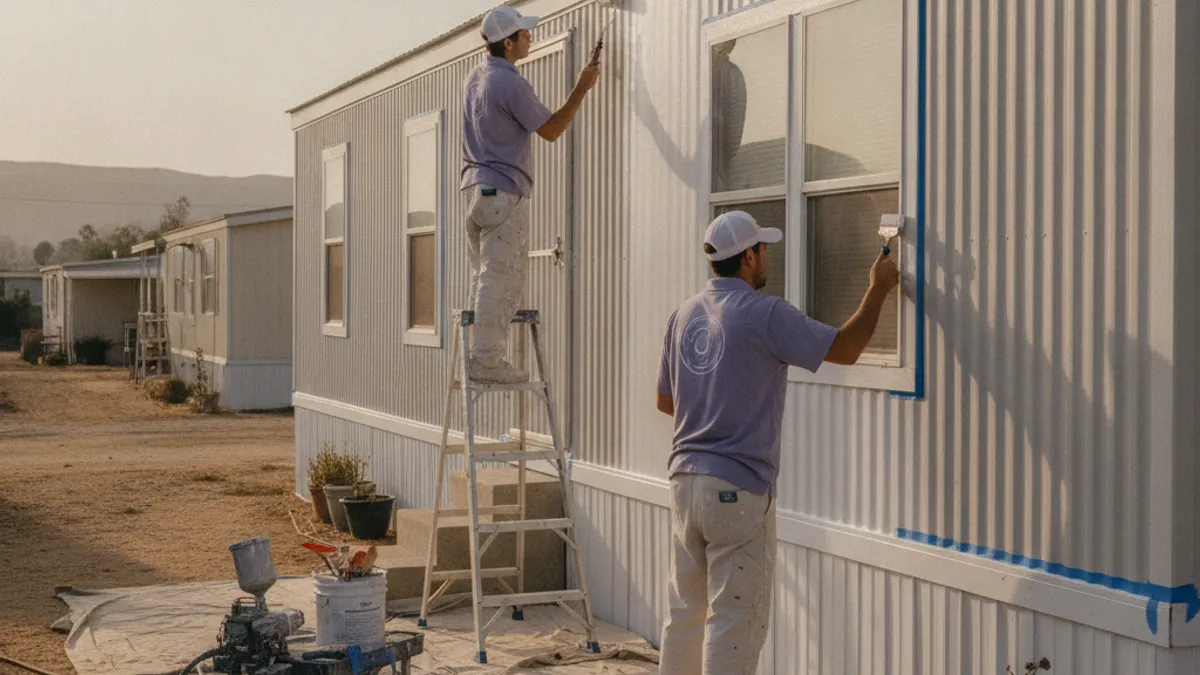
Painting a mobile or manufactured home is not the same job as painting a stucco house, even though the goal (a fresh, durable exterior) is identical. The siding material is different, the prep sequence is different, and the products that hold up on a metal or vinyl exterior aren’t the same ones painters in our network spec on stucco. Spring Valley has a real concentration of mobile and manufactured home communities in its unincorporated East County pockets, so this is a job we see regularly.
The siding difference is the whole job
Most of the mobile homes we see in Spring Valley fall into two categories, and the age split matters.
Older aluminum siding. Homes manufactured before the mid-1970s, and some into the early 1980s, commonly used ribbed aluminum panel siding. Aluminum doesn’t rot, but it does oxidize and chalk over time, and standard exterior acrylic paint won’t bond to a chalky or oxidized aluminum surface without the right prep. Skip that step and the new coat peels within a year or two.
Newer HUD-code manufactured homes. Homes built after the federal manufactured housing standards took effect in 1976 more often use vinyl siding, hardboard, or a fiber-cement panel system that behaves closer to standard house siding. These take a more familiar prep and paint sequence, though vinyl siding still has its own rules around color (dark colors can warp vinyl in direct sun if the product isn’t rated for it).
Knowing which siding you actually have before a painter shows up saves a wasted trip. If you’re not sure, check for visible panel seams and rivets (a sign of aluminum) versus a smoother, slightly flexible panel with a woodgrain or smooth texture (more likely vinyl or hardboard).
Prep and primer for metal siding
Aluminum siding needs a different prep sequence than stucco or wood. The surface gets washed to remove chalking and any surface oxidation, then any remaining chalky residue gets neutralized so the new primer has something to grip. A bonding primer formulated for galvanized or aluminum surfaces goes down next. Skipping straight to a standard latex primer on oxidized aluminum is the most common reason a budget mobile home repaint fails within a season.
Rust spots at seams, rivets, and any exposed steel trim (skirting frames, awning supports) need a rust-inhibitive primer specifically, not a general-purpose one, before the topcoat goes on. Left untreated, rust bleeds straight through even a good paint job within months.
What drives the cost to paint a mobile home in Spring Valley
The smaller footprint of most manufactured homes compared to a site-built house helps the number, but the specialty primer work metal siding requires pushes back the other way.
| Home size | Typical square footage | Full exterior repaint (siding, trim, skirting): what drives it |
|---|---|---|
| Single-wide | 700 to 1,000 sqft | Total surface area, condition of existing coating |
| Double-wide | 1,400 to 1,800 sqft | Surface area, seam count, rust-prep extent |
| Larger double-wide or triple-wide | 1,800 to 2,400+ sqft | Largest surface area, most seams and trim runs |
Rust treatment at seams and skirting frames adds to the scope, and so does any porch, carport, or attached awning structure brought into the job. Homes with heavy chalking or oxidation on aluminum siding take more prep time than a comparable job on newer vinyl or hardboard siding, which pushes the number up from the baseline.
What’s included in a proper mobile home repaint
A complete job covers the main siding panels, all trim and window surrounds, the entry door and storm door frame if applicable, and the skirting that runs around the home’s base. Skirting gets its own attention since it sits closest to the ground and takes the most weather and moisture exposure, especially on properties with limited drainage or landscaping right up against the base panels.
Two coats of an exterior acrylic rated for metal or vinyl substrates is the standard we work to, applied after the full wash-and-prime sequence above. One-coat jobs on chalky aluminum are how a cheap quote turns into a repeat job within two years.
How to check your siding before you call
A quick way to tell what you’re working with before a painter even shows up: look for visible panel seams with exposed rivets running in horizontal rows, that’s aluminum. A smoother panel with a subtle woodgrain texture and no visible rivets is more likely vinyl or a hardboard composite. Tap the surface lightly, aluminum has a distinct hollow metallic sound, while vinyl and hardboard sound more solid. Knowing which one you have before the estimate means the quote you get accounts for the right prep and primer from the start, rather than needing a revision once a painter opens up the siding and finds something different than expected.
Frequently asked questions
Does a mobile home need special paint?
Yes, if the siding is aluminum. A bonding primer made for metal surfaces, plus a rust-inhibitive primer at any exposed steel trim, is what makes the topcoat actually stick. Vinyl and hardboard siding are closer to standard exterior painting but still need the right product rated for the substrate.
Why did my last mobile home paint job peel so fast?
The most common cause is skipping proper prep on oxidized or chalky aluminum siding. Standard latex primer doesn’t bond well to a chalky metal surface. If the paint is lifting in sheets rather than just fading, that’s almost always a prep or primer problem, not a paint quality problem.
How long does a mobile home exterior take to paint?
A single-wide takes less time than a double-wide. Trim detail and how much rust or oxidation prep is needed both push the schedule out further on either size.
Can you paint the skirting a different color than the main siding?
Yes, and it’s a common request, a darker skirting color against a lighter main siding color is a popular combination in Spring Valley’s mobile home communities.
Do you paint mobile homes in other East County communities too?
Yes. The same prep and product approach applies to manufactured homes in Chula Vista, Lemon Grove, and the rest of East County. See our mobile home painting guide for Chula Vista for that market specifically.
Get an estimate for your home
Bring us the siding type, and we’ll bring the right prep and primer for it. Call Paint Pros San Diego at (858) 400-6422 and we’ll match you with a vetted local painter, or see our exterior painting service page for the full process on any exterior substrate.