Three stucco painting proposals can land in a homeowner’s inbox describing what sounds like the same job, and still cover completely different amounts of actual work. Stucco hides cracks, hairline damage, and prior patch jobs under its texture, which makes the written scope more important on a stucco project than on almost any other painting job in San Diego. Comparing quotes means comparing what’s actually included, not just the bottom line.
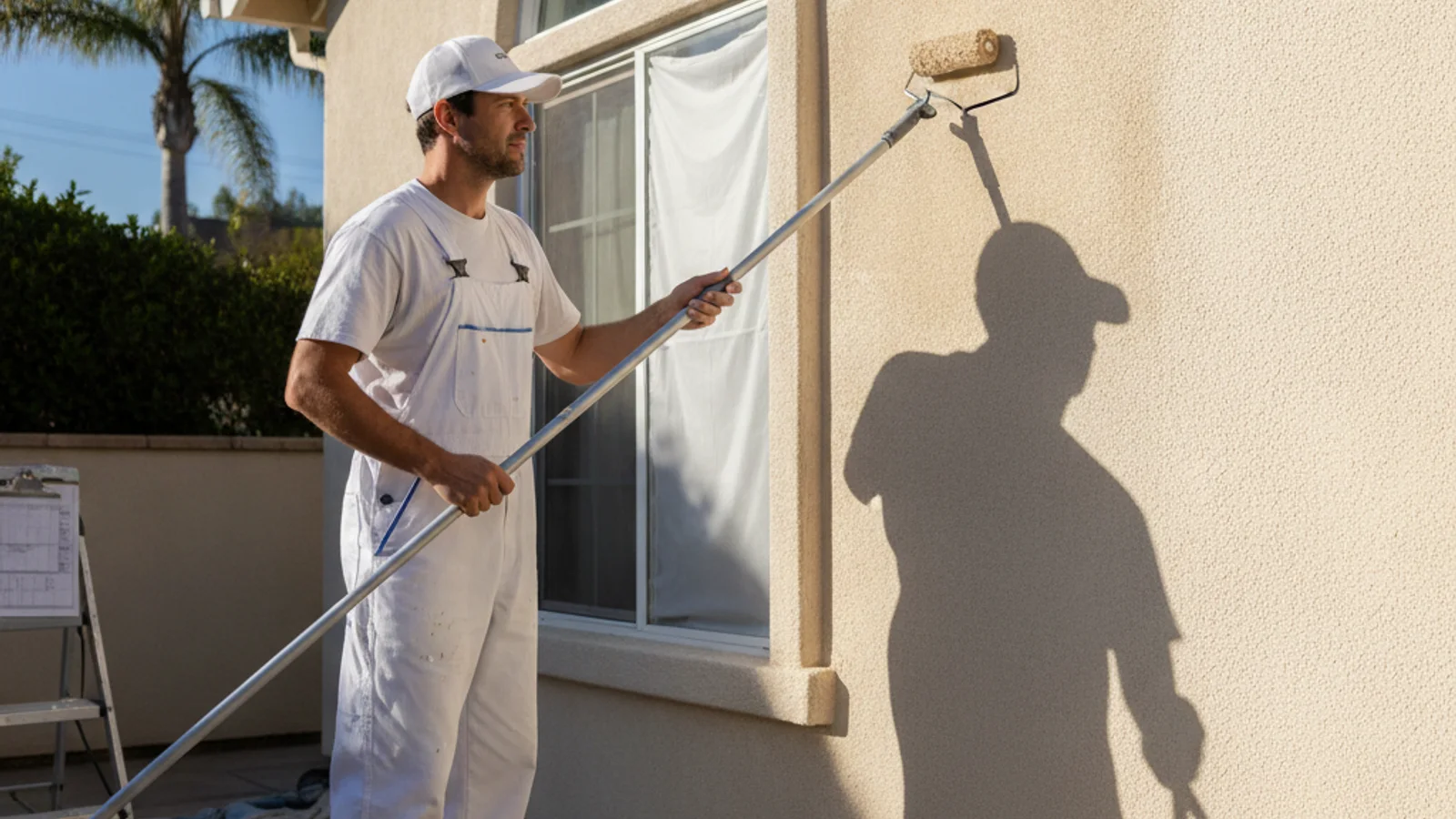
Confirm whether the scope covers repair or paint
The first thing to pin down in any proposal is whether it’s quoting a paint job, a repair job, or both. A stucco painting proposal that only addresses coating application assumes the substrate underneath is already sound. If your stucco has visible cracking, chipped corners, or areas where the texture has worn thin, and the quote doesn’t call out how those get addressed before paint goes on, ask directly.
This matters because two quotes can look close in price while one includes crack repair, corner patching, and re-texturing to match, and the other is priced to paint over the surface as it currently sits. Get every painter to walk the exterior with you and point out, in writing, which specific areas they consider repair work and which they consider ready to coat. A vague line like “minor repairs included” isn’t a scope, it’s a placeholder. Ask what counts as minor, and get it described in terms of what will actually be fixed.
For a broader look at what typically shows up on a stucco exterior in this climate, the common stucco problems guide and the stucco painting overview cover the issues worth flagging during a walkthrough before quotes come in.
It’s also worth confirming whether the proposal is for stucco alone or part of a larger exterior painting project that includes trim, fascia, garage doors, or other siding material on the same structure. A quote that only addresses stucco walls and leaves painted wood trim or metal railings out of the scope can look cheaper than a full-exterior proposal while actually covering less of the house. Ask each painter to state plainly whether trim, doors, and any non-stucco surfaces are included or billed separately.
Compare cleaning, crack work, and surface preparation
Stucco needs to be clean and structurally sound before any coating goes on, and this is where proposals diverge the most. Look for specifics: does the quote describe pressure washing the full exterior, or does it just say “prep as needed”? Does it name a method for filling cracks, or does it just list “crack repair” without saying whether that means a flexible sealant designed to move with the stucco or a rigid patch that could crack again in the same spot?
Ask each painter how they identify hairline cracking versus structural cracking, since the two need different treatments and only one of them is a paint contractor’s job to address. A painter who can explain their crack-filling approach in specific terms, rather than a one-line mention, is generally giving you a more honest look at what the job actually involves.
Surface contamination matters too, particularly on stucco near landscaping or under eaves where mildew and efflorescence, the white mineral deposits that can form on stucco, tend to build up. A thorough proposal should note how those get addressed before coating, not just painted over.
Ask how the painter identified the existing coating
What’s currently on your stucco affects what can go over it, and a painter who skips this step is working blind. Elastomeric coatings, siliconized acrylics, and standard acrylic paints all behave differently, and putting the wrong system over an incompatible existing coating can cause adhesion problems down the line. Ask each quoting painter what they found on your walls and how they determined it, whether that’s a visual assessment, a test patch, or asking about the home’s paint history.
This is a good moment to compare how each proposal frames the choice between coating types. The elastomeric versus acrylic comparison covers how those systems differ in flexibility and crack-bridging, which matters more on some stucco than others depending on the home’s age and existing crack pattern. A quote that recommends a specific coating type should explain why that system fits your walls, not just default to whatever the painter stocks.
Review primer and topcoat as one proposed system
Primer and topcoat on stucco work as a matched system, and mixing brands or product lines without checking compatibility is a real risk on a porous surface like stucco. Compare whether each proposal names the specific primer and topcoat products, or just lists a generic line item for “paint.” A painter who names the products is giving you something you can look up on the manufacturer’s own technical data sheet to confirm it’s suited for exterior stucco in a coastal or inland environment.
Ask directly whether the quoted system is designed to bridge hairline cracking or whether it’s a standard coating meant for sound, uncracked surfaces. That distinction affects both the prep work required and how the finished job performs against San Diego’s wide range of microclimates.
The comparison questions change slightly depending on where the house sits in the county. Along the coast, in places like Point Loma, Coronado, and the Pacific Beach and La Jolla shoreline, the marine layer keeps humidity elevated much of the year and salt-laden air adds a corrosion and coating-durability question that inland homes don’t face the same way. Ask a coastal-area quote how the proposed system handles that exposure. Inland, in East County communities like El Cajon, Santee, and Lakeside, and inland North County cities like Escondido and San Marcos, stucco deals with wider daily temperature swings and more direct sun exposure on south- and west-facing walls, which is a different kind of stress on a coating than coastal humidity. A painter quoting a South Bay property in Chula Vista or National City should be factoring in that area’s own mix of older and newer stucco stock, since the two coat and crack differently. None of this changes the fundamentals of what a proposal should spell out, but it’s a fair question to ask each painter directly: what about my specific location shaped this recommendation.
Check exclusions, access, and cleanup responsibilities
The parts of a proposal that get left out are often more telling than the parts that are spelled out. Ask what’s excluded: window trim, garage doors, gutters, or areas above a certain height that might need special equipment to reach safely. If a quote doesn’t mention how the painter plans to access a two-story wall or a section behind dense landscaping, ask before you sign anything.
Cleanup and site protection deserve the same scrutiny. Confirm who’s responsible for protecting windows, patios, plants, and outdoor fixtures during pressure washing and painting, and what the cleanup process looks like once the job wraps. A detailed proposal spells this out. A one-paragraph quote usually doesn’t, and that gap tends to become an argument later if it isn’t settled up front.
Access equipment is worth a direct question too, especially on two-story homes common across newer developments inland and in the South Bay. Ladders, scaffolding, or lift equipment change how a painter approaches upper-level stucco and any second-story trim included in the scope. A proposal that doesn’t mention how a hard-to-reach section gets painted safely is a proposal that hasn’t fully thought through the job yet, and it’s worth asking about before comparing the number at the bottom of the page.
Since a stucco painting pro connects you with the work but doesn’t inspect, quote, or perform it directly, the comparison work described here is exactly what you’d walk through with any independent painter bidding the job, and it’s worth doing before a single proposal gets a signature.
When to call us
A stucco exterior with visible cracking, staining, or a coating history you’re not sure about is worth a professional look before you compare quotes at all. Call us at (858) 400-6422 and we’ll connect you with a licensed local painter.