The best stucco company for an Imperial Beach home is the one offering the clearest property-specific scope. Compare what each independent painter will clean, repair, prime, coat, protect, and exclude before comparing totals. Otherwise, a paint-only proposal can look deceptively similar to a repair plan.
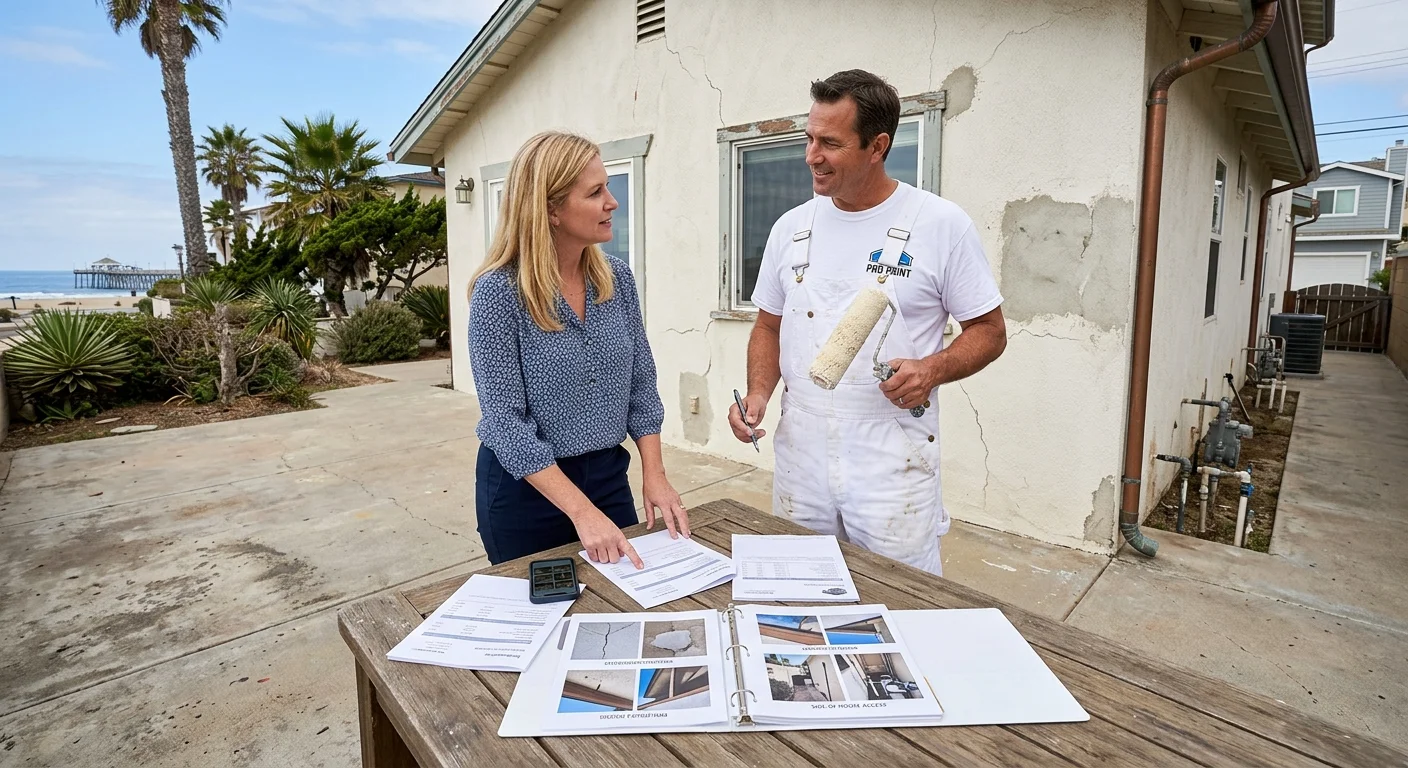
Separate stucco repair from a paint-only scope
Start by asking each painter to classify the proposed work. Every wall should fall under paint-only preparation, crack work, patching, another repair category, or a written exclusion. That distinction matters more than a broad promise to “prep and paint.”
Walk the property with each bidder. Point out every crack, old patch, stain, rough transition, and loose-looking area you’ve noticed. Ask the painter to photograph those locations and identify them in the proposal. A proposal that only lists total wall area won’t show whether the same conditions were included.
For each repair, ask what the painter plans to remove, fill, rebuild, or leave alone. The proposal should also explain how repaired areas will meet the surrounding surface. If a painter believes a condition falls outside a painting scope, ask for that statement in writing. You can then seek the appropriate evaluation before coating begins.
Imperial Beach also has a meaningful amount of older housing. The Census Bureau’s 2023 five-year data counts 10,276 housing units in the city. The largest build-era group is 1950 through 1959, representing 22.1% of units. The approved local calculation places 62% of the city’s housing units before 1978. Those figures don’t prove anything about one home’s stucco or paint. They do make the property’s construction date an important proposal checkpoint.
Compare descriptions, not labels. Two proposals that both say “stucco repair” may include very different work. Our guide to stucco painting and repair referrals explains the service category, but the independent painter must define the actual job. Ask what happens if preparation exposes a larger damaged area. The proposal should state how that discovery would be documented and approved.
Compare cleaning, crack work, and patch blending
Cleaning deserves its own written line item. Ask each painter which surfaces will be cleaned, which method will be used, and what surrounding areas will be protected. “Wash exterior” leaves too much open to interpretation. A stronger scope connects the cleaning step to specific walls, trim, openings, and existing problem areas.
Next, compare crack work one location at a time. Ask whether the proposal covers every visible crack or only selected ones. Have the painter identify the planned preparation method and repair material. If different cracks receive different treatments, those differences should appear in the scope. Don’t rely on a verbal explanation that disappears after signing.
Ask how the painter will handle old patches. Some may already have a different profile from the original wall. The bidder should explain whether those areas will be left, adjusted, or recreated. If texture appearance matters, request a small sample area before the full finish goes on. The proposal should state who approves that sample and what happens if further adjustment is requested.
Photos make comparison easier. Use the same set of wall photos when requesting each proposal. Number the locations and ask bidders to refer to those numbers. You’ll quickly see whether one painter included a repair that another excluded.
Our overview of common stucco problems in San Diego can help you organize what you see. It shouldn’t replace an onsite assessment by the painter. Your goal is a shared record of existing conditions and proposed steps.
Before choosing, compare cleanup around repair work too. Ask how dust, chips, removed material, and unused patching products will be handled. The answer belongs in the written proposal, alongside the actual repair scope.
Review primer and finish as one proposed system
A product name alone doesn’t describe a coating system. Ask each painter to connect surface preparation, repairs, primer, and finish products in one sequence. You should be able to follow that sequence from the existing wall to the completed surface.
Begin with primer. Ask whether the proposal includes spot priming, full priming, or no primer. Then ask the painter to explain that choice for your walls. Bare repairs, existing coatings, stains, and other observed conditions should be addressed individually. If the painter plans to test an existing coating or a repaired area, request the test method and decision point in writing.
The finish proposal should name the manufacturer, product line, color, sheen, and planned application method. Loxon and Loxon XP from Sherwin-Williams and EVERSHIELD from Dunn-Edwards are verified examples of current masonry or stucco coating lines. Their names don’t establish which product fits your house. The quoting painter should explain the proposed specification without attaching an unsupported lifespan or performance promise.
Also ask how many finish applications are included and what counts as completion. Avoid vague phrases such as “as needed” unless the proposal defines the decision. Confirm whether accent walls, foundation edges, vents, trim bands, decorative details, and repaired sections share the same coating specification.
Keep repair language and coating language separate. A coating selection shouldn’t quietly replace a promised patch. Likewise, a repair line shouldn’t leave the final primer and finish unstated. The value of a system comparison comes from seeing every layer and decision together.
Stucco may be part of a larger exterior house painting project. If wood trim, doors, metal railings, or other surfaces are included, request a separate preparation and product specification for each material. That makes competing proposals easier to compare without treating the whole exterior as one surface.
Check access around openings and property lines
A detailed proposal should reflect how the painter will reach every included wall. Walk the complete perimeter before accepting a scope. Note gates, fences, patios, plants, exterior fixtures, windows, doors, utility equipment, and stored items. Ask which items must move and who will move them.
Pay close attention to walls near property lines. If a painter expects to reach an area from neighboring property, settle access permission before scheduling. The proposal should identify any wall that can’t be reached under the current plan. It should also state whether limited access changes the preparation, application method, or price.
Openings need similar attention. Ask how windows, doors, vents, lights, addresses, cameras, and utility components will be protected. Confirm whether sealant work around openings is included, limited, or excluded. If the painter identifies a condition belonging to another trade, record that condition instead of treating it as covered stucco work.
Construction date also matters when preparation may disturb older painted surfaces. Imperial Beach’s verified housing data estimates that 62% of its units were built before 1978. That citywide figure doesn’t establish your home’s age or whether lead-based paint is present.
For work disturbing lead-based paint in pre-1978 housing, the EPA Renovation, Repair and Painting program requires a certified firm and certified renovator. Applicable work practices include signs, containment, controlled waste handling, and HEPA vacuum attachments on covered power sanding or grinding tools. Ask the bidder whether the rule applies to the proposed work and request the relevant certification information when it does.
Paint Pros San Diego isn’t the onsite inspector and holds no EPA certification. The independent painter must evaluate the project, explain the work area, and document the proposed controls.
Confirm exclusions before choosing a painter
The best proposal isn’t necessarily the shortest or longest. It’s the one you can compare without guessing. Before choosing among stucco painters in Imperial Beach, place their proposals side by side and mark every unclear term.
Confirm the exact walls and surfaces included. Then review cleaning, crack preparation, patching, texture matching, primer, finish products, application steps, masking, and cleanup. Record the included colors and identify who handles color approval. If a proposal includes trim or other materials, keep those scopes separate from stucco.
Next, list every exclusion. Common headings to clarify include concealed damage, structural evaluation, waterproofing work, sealant replacement, access from neighboring property, fixture removal, plant movement, and repairs exposed during preparation. Don’t assume an exclusion is included elsewhere. Ask the painter to revise the proposal when an answer changes the scope.
Confirm how changes will be documented and approved. Ask for the payment schedule and any warranty offered by that independent painter. Paint Pros San Diego doesn’t set prices, take project payments, perform work, or provide warranties. You’ll contract with and pay the selected professional directly.
Licensing should be verified before signing. Ask the quoting painter for the business name and license information shown on the proposal. Then use the official CSLB license check to review the current record. You can also request insurance documentation directly from the painter. Don’t substitute a logo, sales statement, or marketplace profile for current documentation.
Our Imperial Beach painting contractor guide offers a broader hiring checklist. For this decision, keep the comparison focused on your stucco walls and the proposed system. A clear scope gives every painter the same question to answer and gives you a useful record after selection.
When to call us
Call when your Imperial Beach project needs a qualified local painting pro to assess stucco, preparation, access, and coating options. Paint Pros San Diego will refer you to an independent professional who can inspect the property and prepare a project-specific proposal. Call us at (858) 400-6422 and we’ll connect you with a licensed local painter.