Two Carlsbad proposals can name the same rooms but describe very different jobs. Compare interior painting contractors by matching their written scopes line by line, then confirm repairs, preparation, protection, coating details, and exclusions.
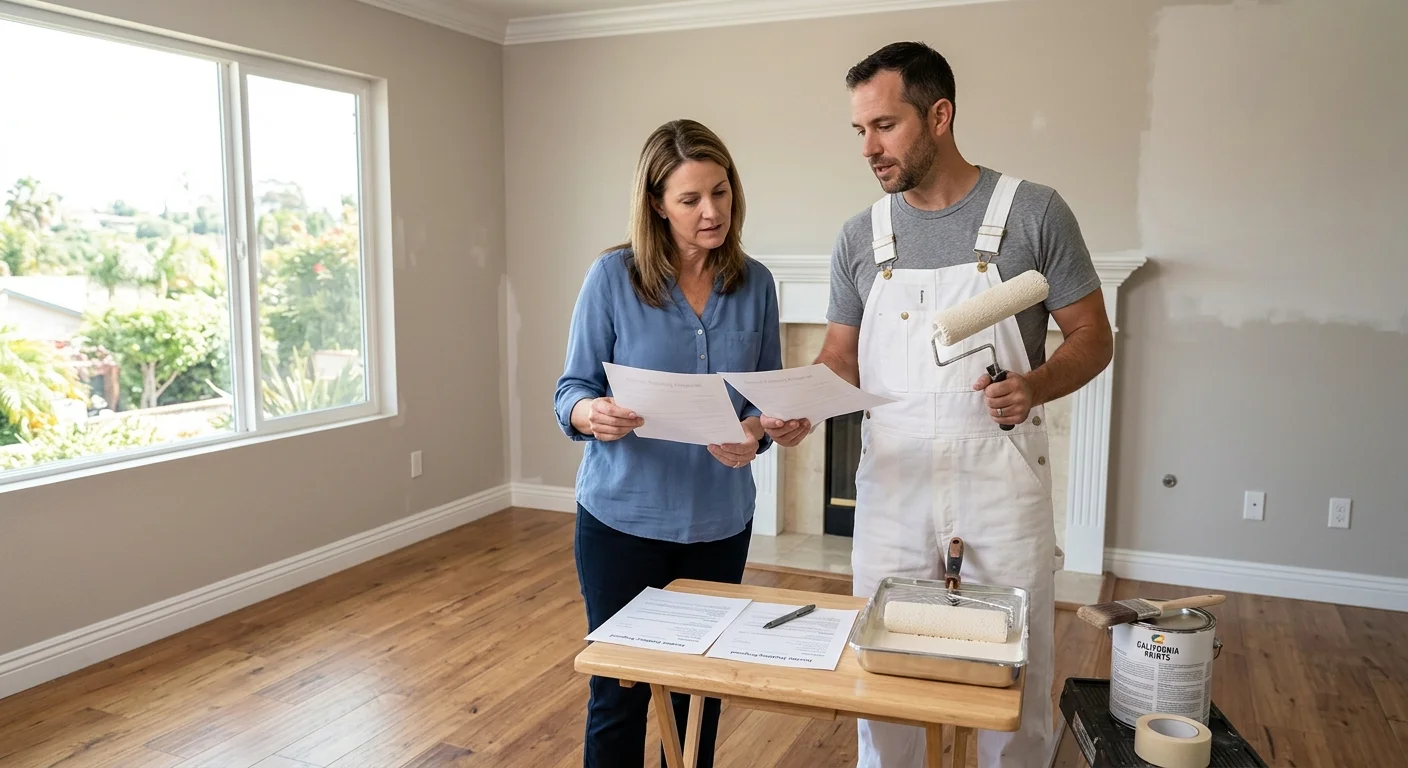
Start with the rooms and surfaces in scope
Create one master room list before independent painters inspect the home. Give every painter the same list. That keeps the comparison focused on their proposed work, not different interpretations of your request.
List each bedroom, bathroom, hallway, living area, stairway, and closet. Then break every room into surfaces. Walls, ceilings, baseboards, doors, door frames, window trim, shelves, and built-ins should appear separately. Cabinets should also be identified, even when they’re outside the project.
“Paint the living room” leaves too much open. One proposal may cover walls only. Another may include the ceiling and baseboards. A third may omit the hallway that visually connects the room to the entry.
Open layouts need extra care. Decide where one color or work area stops. Note whether the kitchen, dining area, and living room share continuous walls. Ask each painter to use those same boundaries in the proposal.
Carlsbad’s housing mix also makes the construction year relevant. The U.S. Census Bureau’s ACS 2023 5-Year table B25034 reports 47,460 housing units in Carlsbad. The largest construction-era group is 2000 through 2009, at 22.8%. The approved local analysis estimates that 27.5% of the city’s units were built before 1978. These are citywide figures, so they don’t establish any individual home’s age.
A clear scope should also note occupancy. Tell each painter which rooms will contain furniture and which will be empty. Identify restricted areas, pets, and any access concerns during the inspection.
Our interior house painting service connects homeowners with licensed independent painters. The painter inspects the rooms, prepares the proposal, and performs the work.
Separate drywall repairs from painting
Drywall repair deserves its own proposal section. A general “patch and paint” line doesn’t show what damage the painter inspected or how each repair will be handled.
Walk through every room and mark nail holes, abandoned anchors, damaged corners, visible seams, cracks, torn drywall paper, and mismatched texture. Ask the painter to describe each repair area. The proposal should distinguish minor filling from broader patching or texture work.
For every repair, compare the proposed steps. Look for clear language covering loose material, filling, sanding, texture matching, and priming. If a ceiling or wall has a stain, ask whether the painter expects the underlying cause to be identified before cosmetic work begins.
Texture deserves special attention. A smooth patch inside an existing textured wall can remain noticeable after painting. Ask how the painter will approach the transition between the repair and surrounding surface. Confirm whether texture matching covers one spot, one wall, or a larger area.
Our drywall repair and texture match service can help when repairs need inspection before painting proposals make sense. Keep the repair and coating portions separate, even when one painter handles both.
Housing age affects another part of the comparison. When the federal Renovation, Repair and Painting rule applies to paid work disturbing painted surfaces in pre-1978 housing, it requires a certified firm and certified renovator. The rule also requires containment so dust and debris don’t leave the work area. Certain powered sanding and grinding methods need a HEPA vacuum attachment.
Review the EPA Renovation, Repair and Painting program before choosing a proposal for an older home. Ask each painter how the home’s construction year affects the planned preparation.
Compare masking, preparation, and protection
Preparation language often separates a detailed proposal from a vague one. “Prepare as needed” doesn’t explain what the painter saw or what the quoted scope includes.
Ask each painter to identify the planned work for every surface. That may include cleaning, removing loose material, sanding selected areas, filling holes, caulking specified gaps, or priming repairs. The proposal should name the locations instead of treating the entire interior as one condition.
Protection should be equally specific. Confirm who moves furniture, takes down curtains, removes switch plates, handles wall-mounted items, and protects floors. Ask how furniture that remains inside will be covered. The written scope should also describe protection along the route between the entry and each work area.
Occupied homes need clearer boundaries than empty rooms. Identify which spaces must remain available and which can become active work areas. If drywall preparation will create dust, ask how the painter plans to contain that work. When the federal RRP rule applies, its containment requirements aren’t optional proposal upgrades.
Masking details matter around cabinets, flooring, windows, fixtures, and adjacent finishes. Ask which items will be removed and which will be masked in place. If spraying is proposed for any surface, request a description of the masking area before comparing it with a brushed or rolled proposal.
Cleanup should appear in writing too. Confirm whether the scope includes removing masking materials, gathering debris, replacing removed hardware, and returning moved items. If a task is the homeowner’s responsibility, it should appear as an exclusion.
Our guide to the professional interior painting process can help you turn broad preparation terms into direct questions for each painter.
Review wall, ceiling, trim, and door details
Walls, ceilings, trim, and doors shouldn’t share one vague coating line. Each surface has its own color, finish, condition, preparation, and application decisions.
For walls, ask for the manufacturer, exact product line, color, and finish. Confirm how the painter will decide whether primer or additional coats are needed. “Premium paint” isn’t an exact product specification. Verified market examples include Benjamin Moore Aura and Sherwin-Williams Emerald, but a product name alone doesn’t establish that it fits your room.
Ceilings need their own boundaries. Confirm whether the proposal includes closets, soffits, trays, skylight wells, ceiling trim, and repaired areas. If only selected ceilings are included, list them by room. Don’t rely on “ceilings as needed.”
Trim details can change the scope quickly. Separate baseboards, door casing, window trim, crown molding, shelves, and built-ins. Ask whether gaps, dents, exposed wood, or worn coating areas receive different preparation. The painter should record the observed condition during the inspection.
Doors require an actual count and surface description. Confirm whether the proposal covers one face, both faces, edges, jambs, and casing. Note sliding doors, closet doors, French doors, and paneled doors separately. Ask whether hardware stays in place or gets removed during painting.
Also confirm the planned application method for each surface. Spraying, rolling, and brushing call for different masking decisions. You’re comparing the complete proposed process, not choosing an application method by name.
Keep exterior work outside this comparison. If the project expands beyond the interior, request a separate scope and review the Carlsbad exterior painting guide. Mixing interior and exterior items makes omissions harder to spot.
Confirm exclusions before choosing a contractor
Read the exclusions before comparing totals. A lower proposal can simply contain less work. Ask each painter to revise unclear language before you choose.
Common scope questions include ceilings, closet interiors, cabinets, shelving, doors, trim, drywall repair, texture matching, furniture movement, and paint purchasing. Don’t assume any item is included. The written proposal should assign responsibility for materials, access, preparation, protection, cleanup, and disposal.
Color decisions also need a deadline in the proposal. Confirm who records the final product, color, and finish for each surface. Ask what happens if those choices change after materials are ordered or work begins. Any added work should be documented before it proceeds.
Review payment terms, proposed scheduling, and the process for approving changes. If a painter offers a warranty, get the issuer, covered work, exclusions, and claim process in writing. Paint Pros San Diego doesn’t provide warranties because the customer contracts directly with the independent painter.
Ask the quoting painter for a license number and insurance documentation. Verify the license through the California Contractors State License Board before signing. Don’t rely on a logo, advertisement, or verbal statement as the check.
Finally, place the proposals side by side. Compare the same rooms, surfaces, repairs, preparation steps, products, protection, and exclusions. Highlight every mismatch and ask for clarification. Our guide on how to hire a painter in San Diego covers the broader contractor review after the interior scopes align.
Paint Pros San Diego is a referral service. We match homeowners with licensed independent local painting professionals. The selected painter inspects the project, sets the price, performs the work, and contracts with you directly.
When to call us
Call when you need licensed independent painters to inspect a Carlsbad interior and prepare comparable scopes. Call us at (858) 400-6422 and we’ll connect you with a licensed local painter.