Apartment exterior painting bids are only comparable when every contractor prices the same work. Start by aligning the property map, repairs, access plan, coating schedule, and exclusions. Then compare what each painter will actually deliver, not just the total at the bottom.
Define buildings, elevations, and shared areas
Give every painter the same property information before requesting a bid. A street address alone doesn’t define an apartment exterior painting project.
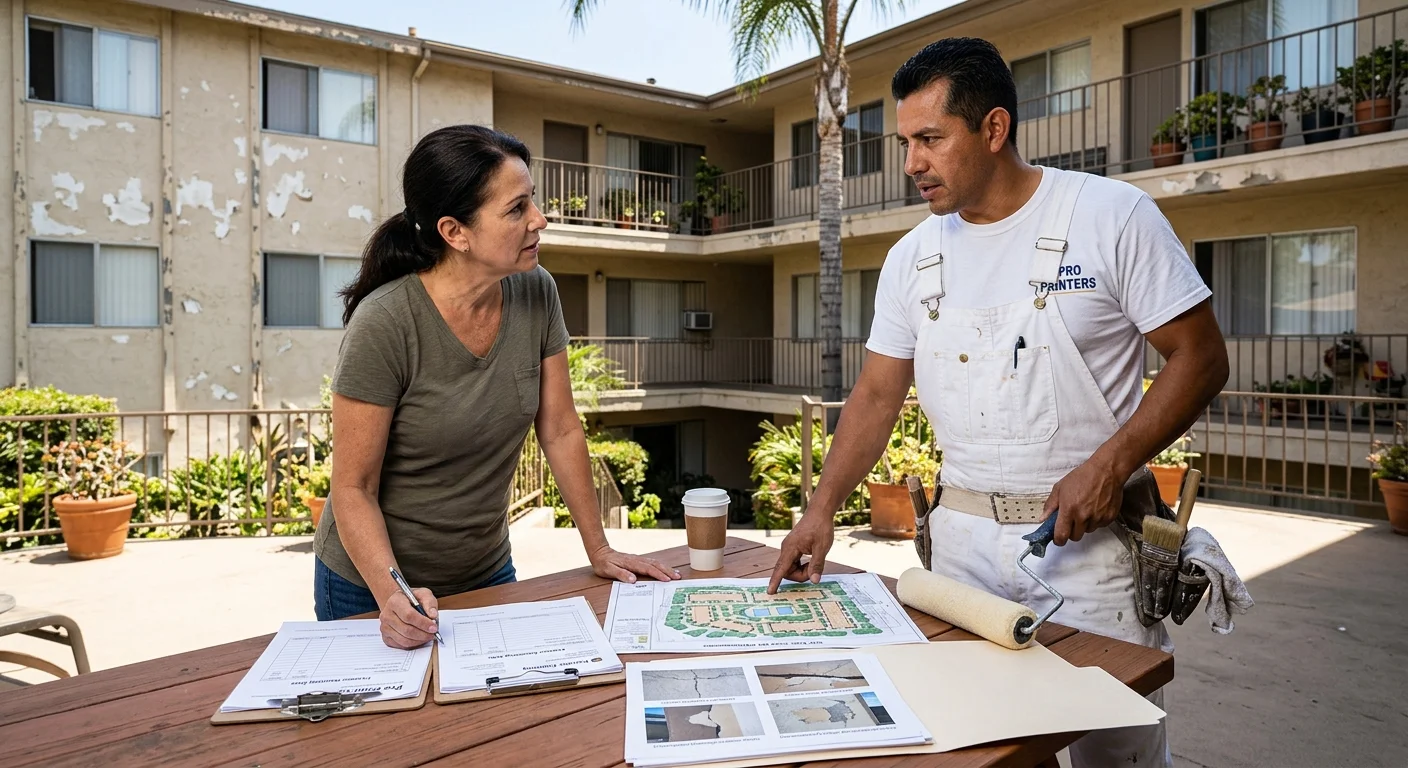
Start with a site plan showing each building. Use consistent labels such as Building A, Building B, and Leasing Office. Mark detached garages, trash enclosures, laundry rooms, carports, retaining walls, and maintenance structures. If a structure isn’t included, label it as excluded.
Break each building into elevations. North, south, east, and west labels work well. Courtyard-facing walls may need separate labels when their access differs. Add photographs tied to those labels, rather than sending an unorganized photo folder.
The scope should identify each painted surface. Common examples include:
- Stucco walls and architectural bands
- Wood fascia, trim, and exposed tails
- Metal railings, stairs, gates, and doors
- Utility doors and service enclosures
- Breezeways, balcony edges, and corridor ceilings
- Previously painted masonry or concrete
- Address numbers and painted directional markings
San Diego properties vary widely. A Pacific Beach complex may have narrow side access and limited staging space. A City Heights property may combine street-facing buildings with interior courtyards. A Mission Valley community may include detached garages, retaining walls, and several vehicle entrances. Treat these as property-specific observations, not assumptions based on the neighborhood.
Ask each painter to return a marked scope. It should show included buildings, elevations, and shared areas. This makes omissions visible before contract review.
For broader project planning, review the site’s commercial painting guidance and exterior painting overview. Those pages help separate apartment-wide planning from the details of one bid.
Separate repairs from paint-only work
A low bid may cover paint application while leaving repair decisions open. Another may include extensive preparation. The totals look different because the scopes are different.
Create separate categories for paint preparation and substrate repair. Paint preparation may include cleaning, scraping loose coating, sanding edges, caulking selected joints, spot priming, and masking. The bid should describe those steps without relying on phrases such as “standard prep” or “as needed.”
Repairs need their own list. Ask painters to identify visible cracking, damaged trim, deteriorated sealant, rusted metal, loose components, and failed patches during the site visit. Each condition should connect to a building and elevation.
When the full repair quantity can’t be known before work starts, request a clear pricing method. The proposal might use measured quantities, documented allowances, or written change approval. Don’t accept an undefined promise to “handle repairs.” Decide who photographs newly exposed damage and who authorizes added work.
Keep paint-only work distinct from carpentry, stucco repair, waterproofing, and structural correction. A painting contractor may include some related preparation, but the written proposal must say exactly what’s covered. If another trade must complete repairs first, record that dependency.
The C-33 classification includes surface preparation and coating application. Still, owners should verify each contractor through the CSLB license check before signing. Confirm the name on the proposal matches the license record.
Older properties need another checkpoint. The site’s approved Census analysis estimates that 49.6% of San Diego housing units were built before 1978. Paid renovation, repair, or painting work that disturbs painted surfaces in pre-1978 housing falls under the federal RRP rule. Ask how the bidder determined whether the rule applies. If it does, verify the firm’s certification and planned work practices through the EPA RRP program.
Compare access, protection, and resident coordination
Apartment painting happens around homes, vehicles, deliveries, visitors, and daily property operations. The bid should explain how the painter plans to work around those conditions.
Start with access. Mark gates, courtyards, balconies, stairs, roof edges, sloped areas, and narrow passages. Ask what access method each contractor priced for every difficult elevation. If a proposal assumes open access, confirm whether parked vehicles, landscaping, stored items, or locked resident areas could change that assumption.
Protection deserves a separate bid section. Ask what gets covered, moved, isolated, or temporarily closed. Include windows, doors, lighting, cameras, signs, landscaping, paving, outdoor furniture, and resident belongings. The proposal should assign responsibility for moving vehicles and personal items.
Resident communication also needs an owner-approved process. Don’t invent a notice period. The property manager should set the notice standard after checking leases, internal policies, and any applicable requirements. Each bid can then state whether the painter will draft notices, post owner-approved notices, or supply work-area updates.
Compare these coordination details:
- Who provides the daily work-area plan
- Who communicates changes to property management
- Who handles resident questions about access
- Who coordinates gates, keys, and locked areas
- Who documents existing damage before protection begins
- Who restores moved property after each work area is released
- Whether translated notices are included when requested
- How overspray-sensitive areas and parked vehicles are addressed
The contractor shouldn’t make promises directly to residents without the manager’s approval. One person should control official building notices and scope changes.
San Diego weather also makes vague calendar language risky. The approved National Weather Service findings place most local rainfall from November through March, while conditions differ between the coast and inland areas. Ask each bidder to state how unsuitable conditions affect daily work decisions. Don’t treat a proposed sequence as a guaranteed completion date.
The same coordination issues appear in occupied associations. Our guide to painting around residents offers a useful framework for notices, access, and shared-space planning.
Review coatings by surface
A bid that says “premium exterior paint” doesn’t provide enough detail. Compare a coating schedule tied to each surface.
Build a simple matrix. Rows should list stucco, wood trim, metal railings, doors, masonry, and other included surfaces. Columns should show preparation, primer, finish product, sheen, color, and application method. Every bidder should complete the same fields.
Exact product names prevent substitutions from hiding inside broad descriptions. Loxon XP and EVERSHIELD elastomeric are examples of verified, currently sold stucco or masonry coating names. A proposal might name something else. The key is recording the manufacturer, product line, finish, and intended surface.
Don’t attach an assumed lifespan to any coating. The approved claims ledger doesn’t support a fixed service-life figure for San Diego apartment exteriors. Exposure, substrate condition, preparation, and the selected system all affect the result. Ask the contractor for the current product data sheet and any written warranty they personally offer. Paint Pros San Diego doesn’t provide project warranties.
Color responsibilities also belong in the schedule. Record who selects colors, who confirms sheen, and who approves samples. If ownership wants field samples, define the surfaces and approval contact. Clarify whether accent colors, address numbers, doors, railings, and utility areas use separate selections.
Watch for mismatched systems. If one contractor specifies spot primer and another specifies broader priming, their bids aren’t equivalent. The same applies when repair areas receive different preparation from intact surfaces.
For another multifamily comparison framework, see our guide to HOA painting contractors in San Diego. Apartment and HOA projects have different decision structures, but both need a surface-specific scope.
Confirm exclusions and approval responsibilities
Exclusions are part of the price. Review them before ranking apartment painting bids.
Ask each contractor to provide one dedicated exclusions section. Search for items discussed during the walkthrough but missing from the priced scope. These often include concealed damage, specialty access, resident-owned improvements, unpainted surfaces, extensive repairs, hazardous-material work, and changes requested after approval.
Don’t assume an omitted item is included. Add a written clarification to the proposal or scope comparison sheet. If the contractor can’t price an uncertain condition, request the process used when that condition appears.
Create an approval chart before selection. Name the person responsible for each decision:
- Final building and elevation scope
- Repair authorization
- Product and sheen selection
- Color and sample approval
- Resident communication
- Access to locked or occupied areas
- Change documentation
- Final walkthrough items
Approval authority matters when an owner, asset manager, property manager, and onsite manager share the project. A painter shouldn’t have to guess whose direction controls the work.
Ask how change requests will be recorded. The document should identify the affected building, surface, reason, scope change, and approval. Verbal direction can create disputes when several people are involved.
Also request the contractor’s current license and insurance documentation. Don’t assume coverage types, policy limits, or endorsements. The property owner or manager should decide what documentation is required, then ask every bidder for the same material.
Finally, compare the revised bids side by side. Normalize scope gaps before comparing totals. Note every allowance, alternate, owner-supplied item, and excluded repair. A higher proposal may simply include work that another contractor left open.
Paint Pros San Diego makes referrals. We don’t manage resident notices, approve changes, select coatings, supervise contractors, or perform the painting. The customer contracts with and pays the independent painter directly.
When to call us
Call when you need qualified local painters to review a San Diego apartment exterior and prepare comparable proposals. Call us at (858) 400-6422 and we’ll connect you with a licensed local painter.