Bathroom paint bubbling in San Diego is almost always moisture getting trapped behind the paint film, usually from a poorly vented shower, a leak inside the wall, or a coat applied over a damp or dirty surface. The fix depends on which one you’ve got: better ventilation and a repaint for a moisture problem, or a plumbing repair first if water is actually getting into the wall. This guide walks through how to tell the difference, what to do about each cause, and when bathroom paint bubbling is a sign of something bigger than a bad paint job.
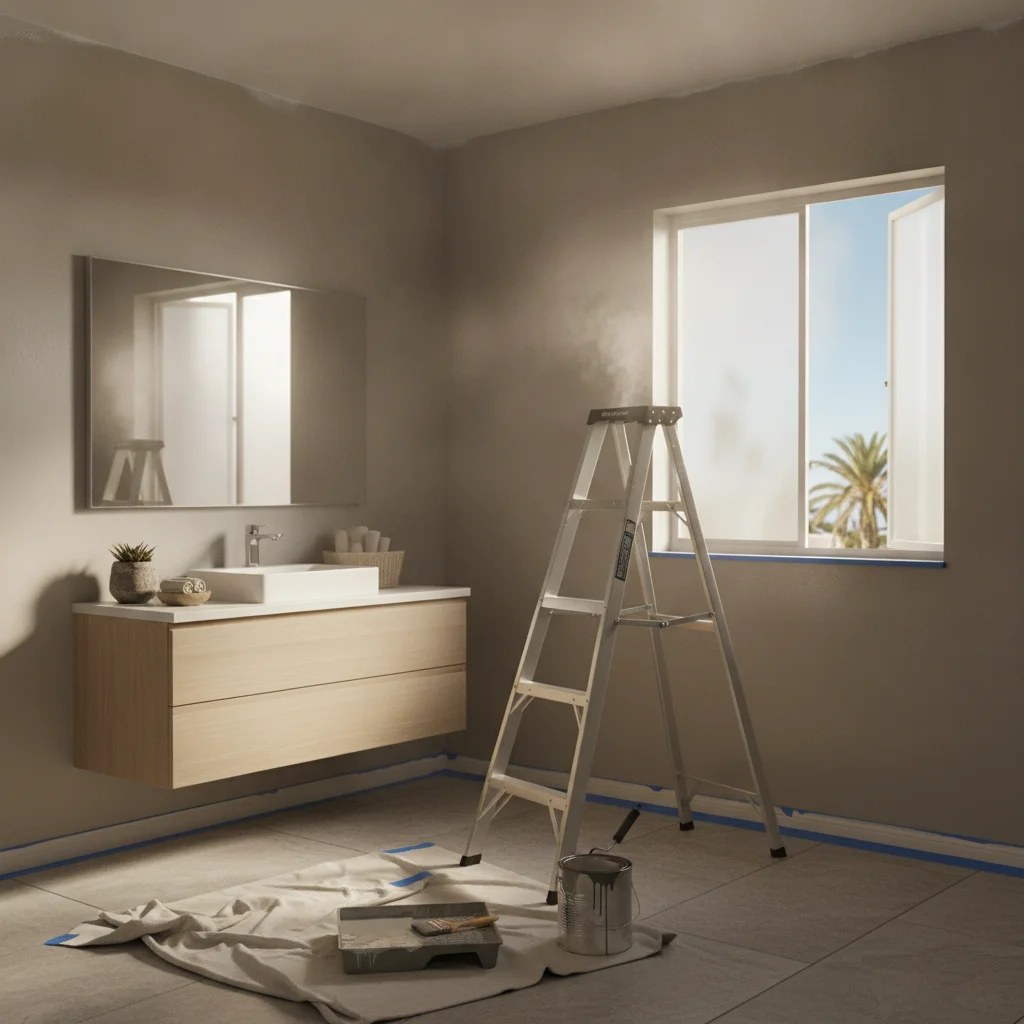
It’s one of the most common calls we get from homeowners across San Diego County, from older Craftsman bathrooms in North Park to newer builds in Rancho Bernardo. The coastal marine layer keeps humidity higher here than most people expect, and a lot of San Diego bathrooms were built with exhaust fans that are undersized, poorly ducted, or never get used. Add a hot shower to that mix every morning and you’ve got the exact conditions bubbling paint needs.
What causes bathroom paint bubbling in San Diego
Paint bubbles when moisture gets between the paint film and the wall and has nowhere to go. As the trapped moisture heats up or expands, it pushes the paint away from the surface in small blisters or larger sagging patches. There are four usual suspects, and figuring out which one you have determines the fix.
The most common cause is simple humidity with nowhere to escape. A shower without a working exhaust fan, or a fan that’s too small for the room, leaves warm moist air sitting against the walls after every shower. Regular wall paint has no defense against that kind of repeated moisture load, and even a bathroom-rated paint eventually fails if the room never actually dries out between uses.
The second cause is paint applied over a damp, dirty, or contaminated surface in the first place. If a wall was painted right after a shower, before it fully dried, or over an existing spot of mildew that wasn’t cleaned and treated, the paint never really bonded. It looks fine for a while, then lets go in bubbles and peeling patches, often within the first year.
The third cause, and the one that matters most to catch early, is an actual water leak inside the wall. A slow leak from a shower pan, a supply line, or grout and caulk that failed around the tub can push water through drywall from behind. This kind of bubbling tends to show up low on the wall, near a corner, or directly below a second-floor bathroom, and it often comes with a musty smell or a wall that feels soft when you press on it.
The fourth cause is heat and steam concentrated right where the shower hits the wall. Even with decent ventilation, a shower head aimed straight at a painted wall or a glass enclosure that traps steam against one section can locally overload the paint film long before the rest of the room shows a problem.
How to tell if it’s ventilation or a leak
This is the question that actually matters, because the two fixes are completely different. Press on the bubbled area and the surrounding wall. If it feels firm and the bubbling is spread across a broad area near the ceiling or high on the wall, moist air is the likely cause. If the wall feels soft, spongy, or damp to the touch, or the bubbling is concentrated low on the wall or in one corner, treat it as a possible leak first.
Check the timing too. Bubbling that’s been slowly building over a year or more, worse in winter when the house is closed up, usually points to ventilation. Bubbling that appeared fast, especially after a specific event like a bathtub overflow or a period the shower ran longer than usual, points more toward a leak.
When in doubt, don’t paint over it. Cut a small section of the bubbled paint away with a putty knife and look at the drywall paper underneath. Discolored, soft, or crumbling drywall means water has been getting in for a while and a plumber needs to find the source before any paint work happens. Our guide on drywall repair costs in San Diego covers what that kind of water-damaged section runs to fix.
Fixing bubbled paint caused by moisture
If the cause is humidity rather than a leak, the fix is two parts: solve the ventilation, then repaint properly.
Start with the fan. A bathroom exhaust fan should move enough air to cycle the room roughly eight times an hour, and in most San Diego bathrooms that means a fan rated well above the builder-grade minimum, ducted straight outside rather than dumping into the attic. Run it during every shower and for a full twenty minutes after, and if the current fan is loud or weak, replacing it is one of the highest-value fixes in this whole list.
Once ventilation is handled, scrape away every bit of loose or bubbled paint back to a firm edge, and check underneath for mildew. Clean any mildew with a diluted bleach solution or a dedicated mildew cleaner, let the wall dry completely (give it longer than the can suggests in a coastal climate), then prime the repaired area with a stain-blocking, mildew-resistant primer before repainting. Skipping the primer step is the number one reason a moisture repair fails again within a year.
For the topcoat, use a true bathroom or “bath and spa” formula in satin or semi-gloss, never a flat or matte finish, which holds onto moisture instead of shedding it. Our best paint for a bathroom in San Diego guide breaks down the specific products and finishes that hold up in a humid coastal bath.
When bubbling means you need a plumber first, not a painter
If you found soft or discolored drywall under the bubbled paint, or the bubbling keeps returning to the same spot within a few months of a repaint, stop treating it as a paint problem. Common sources include failed caulk or grout around the tub or shower pan, a slow supply line leak inside the wall, or a shower pan liner that’s cracked and letting water seep into the framing with every use.
A plumber or a general contractor needs to find and fix the water source before any paint work will hold. Painting over an active leak is a guaranteed repeat call, usually within a season. Once the leak is fixed and the wall has fully dried out, the drywall gets patched or replaced through our drywall repair service and then painted using the same moisture-resistant approach above.
Preventing bathroom paint bubbling going forward
A few habits keep bubbling from coming back once you’ve fixed it. Run the exhaust fan during every shower and for a while after, crack a window when the marine layer isn’t blowing straight fog through it, and wipe down the shower walls after use to cut down on standing moisture. Recheck the caulk line around the tub or shower once a year and re-caulk at the first sign of a gap, since that’s one of the most common quiet entry points for water into the wall.
If you’re repainting the whole bathroom while you’re at it rather than just the bubbled section, our interior painting service covers full-room work with the prep and primer steps built in, and we can match you with a painter who checks for moisture issues before ever picking up a roller. Homeowners in humid coastal spots like Pacific Beach deal with this more than most, given how close the marine layer sits to the coast, but it shows up in inland bathrooms too whenever ventilation is weak.
Frequently asked questions
Why is my bathroom paint bubbling after a shower?
Warm, moist air from the shower is getting trapped against the wall faster than it can evaporate, usually because the exhaust fan is weak, undersized, or not running long enough after you’re done. The paint film blisters as that trapped moisture tries to escape. Running the fan longer and confirming it’s actually ducted outside, not into the attic, is the first thing to check.
Is bubbling paint in a bathroom dangerous?
It can point to a real problem, so it’s worth taking seriously rather than just repainting over it. Simple humidity bubbling isn’t dangerous by itself, but bubbling caused by a hidden water leak can lead to wet, weakened drywall and eventually mold growth inside the wall cavity if it goes unaddressed. Check the wall for softness or a musty smell before assuming it’s just moisture in the air.
Can I just paint over bubbling paint in a bathroom?
No. Painting over bubbled paint traps whatever caused the bubbling underneath the new coat, and it will bubble again, usually faster the second time. Scrape back to a firm edge, address the actual moisture source, let the wall dry fully, prime, and then repaint.
How much does it cost to fix bubbling bathroom paint in San Diego?
A straightforward moisture-related repair, scraping, priming, and repainting one bathroom, typically runs a few hundred dollars depending on the room’s size and how much surface needs prep. If the cause turns out to be a leak requiring drywall replacement, the cost climbs with the size of the damaged section; our drywall repair cost guide has real ranges for that scenario.
Does a better exhaust fan actually stop bathroom paint from bubbling?
In most cases, yes, when humidity is the real cause. A fan that actually clears the room, run during and after every shower, removes the moisture load that paint can’t stand up to over time. Pair it with a proper bathroom-rated paint and the combination handles San Diego’s coastal humidity far better than either fix alone.
Why does bathroom paint bubble worse in winter?
San Diego homes stay more closed up in winter, with windows shut and less natural airflow, which concentrates shower humidity in a smaller space with less chance to escape. If a bathroom already has marginal ventilation, that seasonal drop in airflow is often what finally pushes moisture bubbling from a minor issue into a visible one.
Bubbling paint in a bathroom is usually fixable, and it’s rarely just about the paint. Get the moisture source right first, whether that’s a fan upgrade or a plumbing fix, and the repaint holds. Call (858) 400-6422 and we’ll connect you with a vetted local painter who checks for moisture before repainting, not after.