Yes, you can paint vinyl siding, and in San Diego it works well when done right. The two rules that matter most: use a vinyl-safe acrylic latex paint with urethane resins, and keep the new color the same lightness or lighter than the original (or choose a Sherwin-Williams VinylSafe color) to prevent heat warping in the inland sun. Cost tracks square footage, siding condition, and how many prep steps the job needs, and a properly prepped, vinyl-safe paint job holds up well for years when the siding is in sound condition.
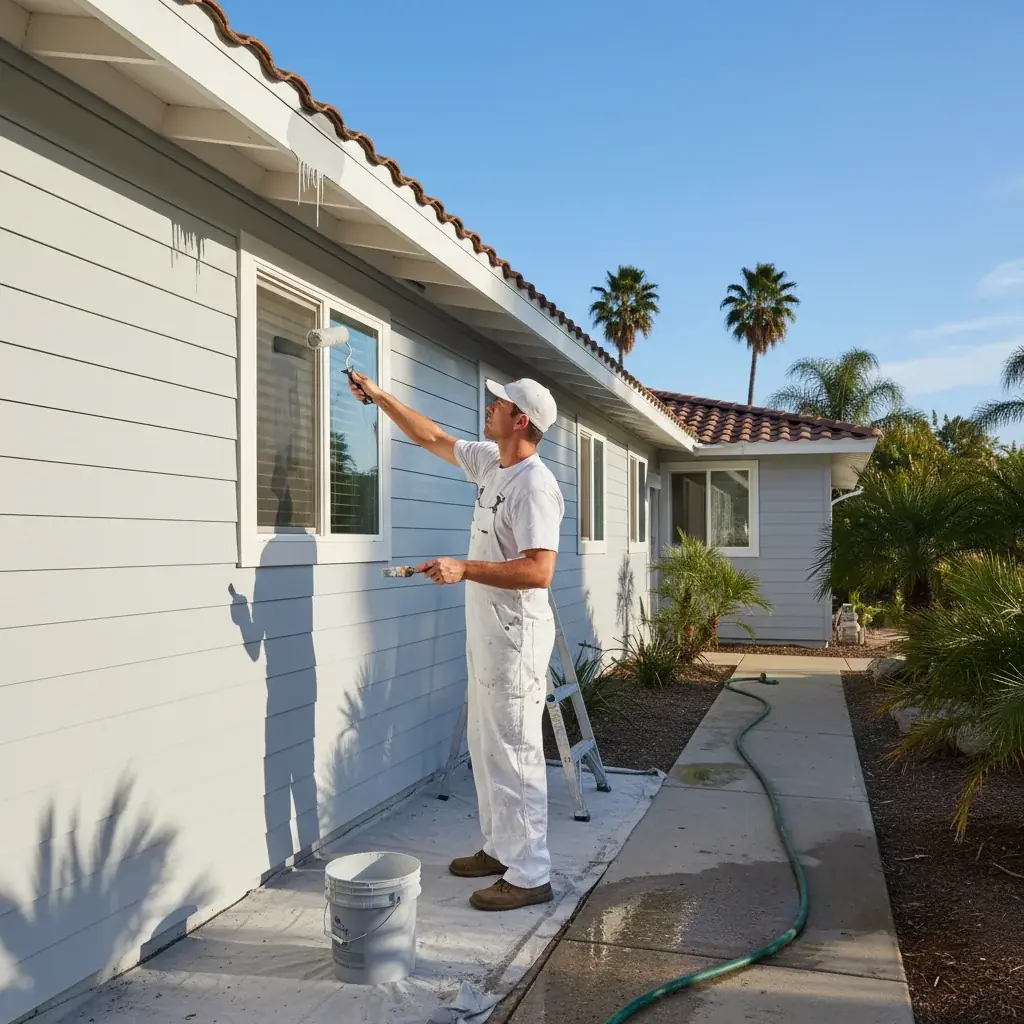
Yes, you can paint vinyl, but only with the right products
The short answer is yes, you can absolutely paint vinyl siding. The long answer is that you can’t use just any can of exterior paint and expect it to last. Vinyl is a plastic (polyvinyl chloride, or PVC) that expands and contracts significantly with temperature changes. A standard acrylic exterior paint is not formulated to be that flexible. When the sun hits the siding, the vinyl expands; as it cools in the evening, it contracts. A rigid paint film will quickly crack, flake, and peel off under this constant movement.
The key is to use a paint specifically designed for this flexibility. Modern advancements have led to high-quality acrylic latex paints with urethane and acrylic resins that have superior elasticity. These paints are engineered to move with the siding, creating a durable bond that withstands the expansion and contraction cycle.
Furthermore, the paint must have excellent adhesion. Vinyl is a non-porous, slick surface. Without the right chemistry, paint has nothing to grab onto. Products formulated for vinyl contain adhesion-promoting ingredients that allow the paint to “bite” into the surface for a lasting finish. Trying to save a few dollars on the wrong type of paint almost always leads to early failure, forcing you to strip it all off and start over.
Why color choice matters (heat absorption and warping)
This is the single most important factor when it comes to painting vinyl siding in San Diego. Choosing the wrong color doesn’t just look bad; it can physically damage your siding.
Vinyl siding is a thermoplastic, which means it softens when heated. Siding manufacturers formulate their products to withstand a certain amount of heat based on their original, factory-applied color. Lighter colors reflect more sunlight and solar radiation, keeping the siding cooler. Darker colors, like deep blues, charcoal grays, or black, absorb much more heat.
If you paint your light-colored siding a dark shade, the surface temperature can soar far beyond its original design limit. Under the intense inland sun in places like Ramona or Poway, this excess heat can cause the vinyl panels to soften, buckle, warp, and sag permanently. This damage is irreversible and can only be fixed by replacing the affected panels.
To avoid this, follow one simple rule: choose a paint color that is the same lightness or lighter than your siding’s original color. Most major paint manufacturers provide a Light Reflectance Value (LRV) for each color, which measures how much light it reflects. You want a color with an equivalent or higher LRV.
The exception to this rule is using a paint system with “vinyl-safe” colorants. Companies like Sherwin-Williams have developed special pigments that allow for darker colors to be mixed while reflecting infrared heat, keeping the siding surface cooler. This technology opens up more vinyl siding paint colors, but it’s critical to only use colors from these specific, approved palettes.
Prep steps: wash, scuff, prime
A great paint job on any surface is mostly preparation. This is especially true for a slick, synthetic material like vinyl. Skipping any of these steps is a recipe for paint failure.
1. Thorough Washing
Over the years, vinyl siding develops a layer of chalky oxidation, along with dirt, pollen, and often mildew in shaded areas. Paint cannot stick to this layer. The surface must be perfectly clean. We typically use a pressure washer on a low-pressure setting (under 1500 PSI) with a cleaning solution like TSP substitute to scrub away all contaminants. For stubborn mildew, a diluted bleach solution may be needed. After cleaning, the siding must be rinsed thoroughly and allowed to dry completely, which can take 24-48 hours.
2. Light Scuffing (If Needed)
While not always necessary, a very light scuff-sand can improve adhesion on older, glossier siding. The goal isn’t to remove material but to dull the surface and create microscopic grooves for the paint to grip. Using a fine-grit sanding sponge (220-grit or higher) is sufficient. After scuffing, the siding must be wiped down to remove all dust.
3. Priming (When to Use It)
Most modern, high-quality exterior paints designed for vinyl are self-priming and don’t require a separate primer coat on a clean, dull surface. However, a high-adhesion bonding primer is excellent insurance in a few situations:
- Heavily Weathered or Pitted Siding: If the vinyl is old and has become porous, a primer will seal the surface and ensure an even finish.
- Major Color Change: When going from a very dark color to a very light one, a tinted primer can help achieve better coverage with fewer topcoats.
The preparation for vinyl is quite different from other substrates. For example, our process for exterior paint prep on stucco in San Diego involves identifying and patching cracks, which isn’t a concern for vinyl.
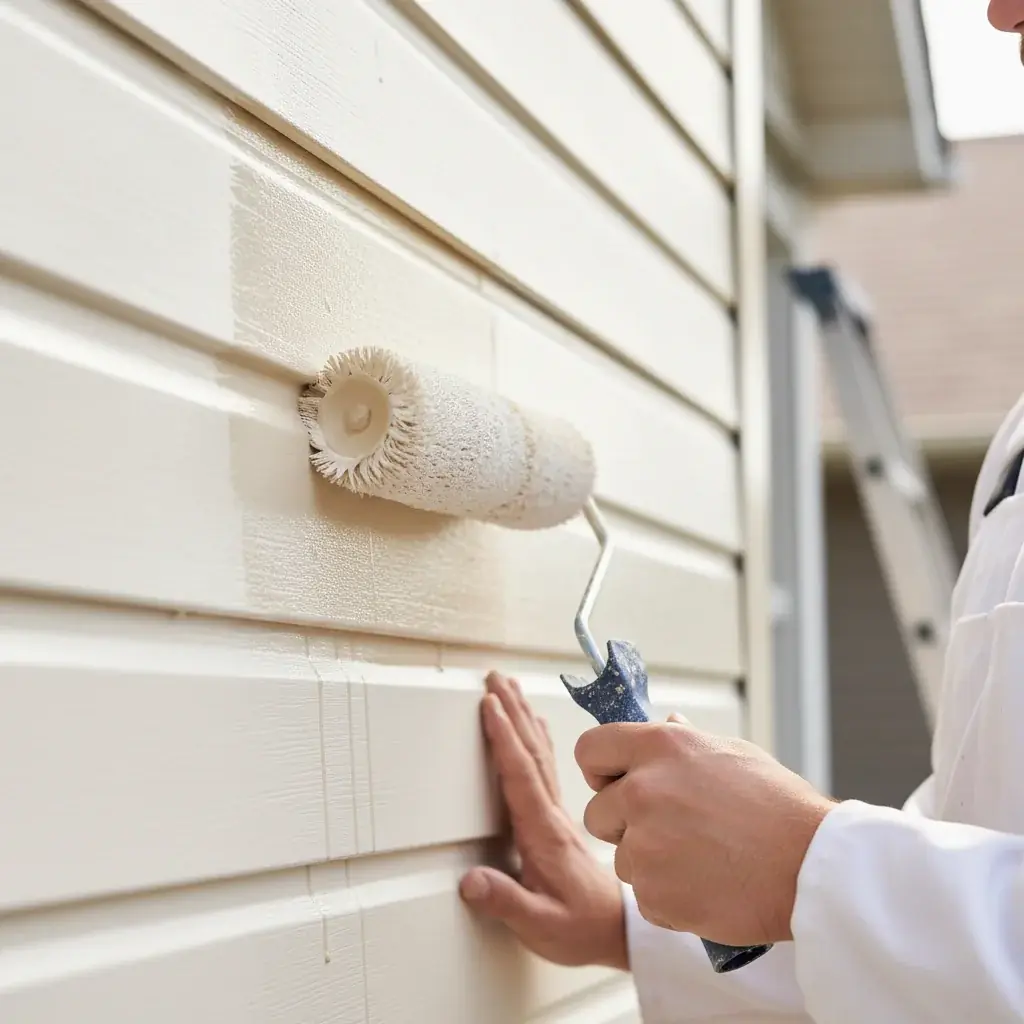
Products that bond: Sherwin-Williams VinylSafe, Behr Marquee
Using the right product is non-negotiable. Two of the most reliable and widely available options are from Sherwin-Williams and Behr.
Sherwin-Williams with VinylSafe® Color Technology
Sherwin-Williams is a leader in this category. Their VinylSafe® Color Technology is not a specific paint, but a system of colorants that can be added to several of their premium exterior paints, like Duration or Emerald Exterior Acrylic Latex. This is the technology that allows you to break the “lighter color only” rule.
The VinylSafe system provides a palette of over 100 colors, including some darker shades, that are formulated to reflect infrared light. This keeps the surface of the siding cooler, preventing heat-related warping. When you choose a color from this specific collection, you can have confidence that it’s been tested and approved for use on vinyl. It’s a fantastic option for homeowners who want a dramatic color change without risking damage. These paints also meet strict local air quality regulations on VOCs (Volatile Organic Compounds) set by agencies like California’s Air Resources Board (CARB).
Behr Marquee Exterior Paint & Primer
Behr’s top-of-the-line products, like Marquee Exterior or Premium Plus Ultra, are also excellent choices for vinyl siding. These are 100% acrylic latex paints that offer great flexibility, adhesion, and resistance to mildew and fading. While they don’t have a named system like VinylSafe for dark colors, their advanced formula provides a durable, long-lasting finish when you stick to colors of a similar or lighter shade than the original siding. The built-in primer helps it bond tenaciously to a properly cleaned and prepped surface.
When applying these paints, two thin coats are always better than one thick coat. A heavy coat can have trouble curing properly and may not flex as well with the siding.
Lifespan: how long a paint job on vinyl actually lasts
A common question we get is whether painting vinyl is just a short-term fix. When done correctly with the right materials, a professional paint job on vinyl siding holds up well for years before it needs another coat.
Several factors influence this lifespan:
- Quality of Prep: This is the biggest factor. A poorly cleaned surface will cause peeling within a couple of years.
- Quality of Paint: Premium, vinyl-safe acrylic paints will outlast cheaper alternatives by many years.
- Sun Exposure: The intense UV radiation in San Diego’s inland communities will break down paint faster than in cloudier climates. West-facing walls that get blasted by the afternoon sun may show fading sooner.
- Color Choice: Lighter colors tend to hold their appearance longer than dark, saturated colors, which are more prone to fading over time.
- Original Condition: Painting vinyl that is already old and brittle won’t make it new again. The paint may last, but the underlying material can still fail.
Compared to installing brand new siding, a repaint is a fraction of the cost and buys the siding meaningful additional life before replacement becomes the better option.
When replacement beats painting
Painting is a great option, but it isn’t always the right one. As professional painters, it’s our job to give you an honest assessment. There are times when replacing your vinyl siding is a smarter long-term investment.
Painting makes sense when your siding is structurally sound but just faded, chalky, or an undesirable color. It’s an effective cosmetic upgrade.
Replacement is the better choice when:
- The Siding is Damaged: If panels are severely cracked, split, or have large holes, paint will not fix the problem. You’re just covering up damage that can lead to water intrusion.
- It’s Already Warped: If the siding is already buckling or sagging (perhaps from a previous bad paint job or heat damage), paint will just follow the warped contours.
- It’s Brittle and Old: Vinyl siding nearing the end of its functional life (30+ years) can become extremely brittle. The process of pressure washing and prepping it could cause more harm than good.
- You Want a Different Profile: Paint changes the color, not the texture or profile. If you want to switch from traditional lap siding to a board-and-batten look, replacement is the only way.
Cost is also a major factor. A professional exterior painting job on vinyl tracks square footage and prep scope. New siding installation involves removal, materials, and reinstallation labor, which puts it well above the cost of a paint job. If your siding is in good shape, painting is the far less expensive way to give your home a fresh, new look.
Frequently asked questions
How much does it cost to paint vinyl siding in San Diego?
Professional vinyl siding painting cost in San Diego depends on the size of the home, condition of the siding, and how many prep steps are needed. Painting is significantly cheaper than replacing siding, since new siding involves removal and material costs that a paint job avoids entirely.
How long does painted vinyl siding last?
A properly done paint job on vinyl siding holds up well for years. Prep quality is the biggest factor: a surface that isn’t fully clean before painting will start peeling within a couple of years. UV exposure on west-facing walls in inland San Diego communities like Ramona and Poway can shorten that window on darker colors.
Can I paint vinyl siding a darker color?
You can, but only if you use colors from a vinyl-safe system like Sherwin-Williams VinylSafe. Standard dark paint absorbs enough heat to warp and buckle vinyl panels under San Diego’s sun. VinylSafe colorants use infrared-reflecting pigments to keep surface temps lower. Outside of that system, stick to a color that’s the same lightness or lighter than the original.
Is it worth painting vinyl siding or should I just replace it?
Painting makes sense when the siding is structurally sound and faded. If panels are cracked, already warped, or more than 30 years old and brittle, replacement is the smarter call. For siding in good condition, painting can deliver a like-new appearance for a fraction of the replacement cost.
Do you need to prime vinyl siding before painting?
Most high-quality vinyl-safe paints are self-priming on a clean surface, so a separate primer coat isn’t always needed. A high-adhesion bonding primer is worth adding when the vinyl is heavily weathered or when making a major color shift from very dark to very light.
How often does vinyl siding need to be repainted?
It depends on how the original job was done and where the siding sits. A premium, well-prepped paint job on a shaded elevation lasts the longest. Heavy sun exposure, especially on south- and west-facing walls in inland SD County, brings the repaint date closer and makes fading noticeable sooner.
When to call us
If your vinyl siding is faded but still in good structural shape, a professional paint job can be a budget-friendly update. Call (858) 400-6422 and we’ll connect you with a vetted San Diego painter who can assess your siding and give you an honest recommendation on whether it’s worth painting or needs replacement first.